
Nvidia Patents a System That Tells Self-Driving Cars When Their Cameras Are Too Slow
Every self-driving car depends on cameras and sensors processing the world fast enough to react in time. Nvidia has filed a patent for a system that figures out, moment by moment, exactly how slow is too slow, and does something about it before the car gets into trouble.
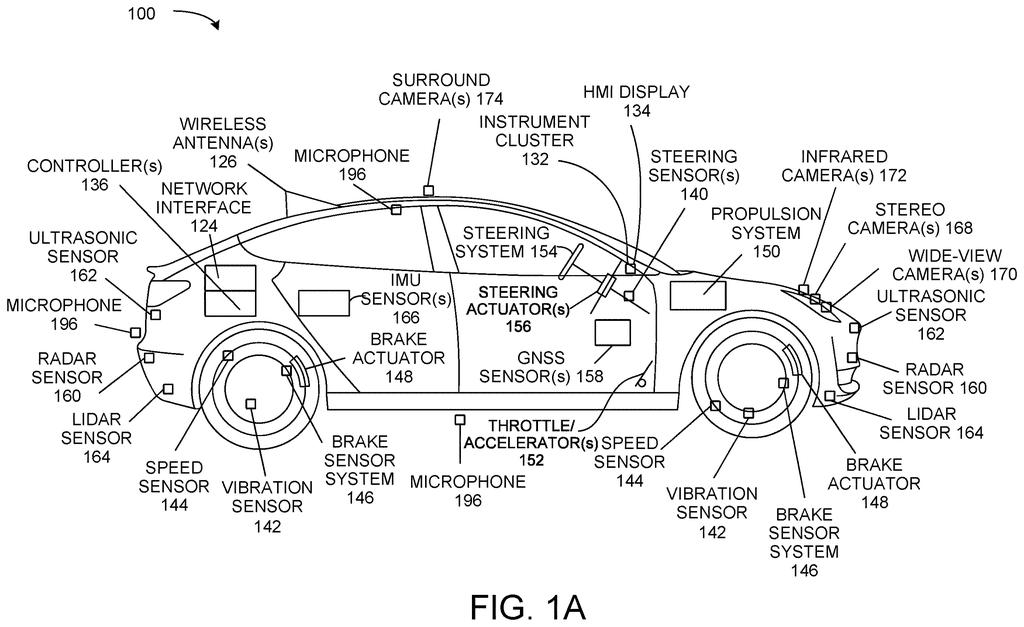
What Nvidia's sensor speed-check system actually does
A self-driving car rolls down a busy street, surrounded by pedestrians, cyclists, and other vehicles. The onboard cameras are constantly feeding images to computers that identify everything nearby. But what happens if those computers get bogged down and start falling behind?
That lag, even a fraction of a second, can be dangerous. Nvidia's patent describes a system that continuously calculates how much delay the camera processing can afford given the specific situation outside the car. Lots of fast-moving objects nearby? The acceptable delay shrinks. A quiet, empty road? There's a little more breathing room.
When the system detects that the cameras are taking longer than that calculated safe limit, it has options: it can sound an alert, redirect the car's computing power to catch up, or push the hardware to run faster. Think of it as a speed governor for data processing, tuned to the danger level of whatever's happening outside right now.
… determining, for a timestep associated with the respective states, a tolerable latency for a sensor of the autonomous vehicle; comparing the tolerable latency to a sensor perception latency associated with the sensor …
Translation: The system figures out the maximum acceptable delay for a camera and compares it to its actual speed.
How the simulation builds a safe latency ceiling
The patent centers on an estimation model built through simulation. Engineers run virtual scenarios with a self-driving car and objects around it, such as pedestrians crossing or cars merging, and use those simulations to calculate the maximum amount of processing delay (called tolerable latency) the vehicle can handle before its picture of the world becomes dangerously out of date.
In operation, the car continuously tracks the state of every detected object nearby: speed, direction, distance. From that data, the system calculates in real time what the tolerable latency ceiling is at that exact moment. It then compares that ceiling to the actual measured delay coming out of each sensor's processing pipeline.
If the actual latency exceeds the safe ceiling, the system can respond in three ways:
- Flag a safety check failure and send an alert to the vehicle's management system
- Reassign computing resources from lower-priority tasks to the struggling sensor pipeline
- Push the underlying hardware to run at higher performance to close the gap
The claim is tied specifically to a simulation-derived model, meaning the thresholds are not arbitrary fixed numbers but are derived from physics-based testing of real driving conditions. The model produces situation-specific limits rather than a one-size-fits-all cutoff.
An autonomous vehicle system process can determine if the processing latency of a sensor is greater than the modeled tolerable latency for that sensor, then a safety check is failed and an alert is sent.
Translation: If the camera is too slow, the car fails a safety check and triggers a warning.
What this means for riders in autonomous vehicles
For anyone who rides in or near a self-driving vehicle, this describes a safety mechanism that could catch a failure mode that most oversight systems ignore. Current approaches often treat sensor processing as either working or broken. This patent describes something more nuanced: a system that knows how much working is required given the current danger level.
Nvidia has been filing around autonomous-vehicle compute safety since at least 2024, and this fits a clear pattern of hardening the software layer between raw sensor data and driving decisions. For the average person, the practical payoff is an AV that should be less likely to freeze up or react slowly in exactly the moments, heavy traffic, fast-moving hazards, that demand the most from the hardware.
Nvidia's 75th filing we've tracked since May in the self-driving sensing race adds to a run that includes a parking camera mode switch and catching erratic car behavior.
The most useful protection a safety system can offer is one you never notice. Nvidia's patent describes a mechanism that watches whether the car's cameras are keeping up with the speed of events around it, and raises an alarm if they fall behind, before anything goes wrong.
At highway speed, a processing delay that seems trivial in a parking lot can mean the difference between reacting to a stopped car and not. This system's job is to catch that gap early, using estimates built from simulations of real driving conditions, so the car can respond before a slow sensor becomes a missed obstacle.
Whether a passenger would ever feel this working is the point. The failure it prevents is invisible by design, which is a reasonable measure of how seriously the engineering takes the problem.
There are more where this came from
We read every patent application Big Tech publishes and send you the ones worth knowing. Plain English, free, every week.
The drawings
23 drawing sheets from US 2026/0285338 A1 · click any drawing to enlarge


Want this weekly breakdown for a company we don't cover? Patentlyze Pro →
Be the first to weigh in