
Nvidia Patents a Traffic Router That Picks the Right AI Model for Each Question
Not every question needs the most powerful AI model, and Nvidia is patenting a system that figures out which one to use before your query even reaches it.
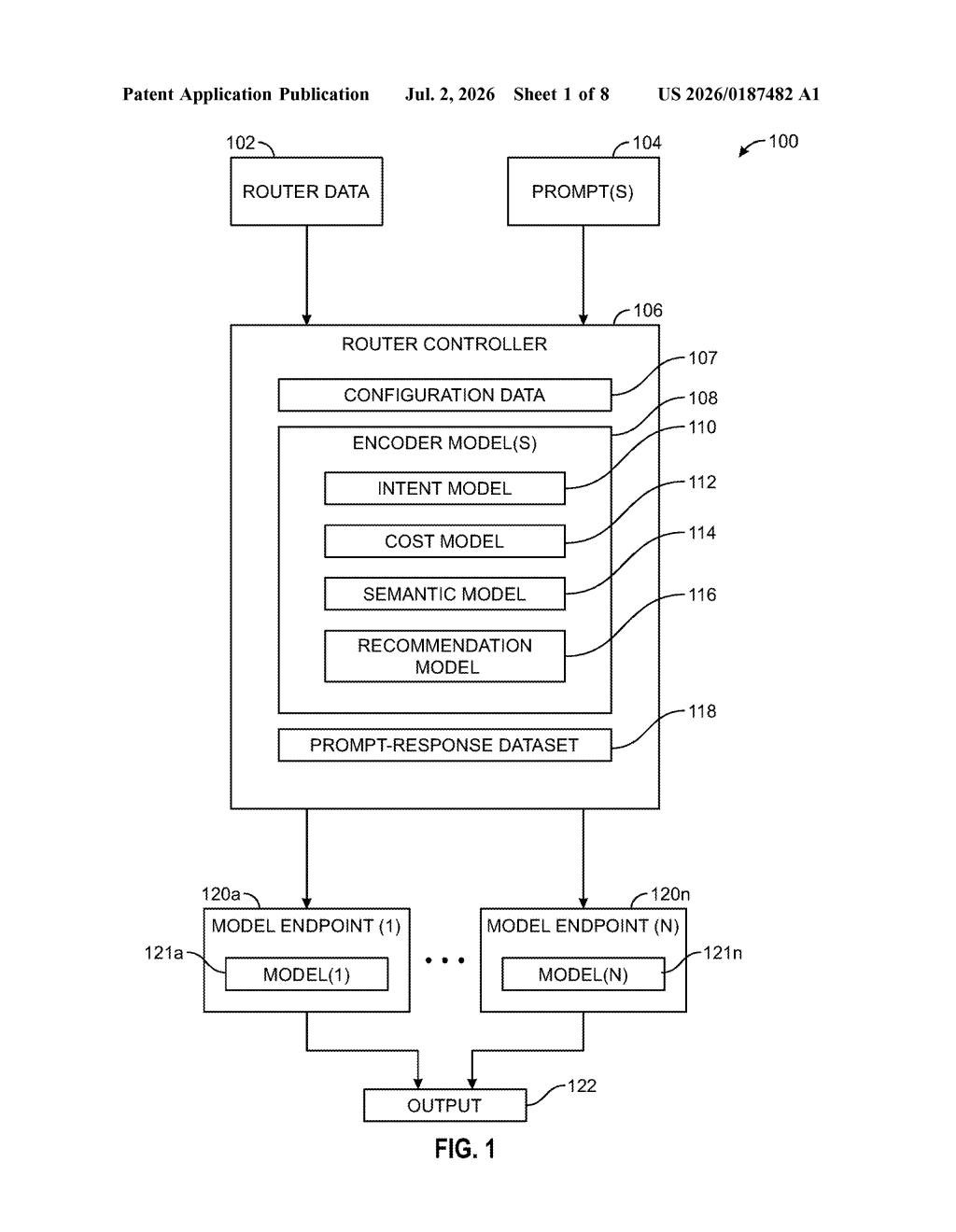
What Nvidia's AI model router actually does
Imagine a hospital with three doctors: a general practitioner, a specialist, and a surgeon. A smart receptionist who knows each doctor's strengths routes each patient to the right one, saving time and money. Nvidia's patent describes exactly that kind of receptionist, but for AI language models.
Instead of sending every question to one big model, the system learns from past examples which model tends to give the best answers for different types of questions. When you send a prompt, a lightweight "router" reads it and picks the model most likely to nail the response before forwarding your question on.
The router is trained on a bank of example questions and the scored answers each model produced. Over time it builds a map of which model excels at what, and uses that map every time a new prompt arrives.
How the router learns which model handles which question
The patent describes a language model router: a trained system that sits in front of a collection of language models and decides which one should handle each incoming prompt.
Training the router works like this:
- A set of example prompts is sent to all available language models.
- The responses are scored (quality ratings), creating a labeled dataset.
- The router model trains on that dataset, learning to predict which model will score highest for a given type of prompt.
At inference time (when a real user sends a question), the router reads the prompt, picks the best-fit model from the pool, and forwards the prompt there. The selected model generates the actual answer. The user never sees the routing step.
The claim is intentionally broad: the router can work with any number of models, any scoring method, and any prompt type. Nvidia does not restrict it to a specific model family, which gives the patent wide coverage across different AI deployment setups.
What this means for AI cost and answer quality
Running the largest, most capable AI model for every single query is expensive. If a simpler, cheaper model can answer routine questions just as well, routing traffic intelligently can cut compute costs significantly without users noticing any drop in quality. For companies running AI at scale, that gap in cost per query adds up fast.
For Nvidia, this is also a platform play. The company sells the chips that power AI inference, and it increasingly sells the software stack that orchestrates AI workloads. A patented routing layer fits neatly into that stack, giving customers a reason to buy into Nvidia's full infrastructure rather than assembling their own from scratch.
This is a sensible, commercially valuable patent for anyone running AI infrastructure at scale, and it fits Nvidia's push to own the full software layer above its hardware. The core idea is not new in computer science, but applying trained performance scoring to model selection is a specific enough claim to be worth watching. It is not a flashy research patent, it is a product infrastructure patent.
Get our take in your Top Stories
Liked this breakdown? Add Patentlyze as a preferred source on Google, and our plain-English take shows up more often in your Top Stories the next time Nvidia patent news breaks.
There are more where this came from
We read every patent application Big Tech publishes and send you the ones worth knowing. Plain English, free, every week.
Want this weekly breakdown for a company we don't cover? Patentlyze Pro →