
Nvidia Patents an AI That Designs Drug Molecules by Assembling Reusable Parts
Designing a new drug molecule from scratch is one of the hardest problems in science — Nvidia thinks an AI trained on molecular building blocks can make it far less like finding a needle in a haystack.
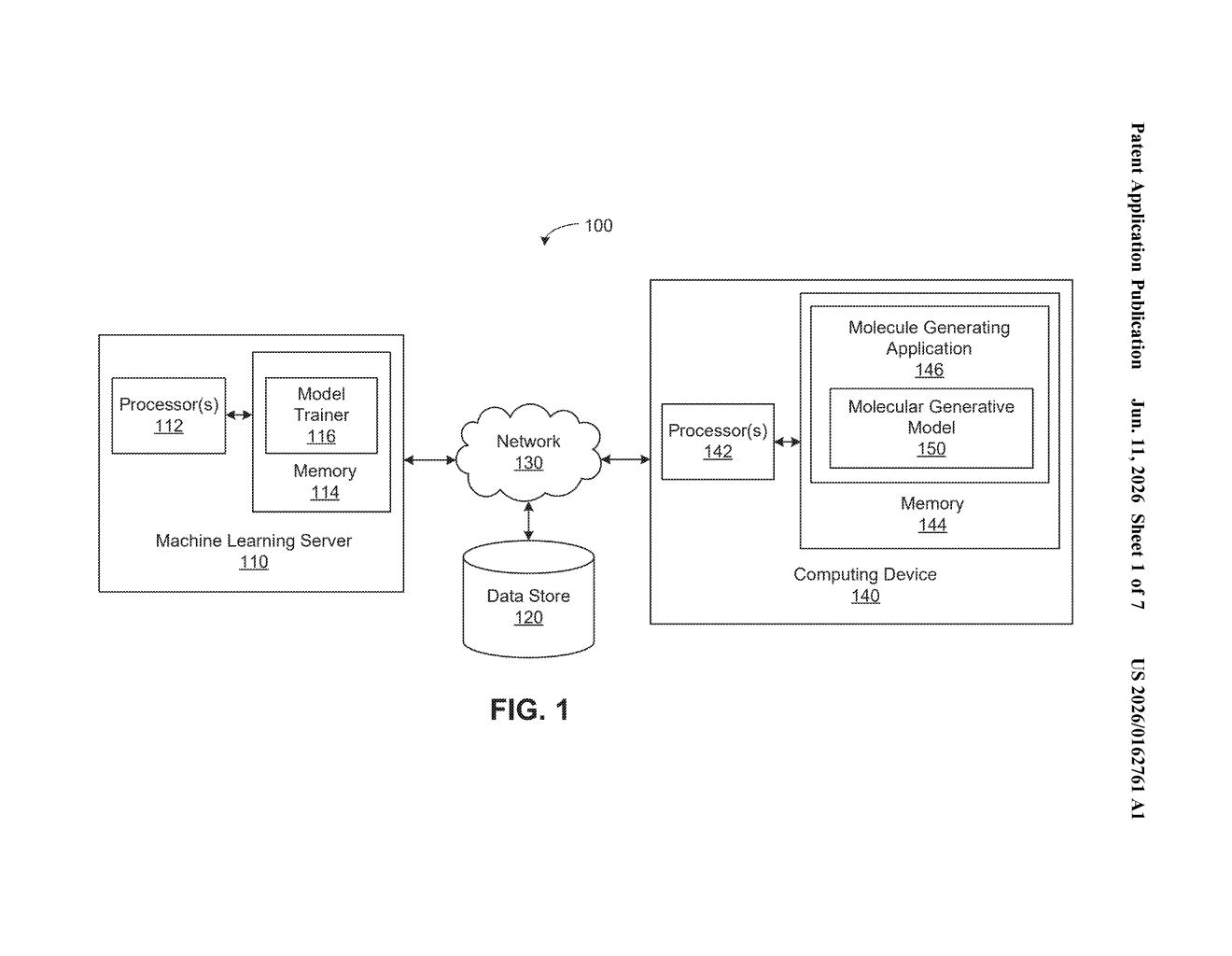
How Nvidia's molecule-building AI works in plain terms
Imagine trying to design a new medication by inventing every atom's arrangement from scratch. That's essentially what drug researchers do, and the search space is so enormous that even powerful computers struggle to find good candidates. Nvidia's new patent describes a system that sidesteps that problem by teaching an AI to think in reusable molecular fragments — pieces of molecules that are already known to work — rather than building everything from zero.
The AI uses two kinds of fragments: hard fragments, which must appear exactly in the final molecule, and soft fragments, which act more like style guides — the AI learns from their properties but doesn't have to copy them literally. Think of it like telling an architect, "This room must have a fireplace, but you can use any style that feels warm and cozy."
During training, the system learns by predicting which fragment should complete a molecule, then checking its answer against the real one and adjusting. Over millions of such exercises, it gets better at generating molecules that hit specific biological targets — potentially speeding up the early stages of drug development.
How the fragment retrieval and training loop fits together
The patent describes a two-phase system: a training phase and a generation phase.
In the training phase, the model is given a real molecule and asked to reconstruct one of its fragments. To help, it's also given a set of retrieved fragments — other molecular pieces from a database that are structurally similar to the missing one (this is the "retrieval augmentation" in the title, borrowed from a technique used in large language models). The model generates a candidate fragment, and its parameters are updated based on how well the predicted fragment matches the actual one. This is a standard self-supervised learning loop (training on the data itself without human labels).
In the generation phase, a user specifies desired molecule properties — say, "binds to this protein" or "is water-soluble." The system then selects:
- Hard fragments: structural pieces that must appear verbatim in the output molecule
- Soft fragments: reference pieces whose chemical character guides the model without being copied literally
The trained model takes all of these as input and generates a novel molecule that satisfies the constraints. The retrieval step is key — instead of searching a near-infinite chemical space blindly, the model anchors its search around known, chemically valid building blocks, which keeps outputs realistic and synthesizable.
What this means for AI-driven drug discovery
Drug discovery's most expensive bottleneck is the early molecule design stage — researchers need compounds that hit a biological target precisely while remaining stable, non-toxic, and manufacturable. Generative AI has been creeping into this space for years, but models that generate molecules atom-by-atom often produce structures that look good on paper but can't actually be synthesized in a lab. By grounding generation in real molecular fragments, Nvidia's approach nudges the AI toward outputs a chemist could actually make.
Nvidia has been building out its BioNeMo platform for computational biology, and this patent fits squarely into that effort. If this technique works at scale, it could meaningfully compress the time between "we have a disease target" and "we have a molecule worth testing" — a step that currently takes years and hundreds of millions of dollars.
This is serious work, not a flashy demo. Fragment-based drug design is a well-established strategy in medicinal chemistry, and grafting retrieval-augmented generation onto it is a genuinely clever combination — one that addresses a real failure mode of generative chemistry models. Nvidia's eight-inventor team (including researchers with strong generative-model credentials) suggests this isn't a one-off filing.
There are more where this came from
We read every patent application Big Tech publishes and send you the ones worth knowing. Plain English, free, every week.
Want this weekly breakdown for a company we don't cover? Patentlyze Pro →