
Nvidia Patents a Way for Self-Driving Cars to Know When an Object Is Actually in Their Path
Not every object near a self-driving car is actually a threat. Nvidia's new patent describes a system that figures out exactly which obstacles sit in the vehicle's path, so the car can react to the right things.
How Nvidia's lane-path obstacle check works
Imagine you're in a self-driving car on a winding road and a trash can sits on the shoulder, just a few feet away from your lane. Should the car brake? Panic? A system that can't tell the difference between "nearby" and "directly in your way" might react to both the same way, which isn't ideal.
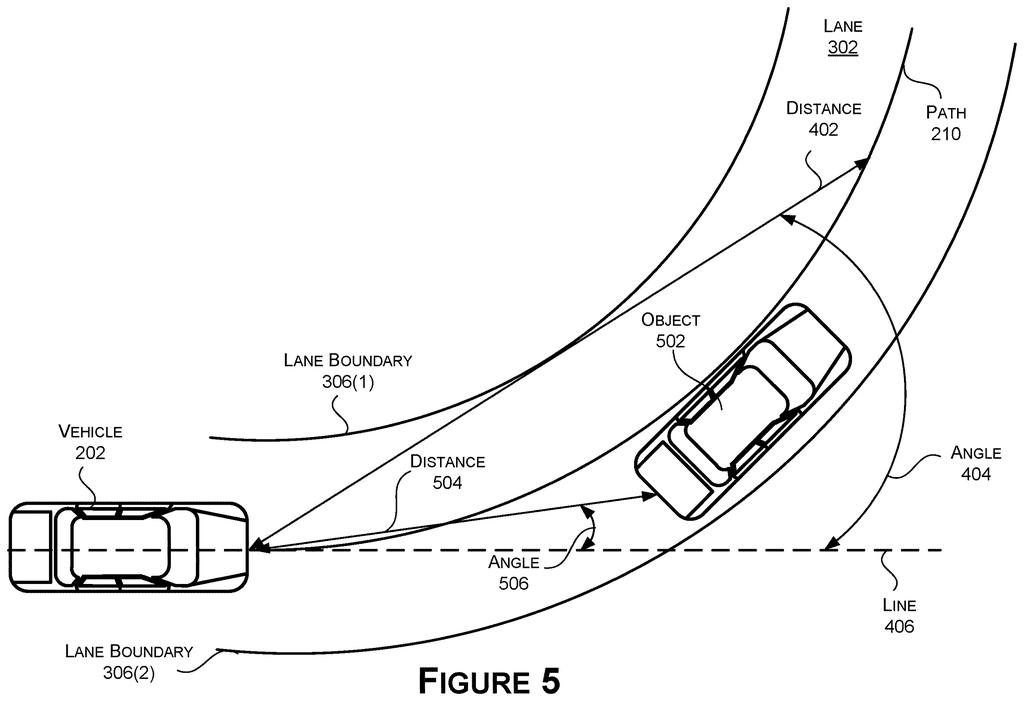
Nvidia's patent tackles that specific problem. The system draws a virtual lane around the car's actual predicted path, including the curves, not just a straight line ahead. Then it uses radar and lidar (sensors that bounce signals off nearby objects) to pinpoint where obstacles are and checks whether they fall inside that lane boundary.
If an object is inside the lane, the car treats it as a real hazard and responds. If it's outside, the car can mostly ignore it. The goal is cleaner, more confident decisions so the vehicle brakes or steers when it genuinely needs to, not whenever anything shows up nearby.
… determine, based at least on the distance and the location associated with the object, whether the object is located along the path; and perform, based at least on whether the object is located along the path, one or more planning, navigation, or control operations.
Translation: The vehicle figures out if something is blocking its route and decides how to react.
How the system maps a lane and locates objects in it
The patent describes a pipeline running on an autonomous or semi-autonomous vehicle's onboard hardware, including CPUs, GPUs, and dedicated accelerators.
Here's roughly how it works step by step:
- Build a path: The vehicle uses inertial measurement unit (IMU) data (essentially a sensor that tracks acceleration and rotation, the same type in your phone) to calculate the curve of the road it's currently following.
- Draw a lane: The system adds distance boundaries on both sides of that curved path to define a lane geometry. This is a dynamic, curved corridor, not a fixed straight box.
- Find objects: Using radar and lidar, the system determines the positions of nearby objects relative to the vehicle.
- Check membership: The system measures the distance along the path to a point further ahead and asks whether any detected object's location falls within that corridor.
Based on that yes-or-no answer, the vehicle's planning, navigation, and control systems decide how to respond. That might mean slowing down, steering around the object, or doing nothing at all because the object isn't a threat.
… the lane is generated or determined by determining a curvature of a path that the vehicle is navigating and then adding distance boundaries to both sides of the path.
Translation: It maps out the road's curves and sets safety boundaries on either side.
What this means for self-driving car safety decisions
For anyone riding in or near a self-driving vehicle, the practical difference here is between a car that second-guesses itself constantly and one that reacts with some confidence. A system that treats every nearby object as a potential emergency would brake erratically, which is both uncomfortable and potentially dangerous. Filtering by actual path membership is one way to make that behavior calmer and more predictable.
Self-driving technology lives or dies on the quality of its moment-to-moment decisions, and Nvidia occupies an interesting position here: it supplies chips and software infrastructure to many of the companies building these vehicles. A detection method like this, embedded in platform-level hardware, could influence how a wide range of cars behave. Nvidia's autonomous-vehicle filings are among the latest Big Tech patents showing how chip makers are moving further up the stack into driving logic itself.
This is the 42nd Nvidia filing we've tracked since May in the self-driving sensing race, joining one on selective restarts and one on road hazard mapping.
The clearest sign a self-driving car is working well is that you stop noticing it. This patent targets one of the most noticeable failures: the car flinching at a trash can on the shoulder, or hesitating near a parked truck that poses no actual threat.
The fix is geometric. The car uses its own motion through a curve to draw a lane around itself, then checks whether a detected object falls inside that boundary. If it does, the car responds. If it doesn't, the car holds its course.
Passengers feel this as confidence. Fewer unnecessary slowdowns, fewer moments where the car seems uncertain about nothing. That steadiness is what separates a system people trust from one they tolerate.
Get our take in your Top Stories
Liked this breakdown? Add Patentlyze as a preferred source on Google, and our plain-English take shows up more often in your Top Stories the next time Nvidia patent news breaks.
There are more where this came from
We read every patent application Big Tech publishes and send you the ones worth knowing. Plain English, free, every week.
The drawings
15 drawing sheets from US 2026/0249886 A1 · click any drawing to enlarge


Want this weekly breakdown for a company we don't cover? Patentlyze Pro →
Be the first to weigh in