
Nvidia Patents a System for Steering Autonomous Vehicles via VR Headset
When a self-driving car hits a situation it can't handle, Nvidia's patent describes handing the wheel to a human operator wearing a virtual reality headset miles away, seeing exactly what the car sees.
How Nvidia's remote VR vehicle control actually works
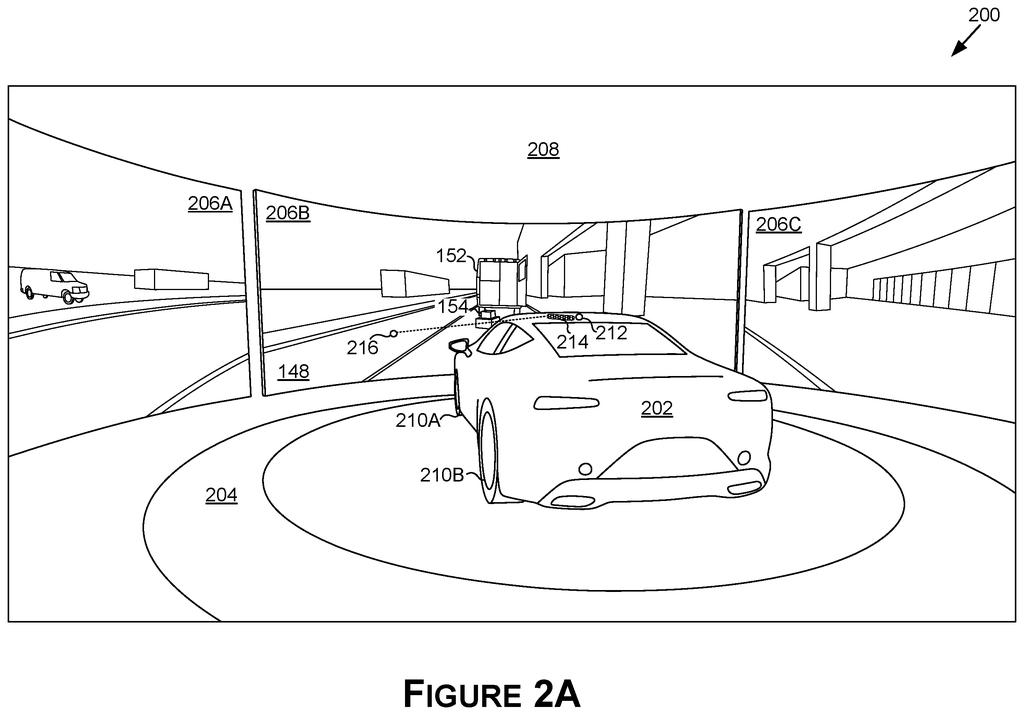
Imagine you're a passenger in a self-driving car and it stops dead because it can't figure out a confusing construction zone. Under Nvidia's patented approach, the car could silently pass control to a remote human operator sitting in a room somewhere, wearing a VR headset that shows a live 3D view from the car's cameras and sensors.
That remote operator looks around by moving their head, and the system pays attention to where they're looking. It only sends the sensor data that matches the direction the operator is facing, so the connection doesn't get overwhelmed trying to stream everything at once.
The operator then provides steering or speed inputs, and the car responds in real time. Once the tricky situation is resolved, control can return to the autonomous system. It's a fallback plan baked into the car's software rather than something bolted on afterward.
… determine, based at least on one or more conditions associated with generating a virtual reality visualization of the environment at a remote-control system, a subset of the sensor data from among the sensor data, the one or more conditions including at least an orientation of a virtual reality headset of a remote operator …
Translation: The system figures out what data to send based on where the remote operator is looking in their headset.
How the system picks which sensor data to stream
The patent describes a system built around one core idea: selective data transmission keyed to the remote operator's head position.
Here's how the pieces fit together:
- The vehicle's sensors (cameras, lidar, radar) continuously collect data about the surrounding environment.
- The system monitors the orientation of the VR headset worn by the remote operator, meaning it tracks which direction they're physically looking.
- Instead of streaming the full firehose of sensor data over the network, the system identifies a subset of data that corresponds to what the operator is actually facing, reducing the bandwidth load significantly.
- That subset is encoded and transmitted to the remote control station, where it's rendered inside the VR headset as a real-time 3D visualization of the car's environment.
- The operator's physical control inputs (steering, acceleration, braking) are sent back to the vehicle as control data, which the car's actuators then execute.
The claim language specifies that the selection logic looks at "one or more conditions" for generating the VR visualization, with headset orientation listed as the key variable. This means the system is designed to be adaptive, potentially factoring in network quality or scene complexity as additional triggers. The filing names Nvidia CEO Jen-Hsun Huang among the inventors, which is unusual and signals this is considered strategically important inside the company.
Control data may be received by the vehicle and from the control system that may be representative of a control input(s) from the control system, and actuation by an actuation component(s) of the vehicle may be caused based on the control input.
Translation: The vehicle moves based on the driving commands sent back from the remote operator.
What this means for self-driving cars that get stuck
Self-driving vehicles still fail in unexpected situations, and the industry has not found a clean answer to the question of what happens in those moments. A remote human operator with a VR view of the scene is a more practical fallback than simply stopping the vehicle and calling for a tow. The bandwidth-reduction approach described here is important because streaming raw sensor data from a car in real time is genuinely expensive and slow, and that cost has been a practical barrier to making remote operation actually work.
Nvidia is already deep inside most autonomous vehicle programs through its DRIVE platform, so a remote-operation system that runs on the same hardware stack would be a natural extension of that business. The VR angle also suggests Nvidia is thinking about how its GPU and headset-adjacent chip work connects to vehicles, not just gaming. For anyone tracking where the self-driving industry is heading, this filing sits alongside the broader wave of Big Tech patent news around autonomous vehicle infrastructure, where the real engineering bets are being placed well before any product ships.
This is the 43rd Nvidia filing we've tracked since May in our self-driving sensing race watch, following one on object path detection and one on selective vehicle restart.
The problem this patent attacks is one of the most expensive and embarrassing ones in the autonomous vehicle world: cars that simply stop when they encounter something unfamiliar, stranding passengers and blocking traffic. That failure mode has cost the industry real credibility, and no software update has solved it because the edge cases are, by definition, unpredictable. Remote human operation is a known fix for this, but it has historically run into a hard wall: you can't stream a car's full sensor output over a mobile network without massive lag or packet loss, and lag in a vehicle control loop is dangerous.
The headset-orientation trick described here is a practical engineering answer to that wall, not a flashy one, and that's what makes it interesting. What's notable is that Jen-Hsun Huang appears as a named inventor. CEOs are sometimes added to patents for political reasons inside large companies, but it also signals that Nvidia sees remote vehicle operation as a direction worth attaching its most senior name to.
The approach matches the size of the problem reasonably well, though the harder questions, like regulatory approval for remote operation and liability when something goes wrong, are nowhere in this document.
Get our take in your Top Stories
Liked this breakdown? Add Patentlyze as a preferred source on Google, and our plain-English take shows up more often in your Top Stories the next time Nvidia patent news breaks.
There are more where this came from
We read every patent application Big Tech publishes and send you the ones worth knowing. Plain English, free, every week.
The drawings
14 drawing sheets from US 2026/0252073 A1 · click any drawing to enlarge


Want this weekly breakdown for a company we don't cover? Patentlyze Pro →
Be the first to weigh in