
Nvidia Patents a Way to Lock Encryption Keys Where Apps Can Never Reach Them
Nvidia is filing patents around a cryptographic architecture where an app can encrypt or decrypt data without ever seeing — or even knowing — the actual key it's using. The whole key management layer lives inside a hardware-isolated environment the app can't touch.
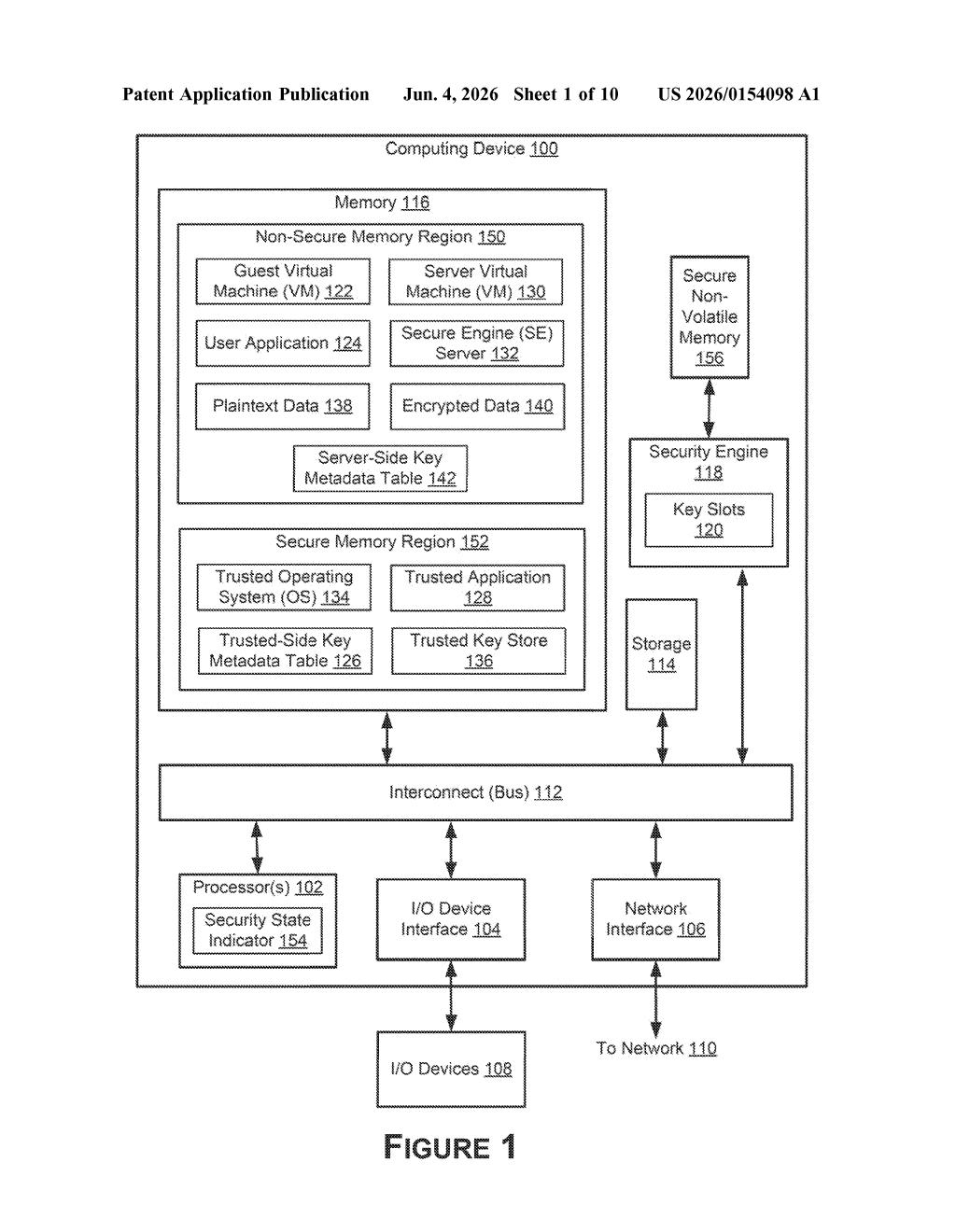
How Nvidia locks encryption keys away from apps
Imagine handing a sealed envelope to a secure vault and saying, 'Use my key to sign this' — and the vault does the job and hands back the result, but never lets you near the key itself. That's the core idea here.
Nvidia's patent describes a setup where an application running inside a virtual machine (a software-isolated computing environment) can ask for an encryption operation to be performed. But instead of handing the app the actual encryption key, the system gives it a temporary nickname — an ephemeral key identifier — that gets resolved inside a secure, hardware-protected zone the app can't access directly.
The actual key never leaves that secure zone. The app sends data in, the secure zone does the crypto work, and only the result comes back out. If the app is compromised, an attacker can't steal the key — because it was never accessible to the app in the first place.
How ephemeral key IDs map to real cryptographic slots
The system sits between a virtual machine (VM) and a trusted execution environment (TEE) — a hardware-enforced secure zone, like Nvidia's Hopper GPU Confidential Computing feature or similar CPU-based enclaves. The TEE stores and manages actual cryptographic keys in numbered key slots.
When an app inside a VM wants to encrypt or sign something, it sends a request using an ephemeral key identifier — essentially a temporary, opaque alias for a real key. A lookup layer, using key metadata provided by the TEE, translates that alias into a specific key slot identifier. The actual key material lives in that slot inside the TEE and never surfaces outside it.
The TEE performs the cryptographic operation (encryption, decryption, signing, etc.) on the source data using the key in the resolved slot, then returns only the result to the requesting application. The indirection through ephemeral identifiers means:
- Apps can't enumerate or guess which key they're using
- Keys can be rotated or revoked without changing app-facing identifiers
- A compromised VM gains no key material even if it's fully controlled by an attacker
This architecture is particularly relevant to autonomous systems — vehicles, robots, inference servers — where multiple tenants or workloads may share GPU infrastructure and key isolation becomes a safety-critical concern.
What this means for autonomous vehicle and AI security
Autonomous vehicles and AI inference platforms increasingly run multiple workloads on shared GPU hardware. If one workload is compromised, you don't want it to be able to pull cryptographic keys used to authenticate sensor data, sign OTA updates, or access secured model weights. Nvidia's architecture creates a clean boundary: the TEE holds the real keys, and everything outside it only ever gets temporary, meaningless aliases.
For fleet operators or cloud AI providers using Nvidia hardware, this kind of key isolation is foundational to meeting compliance standards like FIPS 140-3 and hardware root-of-trust requirements. It also maps neatly to Nvidia's existing Confidential Computing push on Hopper and Blackwell GPUs — suggesting this patent is less about a future product and more about formalizing an architecture already in motion.
This is genuinely important infrastructure work, not a flashy consumer-facing patent. Key isolation in virtualized GPU environments is a real unsolved problem for autonomous systems and multi-tenant AI deployments, and Nvidia is clearly thinking carefully about the security architecture underneath its platform ambitions. Worth tracking if you care about how AI inference security actually gets implemented.
There are more where this came from
We read every patent application Big Tech publishes and send you the ones worth knowing. Plain English, free, every week.
Want this weekly breakdown for a company we don't cover? Patentlyze Pro →