
Nvidia Files Patent for Cars That Spot Speed Bumps and Potholes Before Hitting Them
Nvidia's filing describes a car that measures the height of the road ahead and slows for speed bumps and potholes. It does this without a map of past bumps or a trained image model.
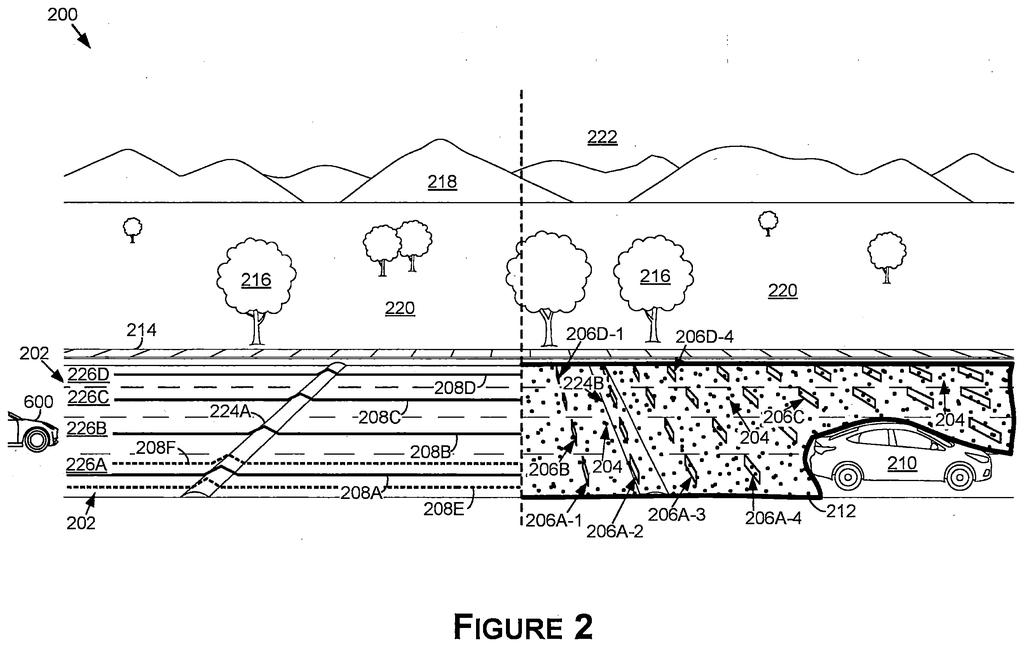
What Nvidia's bump-spotting patent describes
Ever hit a speed bump you didn't see coming, with a full cup of coffee in the cupholder? Nvidia's patent filing describes a way for a car to spot the bump early and ease off before the jolt.
The idea is to turn what the car's sensors pick up into a rough height map of the road ahead. Anything that isn't road (parked cars, sidewalks, trees, people) gets ignored, so only the pavement is left. The system then measures how high the surface sits at small steps along your lane. A hump shows up as a rise in that line, and a pothole as a dip.
With that information, the car can slow down, adjust its suspension, or even steer to cross the bump at a better angle. It can also warn passengers so they can grab the coffee or secure a child or a pet. The filing says it does not depend on a map of past bumps, so a brand-new one still gets caught.
determine, based at least on sensor data obtained using the plurality of external sensors, one or more locations of at least one of a protuberance or a cavity within an environment; and perform one or more planning, navigation, or control operations based at least on the one or more locations of the at least one of the protuberance or the cavity.
Translation: The vehicle finds bumps and holes using its sensors and then adjusts how it drives to handle them.
How Nvidia's system measures road height, step by step
The claims cover a car or other machine with CPUs, GPUs and hardware accelerators (chips built for specific heavy tasks), plus several kinds of external sensors. It finds where a protuberance (a bump) or a cavity (a dip or hole) sits, then uses that location for planning, navigation or control. Further claims add the bump's shape and orientation, and a height threshold test.
The description's main method starts with a 3D point cloud, a swarm of dots that each have a position in space. It can come from lidar or radar, or from a single camera using structure from motion (matching features across frames as the car moves to work out depth). Then:
- Points outside the drivable area (sidewalks, other cars, trees) are filtered out.
- A flat reference plane for the road is estimated, so height can be measured from it.
- A sliding window of boxes moves along the lane, recording the height of the points in each box.
- Those heights form a 1D signal, a single line tracing the road's rise and fall.
- Peaks above a threshold count as bumps.
Comparing signals from neighboring lines gives the bump's orientation and length. The boxes are capped near the tallest expected bump, which screens out cars and people.
The 3D point cloud may be analyzed—e.g., using a sliding window of bounding shapes along a longitudinal or other heading direction—to determine one-dimensional (1D) signal profiles corresponding to heights along the driving surface.
Translation: The system scans 3D data to measure the exact height of the road ahead and map any surface bumps.
Why Nvidia's bump patent matters for ride comfort
For you, the payoff is a gentler ride and a car that lasts longer. The background section says that hitting a bump at speed puts extra force on the chassis, suspension and axles, and that passengers feel it. Slowing down early or adjusting the suspension ahead of time avoids both. The filing also suggests alerting people in the cabin so they can steady a drink or secure a child or pet.
The method avoids relying on a map of earlier bumps, so a fresh pothole or an unmapped road would still get handled. This filing is a continuation of an application first filed in 2020, and its claims also list robots, simulation and cloud setups, so the idea reaches beyond passenger cars.
Nvidia's 89th filing we've tracked since May in our self-driving sensing race watchlist follows its work on teaching radar to replace lasers and finding objects by name.
The whole system rests on the quality of its 3D dot-map of the road ahead. The filing openly admits that map can come out thin and patchy, then adds an extra step to fill the gaps, which is an honest acknowledgment of where things can go wrong.
Every measuring box size and sensitivity setting is chosen by hand rather than learned from data, so a miscalibrated setting could average a real bump into nothing.
That said, the stakes here are low: a false alarm means a slightly smoother slowdown, and a miss means a small jolt. For a feature built around passenger comfort and protecting the vehicle, simple and auditable beats sophisticated and opaque.
Get our take in your Top Stories
Liked this breakdown? Add Patentlyze as a preferred source on Google, and our plain-English take shows up more often in your Top Stories the next time Nvidia patent news breaks.
There are more where this came from
We read every patent application Big Tech publishes and send you the ones worth knowing. Plain English, free, every week.
The drawings
13 drawing sheets from US 2026/0320816 A1 · click any drawing to enlarge


Show the other 5 sheets


Want this weekly breakdown for a company we don't cover? Patentlyze Pro →
Be the first to weigh in