
Nvidia
Nvidia · Automotive · Filed Jul 22, 2026 · USPTO published Nov 19, 2026 · This week's release
Nvidia Patents a Voting System That Double-Checks Where a Self-Driving Car Thinks It Is
A self-driving car that trusts a single sensor can be fooled by one bad view. Nvidia's patent application has the car blend many sources into one guess, then makes trusted backup systems vote on whether that guess is safe to follow.
- Publication number
- US 2026/0365200 A1(US20260365200A1)
- Applicant
- Nvidia Corporation
- Filed · Published
- Jul 22, 2026 · Nov 19, 2026
- Inventors
- Aidin Ehsanibenafati, Jonas Nilsson, Amir Akbarzadeh, Hae Jong Seo
- Status when we published
- Waiting for an examiner
- Document
- 20 claims
- US classification
- 701/23
- Parent application
- Continuation of 17/483,019 (filed Sep 23, 2021)(17483019)
What Nvidia's self-driving voting check does
You're riding in a self-driving car on a rainy highway, and spray from a truck blurs what the front camera can see of the lane lines. The car still has to know exactly where it is and where the road goes. A wrong guess could put it in the wrong lane.
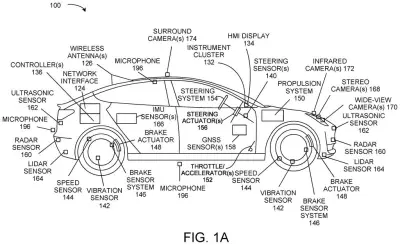
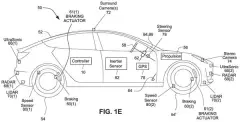
Nvidia's patent application describes a way to blend several sources, such as cameras, radar, lidar (a laser-based sensor) and stored high-detail maps, into one best guess. Then comes the safety check: the blended guess is only used if at least two separate, trusted sources agree with it. Think of it as a small panel of voters.
If the vote fails, the car falls back on one of the individual sources. If a sensor goes dark for a few seconds, the car can estimate its position from its speed and its last good reading. The goal is a ride that is smooth and also meets strict safety rules.
… one or more arbiter components processing two or more outputs of two or more discrete processing components of the plurality of processing components that independently perform path-related processing for the machine …
Translation: Multiple computer chips independently calculate where the car should go, and a referee chip checks their work.
How the car blends sensors and checks the blend
The claims cover a machine with three kinds of processors (CPUs, GPUs and hardware accelerators) in which an arbiter (a referee component that decides which answer to trust) takes the outputs of two or more separate components that each work out the path on their own. The claims say at least one resulting operation can meet ASIL D, the strictest automotive safety rating.
The description fills in the steps:
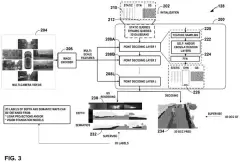
- Each source, such as a camera or radar, makes its own position estimate, and a fusion step blends them.
- Comparators (the filing calls them "voters") check the blend against the individual estimates, and at least two must agree.
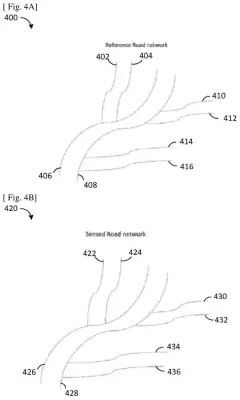
- The same trick runs on the lane graph, a digital map of lane centers and edges built from stored map data and live sensor views.
- If confidence falls below a threshold, the car swaps in the most confident individual answer.
The filing splits the safety burden so the blending step can stay flexible, while the simple voting checks carry the strict rating. Dead reckoning (estimating position from the last good reading plus speed and heading) covers short gaps of a few seconds. Other claims add a second, parallel path generator, and the description adds a second control unit fed by satellite data that can take over.
… as long as at least two comparators agree with the fused localization data, the fused localization data can be used and verified to be safety regulation compliant …
Translation: If at least two independent checks match the car's calculated location, the system confirms it is safe to use.
What this means for smoother self-driving rides
If you ever ride in a self-driving car, you want two things: safety and a ride that doesn't lurch. The filing's background says that proving every individual part meets the top safety rating is costly, and that playing it safe at every step can give a ride that is safe but not pleasant. Blending sources lets the car steer more smoothly, while the vote keeps a safety check in place.
For Nvidia, the pitch is less development and testing effort, since only the simple checking parts need the strictest proof. The filing also covers robots, not only cars, and mentions running on edge devices or in a data center. A patent application is not a product, and nothing here says when a car would use it.
That makes this Nvidia's 116th filing we've tracked since May in our self-driving sensing race watchlist, adding to earlier applications like the radar chip that pre-processes data and blocked sensor detection.
Source: US 2026/0365200 A1 at the USPTO (PDF). Full patent text and figures are in the official publication.
Get our take in your Top Stories
Liked this breakdown? Add Patentlyze as a preferred source on Google, and our plain-English take shows up more often in your Top Stories the next time Nvidia patent news breaks.
Add Patentlyze on Google
One click.
There are more where this came from
We read every patent application Big Tech publishes and send you the ones worth knowing. Plain English, free, every week.
The drawings · 22 sheets
22 drawing sheets from US 2026/0365200 A1 · click any drawing to enlarge


Show the other 14 sheets


More from Nvidia
All 665 Nvidia patents →
More in Automotive
All 377 Automotive patents →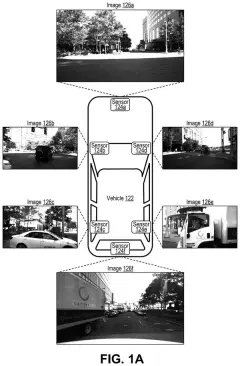
Qualcomm
Qualcomm Patents a Car Vision System That Reads Roads Without a Fixed Grid
Qualcomm
Qualcomm Files Patent for a Self-Driving Car That Explains Moves You Once Overrode
Qualcomm
Qualcomm Patents a Self-Driving Vision System That Spends Less Effort on Parked Cars
Qualcomm
No comments yet