
OpenAI
OpenAI · AI / ML · Filed Sep 10, 2025 · USPTO published Nov 19, 2026 · This week's release
OpenAI Files Patent for Locking an AI Coder Offline Before It Touches Your Code
Before an AI coding assistant touches your project, this OpenAI filing has the system download everything it needs and then cut the internet cord.
- Publication number
- US 2026/0367886 A1(US20260367886A1)
- Applicant
- OpenAI OpCo, LLC
- Filed · Published
- Sep 10, 2025 · Nov 19, 2026
- Inventors
- Fotios Chantzis, Channing Conger, Joshua Ma
- Status when we published
- Waiting for an examiner
- Document
- 20 claims
- US classification
- 717/106
- Parent application
- Claims priority from a provisional application 63806537 (filed May 15, 2025)
What OpenAI's offline AI coding sandbox does
Imagine you hire a contractor to fix your company's software and hand over the keys to your codebase, passwords included. You would want to be sure they can't copy anything and send it out the door. That is the worry behind this OpenAI patent application.
OpenAI's answer is to give the AI coder a sealed workspace. First, the system sets up the workspace and downloads everything the project needs while internet access is still on. Then it switches the internet off. Only after that does the AI get to work, reading code, running tests and making edits inside the closed room.
When it finishes, the system saves a summary of what changed and a log of every command, so a person can review it before anything reaches the real project.
… after the container has started, retrieving the packages identified by the repository to build a build target identified by the repository; and after the packages are retrieved, disabling the network interface.
Translation: The system downloads necessary code dependencies first, and then instantly cuts off all internet access.
How the internet gets switched off mid-setup
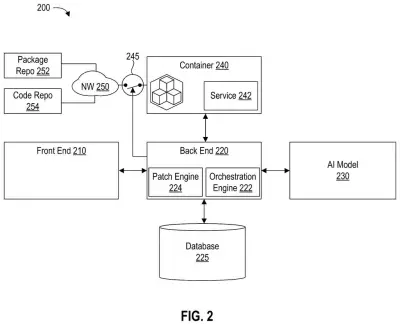
The system starts with a container, a self-contained mini computer environment that runs on a server and is walled off from the machine hosting it. Inside it sits a small service the AI model can talk to over an internal connection, plus a regular connection to the public internet.
While the internet is still on, the container copies down the project's repository (the folder holding its code and history), using stored passwords if the repository is private. It then installs the packages the repository lists, meaning the outside code libraries needed to build the finished app or tool. Users can add their own startup script, and it runs before the internet is cut.
Next comes the key step: the system disables the external connection. The AI then works through the internal link only, such as a terminal for running commands and tests, or an interface for editing files. The description says a stray command could otherwise upload code to an outside server or fetch harmful software.
When the AI finishes, the system:
- Pulls out a summary of the changed files and a log of what the AI did
- Stores that in a database
- Shuts the container down
The filing also describes an alternative where a proxy (a gatekeeper server) allows only certain websites instead of blocking everything.
Why sealed workspaces matter for AI coders
If you ever let an AI assistant work on private code, the big question is what it can reach. This design gives a simple rule: the AI gets the files and tools it needs, and no path to the outside world. A tricked or misbehaving model has nowhere to send your code or passwords.
The filing also describes running several of these workspaces at once, one adding sign-in, another adding a database, a third building a feature, so a person can supervise a small crew of AI helpers. Each result comes back as a reviewable list of changes, which keeps a human in the loop before anything is merged.
This is the 13th OpenAI filing we've tracked in our AI guardrails watchlist since September, adding to earlier applications like one blocking passwords from AI and one sandboxing AI code review.
Source: US 2026/0367886 A1 at the USPTO (PDF). Full patent text and figures are in the official publication.
Get our take in your Top Stories
Liked this breakdown? Add Patentlyze as a preferred source on Google, and our plain-English take shows up more often in your Top Stories the next time OpenAI patent news breaks.
Add Patentlyze on Google
One click.
There are more where this came from
We read every patent application Big Tech publishes and send you the ones worth knowing. Plain English, free, every week.
The drawings · 12 sheets
12 drawing sheets from US 2026/0367886 A1 · click any drawing to enlarge


Show the other 4 sheets


More from OpenAI
All 58 OpenAI patents →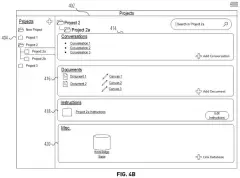
More in AI assistant & agent
All 436 AI assistant & agent patents →
Salesforce
Salesforce Files Patent for Automated Bots That Shut Themselves Off When Accuracy Drops
IBM
IBM Patents a Memory System to Help AI Follow Facts Across Long Texts
IBM
IBM Patents a Panel of AI Judges to Grade Chatbot Answers
Amazon
No comments yet