
Philips Hue
Philips Hue · Gear · Filed Nov 24, 2025 · USPTO published Nov 19, 2026 · This week's release
Signify Files Patent for a Streetlight With a Stretchy Rubber Skin Instead of Metal
Most streetlights wear a heavy shell of cast aluminum. Signify's patent application proposes a stretchy rubber skin inflated from the inside with foam instead.
- Publication number
- US 2026/0366704 A1(US20260366704A1)
- Applicant
- SIGNIFY HOLDING B.V.
- Filed · Published
- Nov 24, 2025 · Nov 19, 2026
- Inventors
- MICHAL JAN HORACZEK, PETER JOHANNES MARTINUS BUKKEMS, QUINTEN LENNART CONSTANT STEFAN VAN WAGENBERG, MARK ANDRE DE SAMBER, COEN THEODORUS HUBERTUS FRANSISCUS LIEDENBAUM, JACOBUS PETRUS JOHANNES VAN OS
- Status when we published
- Waiting for an examiner
- Document
- 13 claims
- US classification
- 362/249.01
- Examiner
- CATTANACH, COLIN J (Art Unit 2875)
- Parent application
- National Stage Entry of PCT/EP2024/063315 (filed May 15, 2024)(PCTEP2024063315)
What Signify's rubber-skinned streetlight does
You're walking home under a streetlight when a soccer ball slams into it. Today's version is usually a heavy shell of cast aluminum, built to survive that kind of hit along with rain, dust and years of vibration.
Signify's patent application swaps the metal shell for a stretchy rubber skin. Inside sits a small, rigid core that holds the LEDs. The gap between the core and the skin gets filled with something like foam, which pushes the rubber out until it's tight and gives the light its final shape. Think of a balloon that keeps its form because of what's inside it.
The company says the result is lighter, needs fewer parts and screws, and can still shrug off weather and knocks.
… wherein the outer housing part is made from a flexible material, wherein a space between the inner housing part and the outer housing part comprises a filler material, and wherein the filler material comprises one or more of a material forming an expanding foam, a granular material, a fibrous material, a liquid, and a curable material …
Translation: The flexible outer shell is filled with materials like foam, liquid, or tiny grains to give it shape.
How the foam stretches the rubber shell tight
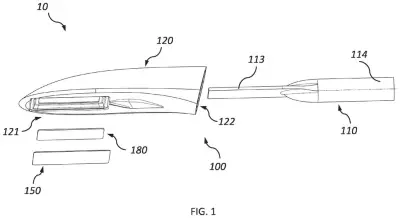
The patent covers a luminaire (the industry word for a complete light fixture) built in two layers. An inner housing acts as the skeleton: it's rigid, made of metal or plastic, holds the LED lighting unit, and can double as a heat sink and as the part that attaches to a pole. An outer housing made of a stretchable material such as rubber encloses it.
The space between the layers is packed with a filler material. Claim 1 lists an expanding foam, a granular material, a fibrous material, a liquid, or a curable material (one that starts runny and then hardens). The filler pushes the rubber into a stretched state, and together they set the fixture's outer shape. The description names examples such as polyurethane foam, polystyrene balls, wool, fabric scraps and oil.
A second independent claim covers how to build it:
- Mount the LED unit in the inner housing.
- Stretch the rubber shell and slide the core inside, so the light lines up with the opening.
- Blow, pour or inject the filler so the rubber ends up taut.
Dependent claims add rubber that lets radio signals pass through, a sealed lighting unit, several ways to join the layers (including a zip-style seal), impact protection, and use as a streetlight.
The invention provides a luminaire ( 10 ) comprising a housing ( 100 ) for mounting the luminaire ( 10 ) to a support ( 50 ), the housing ( 100 ) having a light exit window ( 150 ), and a lighting unit ( 180 ) arranged to emit light through the light exit window ( 150 ).
Translation: The design covers a light fixture attached to a pole with a clear window for the light to shine through.
What a lighter streetlight means for poles
For cities and anyone who maintains outdoor lighting, the pitch is a lighter fixture that's easier to hang on a pole. The description says the lower weight may allow thinner poles, and that the rubber shell could help damp vibration in high winds. Because rubber can be molded in different colors, it also skips the powder coating step that aluminum fixtures need.
The rubber also lets radio signals through, so wireless modules and sensors can sit inside the fixture and still send and receive. The filing adds that easy-access compartments allow low-skilled repair and upgrades, and that recyclable fillers could be used. It's a patent application, so none of this means a product is on the way.
Source: US 2026/0366704 A1 at the USPTO (PDF). Full patent text and figures are in the official publication.
Get our take in your Top Stories
Liked this breakdown? Add Patentlyze as a preferred source on Google, and our plain-English take shows up more often in your Top Stories the next time Philips Hue patent news breaks.
Add Patentlyze on Google
One click.
There are more where this came from
We read the new patents from Big Tech, carmakers and more and send you the ones worth knowing. Plain English, free, every week.
The drawings · 6 sheets
6 drawing sheets from US 2026/0366704 A1 · click any drawing to enlarge


More from Philips Hue
All 2 Philips Hue patents →More in Gear
All 26 Gear patents →
SharkNinja
SharkNinja Patents a Single Valve That Pours Your Seltzer and Releases Leftover Gas
Roborock
Roborock Files Patent for a Brush Cover That Won't Latch Shut Without the Brush
Roborock
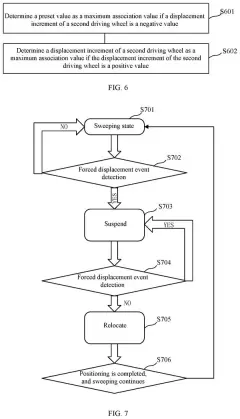
Roborock Patents a Robot Vacuum That Notices When You Pick It Up or Push It
Lutron
No comments yet