
Roborock
Roborock · Gear · Filed Jul 2, 2026 · USPTO published Nov 19, 2026 · This week's release
Roborock Files Patent for a Brush Cover That Won't Latch Shut Without the Brush
Forget to put the brush back in and this cover simply won't close. Roborock's filing also hides a hair-cutting blade inside, exposed only when the cover is on.
- Publication number
- US 2026/0363513 A1(US20260363513A1)
- Applicant
- Beijing Roborock Technology Co., Ltd.
- Filed · Published
- Jul 2, 2026 · Nov 19, 2026
- Inventors
- Zhiwei ZHOU
- Status when we published
- Waiting for an examiner
- Document
- 20 claims
- US classification
- 15/52.1
- Parent application
- Continuation of PCT/CN2024/120724 (filed Sep 24, 2024)(PCTCN2024120724)
What Roborock's brush cover actually does
You pull the cover off your cleaner to free a clump of hair from the brush roller, then snap everything shut and carry on. The brush is still sitting on the counter.
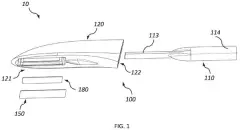
Roborock's patent application goes after that slip with a trick of shape. The two halves of the brush housing are built so they only fit together when the brush is actually inside. Leave it out and the parts physically refuse to latch, so you notice right away instead of finding out later.
The filing also describes a small blade near the end of the brush that cuts away tangled hair and thread. It pops out only when the two halves are connected and tucks back in when you open the cover, so a sharp edge isn't sitting next to your fingers while you work on the brush.
… the second housing provides an avoidance space for the first housing when the rolling brush is assembled inside the accommodating cavity, such that the first housing is connected to the second housing …
Translation: The cover fits into place when the rolling brush is installed.
How the cover refuses to close without a brush
The filing covers two linked ideas, and each has its own independent claim (the part of a patent that defines what it covers).
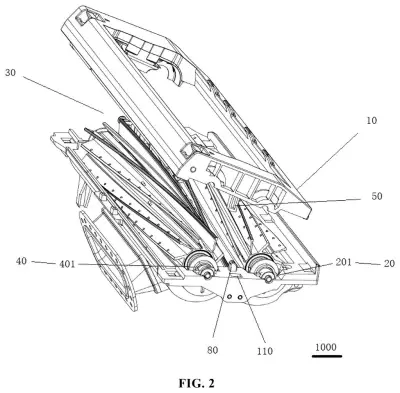
Idea one: a lock that checks for the brush. The cleaning module has two housings, roughly a holder and a cover, that clip together around the roller brush. One housing carries a small locking piece. The other has a chamber behind a shutter the filing calls a foolproof valve. When the roller sits in its groove, its end presses a trigger that rotates the shutter out of the way, giving the locking piece room to enter so the housings can snap together. Without the roller, a spring keeps the shutter closed and the pieces cannot join. With two side-by-side rollers, both must be in place before the opening is fully clear.
Idea two: a blade that only appears when the cover is on.
- A blade sits in a small holder (the cutting seat) on one housing.
- A pushing part on the other housing has a slanted face. As the halves join, the slope shoves a sliding piece, which compresses a spring and slides the blade out toward hair wrapped on the brush end or shaft.
- When you pull the halves apart, the spring draws the blade back in.
The filing says the blade could be metal, ceramic or synthetic diamond, with a curved or serrated tip, and a guard can shield part of the exposed edge. In a two-brush design, one pushing part can drive both blades.
What this changes when you clean the brush
If your cleaner has a roller brush, you know the routine: take the cover off, wrestle out the hair, put it back. This design aims at two ways that routine goes wrong. A brush you forgot to reinstall stops you from closing the cover, and a blade that hides whenever the cover is open keeps sharp metal away from your fingers while you clean.
The filing says hair that gets cut is flung off by the spinning brush and pulled into the dust box, which the company says helps the brush spin faster and clean better. The filing names no product, so whether any Roborock cleaner uses this is unknown. It also claims priority to Chinese applications filed in January 2024, so the ideas have been around for a while.
Roborock's fifth patent in home tech we've tracked since November adds to a run that includes one on a swinging side brush and one on a zoned mop cloth.
Source: US 2026/0363513 A1 at the USPTO (PDF). Full patent text and figures are in the official publication.
Get our take in your Top Stories
Liked this breakdown? Add Patentlyze as a preferred source on Google, and our plain-English take shows up more often in your Top Stories the next time Roborock patent news breaks.
Add Patentlyze on Google
One click.
There are more where this came from
We read the new patents from Big Tech, carmakers and more and send you the ones worth knowing. Plain English, free, every week.
The drawings · 29 sheets
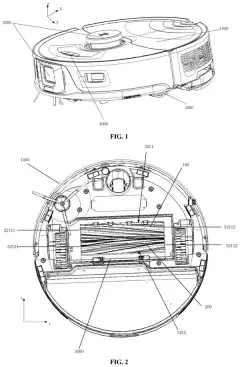
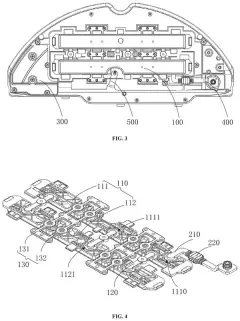
29 drawing sheets from US 2026/0363513 A1 · click any drawing to enlarge


Show the other 21 sheets


More from Roborock
All 7 Roborock patents →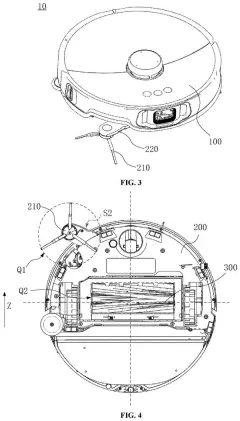
More in Gear
All 26 Gear patents →
SharkNinja
SharkNinja Patents a Single Valve That Pours Your Seltzer and Releases Leftover Gas
Lutron
Lutron Files Patent for a Wall Keypad With Separate Setup Buttons
Lutron
Lutron Patents a Clip-On Frame That Turns Old Wall Switches Into Smart Controls
Philips Hue
No comments yet