
Samsung Patents a Way to Run Calculations Inside Storage Chips Themselves
What if your hard drive could do math on your data before it ever leaves the chip? That's the core idea behind Samsung's latest storage patent — and it could quietly reshape how data centers handle massive datasets.
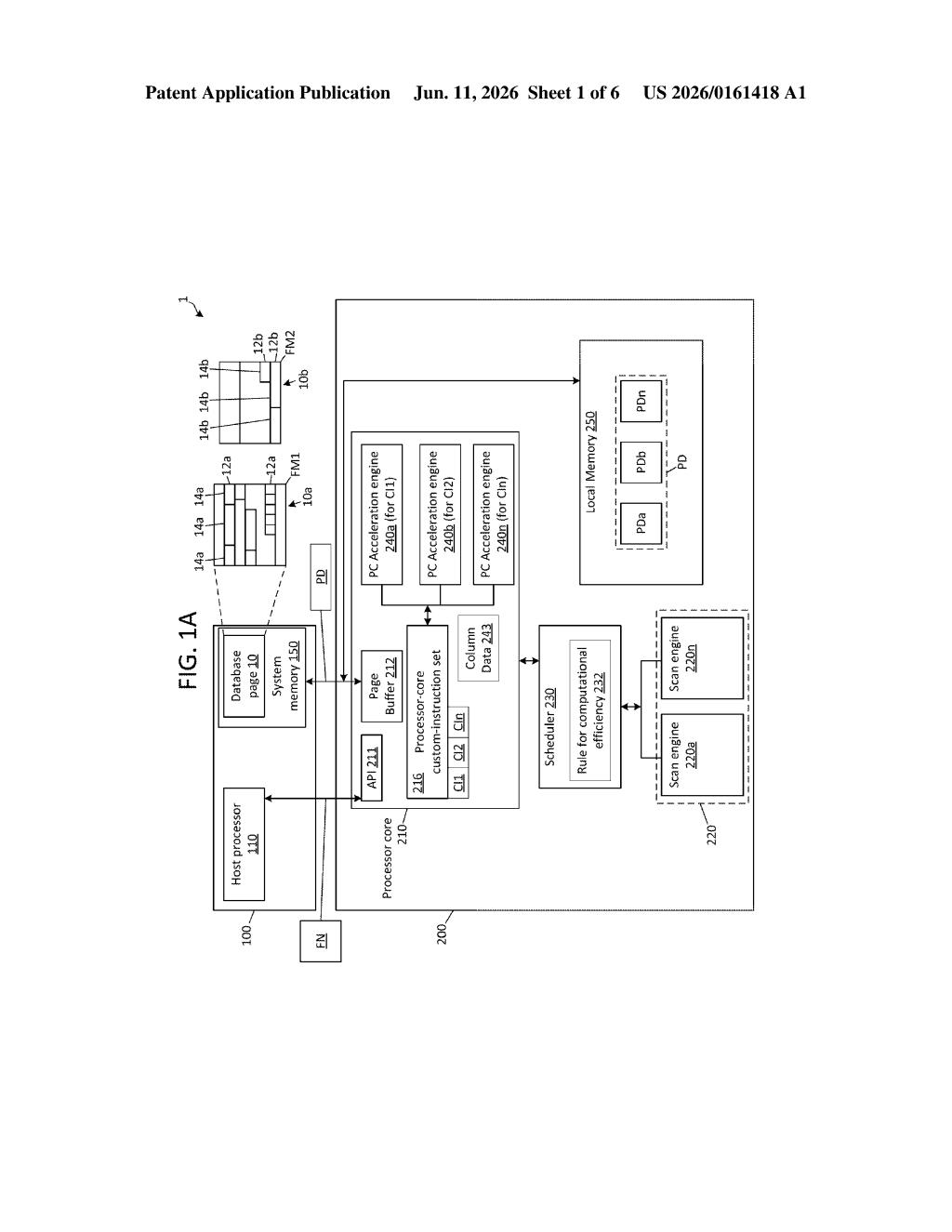
What Samsung's in-storage computing patent actually does
Imagine you have a massive pile of receipts in a filing cabinet, and every time you need a total, someone has to carry all those receipts across the building to an accountant, wait for the math to be done, then carry the results back. It's slow, and the hallway gets jammed. Now imagine the filing cabinet itself has a little calculator built in — it crunches the numbers right there, and only sends the answer down the hall.
That's essentially what Samsung is patenting here. Instead of shipping raw data from a storage device (think: a fast SSD) all the way to a computer's main processor, the storage device handles parts of the calculation on its own. It has a built-in acceleration engine for the first step, and a secondary circuit for the next step, all coordinated by custom instructions.
This approach — called computational storage or "near-memory computing" — is designed to reduce the traffic bottleneck between storage and processors, which is one of the biggest slowdowns in modern data-heavy systems like AI training rigs and large databases.
How the storage chip splits and handles each operation
The patent describes a computational storage device: a piece of storage hardware (like an SSD) that doesn't just hold data passively, but actively participates in processing it.
When a request comes in to perform a multi-step function on stored data, the work is divided:
- A processor-core acceleration engine — a specialized circuit baked into the storage chip's processor — handles the first operation, using custom instructions tailored to that chip.
- A separate extra-processor-core circuit — hardware that lives outside the main processor core but still inside the storage device — picks up the result and completes the second operation, also guided by those same custom instructions.
- The system is designed to handle data that arrives in a specific format, meaning it can be tuned to particular data types (like structured database rows or AI tensor data).
The "custom instructions" piece is important: rather than relying on generic processor commands, Samsung's design lets the storage chip execute specialized instructions optimized for its own hardware. This is similar to how a graphics card (GPU) uses its own instruction set instead of borrowing from the main CPU — it's just happening here inside a storage device.
The broader goal is to reduce the amount of raw data that needs to travel across the bus between storage and CPU, which is a well-known performance bottleneck in large-scale computing.
What this means for data centers and AI workloads
Data movement is one of the most expensive operations in modern computing — not just in time, but in energy. Every byte that has to travel from storage to a central processor consumes power and creates congestion. For AI workloads, database queries, and analytics pipelines that chew through terabytes at a time, shaving down that movement translates directly into faster results and lower electricity bills.
Samsung is one of the world's largest producers of NAND flash and DRAM, so a patent like this fits a clear strategic direction: making storage hardware smarter so that the whole system — not just the CPU — shares the computational load. If this approach ships in future Samsung SSDs or enterprise storage products, it could give data center operators a meaningful efficiency lever without replacing their entire server infrastructure.
This is a solid, infrastructure-level patent that won't make headlines in consumer tech circles but matters a lot in the data center world. Samsung is clearly betting that the next competitive frontier for storage isn't just speed or capacity — it's how much work the drive itself can do. That's a sensible long-term bet, and this patent is a concrete step in that direction.
There are more where this came from
We read every patent application Big Tech publishes and send you the ones worth knowing. Plain English, free, every week.
Want this weekly breakdown for a company we don't cover? Patentlyze Pro →