Qualcomm
Qualcomm · AI / ML · Filed Feb 18, 2026 · USPTO published Aug 27, 2026 · Aug 27 release
Qualcomm Patents a Way to Keep Only the Video Frames That Actually Matter for AI
Most AI video analysis wastes memory saving frames that don't matter. Qualcomm's new patent describes a system that scores each frame's importance and automatically tosses the low-priority ones before memory fills up.
- Publication number
- US 2026/0253407 A1(US20260253407A1)
- Applicant
- QUALCOMM Incorporated
- Filed · Published
- Feb 18, 2026 · Aug 27, 2026
- Inventors
- Munawar HAYAT, Titash RAKSHIT
- Status when we published
- Waiting for an examiner
- Document
- 30 claims
- US classification
- 382/156
- Parent application
- Claims priority from a provisional application 63764255 (filed Feb 27, 2025)
What Qualcomm's frame-priority memory system actually does
Imagine you're recording a long meeting on your phone and asking an AI assistant to summarize what happened. The AI has to process every single frame of that video, but storing all that processed data at once would flood your phone's memory fast.
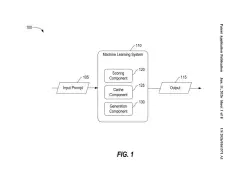
Qualcomm's patent describes a system that handles this by giving each processed frame a priority score. Higher-priority frames, ones where something significant happened, stay in memory. Lower-priority frames get dropped according to a set of rules called a retention policy. The AI keeps enough context to still understand the full video without holding on to everything at once.
The end result is that your device can run this kind of video-aware AI analysis locally, without sending everything to a cloud server, because it's being far more selective about what it holds in memory at any given moment.
use a vision encoder to process an image frame of a sequence of image frames to generate encoder output data …
Translation: An AI translates each video picture into mathematical data.
How the retention policy scores and prunes encoder output
The patent centers on what Qualcomm calls a vision encoder, a piece of software (or hardware-accelerated software) that converts raw video frames into compact data the AI can actually reason about. Think of it like a translator that turns a photograph into a short list of descriptive notes.
As the encoder processes each frame in a video sequence, it generates encoder output data for that frame. Normally, you'd store all of that output so the AI has a full picture of the video. The problem: that data accumulates fast, especially on a phone or embedded chip with limited memory.
Qualcomm's system adds two layers on top of that basic process:
- Retention priority: each frame's output gets a score reflecting how important it is to the overall analysis. A frame where nothing changes might score low; one with significant motion or a key moment scores higher.
- Retention policy: a set of rules the device applies to decide when and whether to drop lower-priority frames from memory.
The result is a dynamic memory buffer. The device constantly evaluates what it's holding, keeps what's essential for image-based cognitive analysis (meaning tasks like summarizing, recognizing, or reasoning about video content), and discards the rest. The AI still gets enough data to do its job without the memory bill of storing every frame.
… based on a retention policy and a retention priority of the encoder output data, determine whether to remove the encoder output data from the image analysis data …
Translation: The system decides which frames to keep and which to throw away based on their importance.
What this means for AI running on phones and edge devices
For anyone using AI features on a phone or a lightweight device, this kind of patent targets a very real constraint: local AI processing eats memory, and memory is finite. A system that intelligently prunes its own working data means longer video clips can be analyzed on-device, with less risk of the AI crashing or slowing down because it ran out of room. You'd notice the benefit most in applications like always-on camera analysis, personal AI assistants that watch your screen, or real-time video Q&A on a mobile device.
Qualcomm is primarily a chip designer, and this patent fits squarely into the company's push to run capable AI directly on the hardware it sells to phone makers and device manufacturers. The efficiency angle matters a lot when you're targeting mid-range phones, not just flagship models. Qualcomm's approach here is part of a broader wave of on-device AI memory optimization covered across new tech patents from chip and mobile platform companies working to shrink the gap between cloud-level AI capability and what a pocket-sized device can actually handle.
That makes this Qualcomm's 41st filing we've tracked in our AI chip wars watchlist since July, adding to work like their camera frame-skipping patent and their chip memory sleep mode.
Source: US 2026/0253407 A1 at the USPTO (PDF). Full patent text and figures are in the official publication.
Get our take in your Top Stories
Liked this breakdown? Add Patentlyze as a preferred source on Google, and our plain-English take shows up more often in your Top Stories the next time Qualcomm patent news breaks.
Add Patentlyze on Google
One click.
There are more where this came from
We read the new patents from Big Tech, carmakers and more and send you the ones worth knowing. Plain English, free, every week.
The drawings · 16 sheets
16 drawing sheets from US 2026/0253407 A1 · click any drawing to enlarge


Show the other 8 sheets


More from Qualcomm
All 637 Qualcomm patents →
More in AI assistant & agent
All 436 AI assistant & agent patents →
IBM
IBM Patents a Memory-Saving Compression System for AI Text Generation
Samsung
Samsung Patents a Technique to Train AI That Learns Your Preferences Faster
IBM
IBM Patents Smarter AI Training That Allocates More Memory to Harder-Working Connections
Amazon