
Qualcomm
Qualcomm · AI / ML · Filed Sep 9, 2025 · USPTO published Nov 12, 2026 · This week's release
Qualcomm Files Patent for a Robot Brain With Fast and Slow Thinking Modes
Qualcomm's AI for robots can either plan a task step by step or skip the planning and just move, and you can tell it which to do. If it plans, you get to read the plan and fix it before anything happens.
- Publication number
- US 2026/0358811 A1(US20260358811A1)
- Applicant
- QUALCOMM Incorporated
- Filed · Published
- Sep 9, 2025 · Nov 12, 2026
- Inventors
- Pietro Mazzaglia, Markus Peschl, Daniel Hendricus Franciscus Dijkman
- Status when we published
- Examiner raised objections; the company can respond
- Document
- 20 claims
- US classification
- 700/259
- Examiner
- CAIN, AARON G (Art Unit 3656)
- Parent application
- Claims priority from a provisional application 63803173 (filed May 9, 2025)
What Qualcomm's think-or-act robot AI does
Every time you ask a robot or an AI assistant to do a chore, somebody has decided how much it should think before it moves. Stop to plan everything and it feels sluggish. Skip the planning and it can fumble anything unfamiliar.
This Qualcomm filing gives the AI two settings. In thinking mode, it first writes out its plan, such as what it sees and what order to do things in, and then acts. In non-thinking mode, it just acts, which is quicker and uses less power. You can pick the mode by adding a short tag like 'think' or 'act' to your command, or the system can pick for you based on how sure it is.
Better still, in thinking mode you can read the plan and fix it before the robot moves.
a thinking mode, wherein the PTA model is configured to generate intention data and task execution data; and a non-thinking mode, wherein the PTA model is configured to generate the task execution data without the intention data; …
Translation: The robot can switch between a deliberate planning mode and a fast automatic mode.
How the model picks between planning and acting
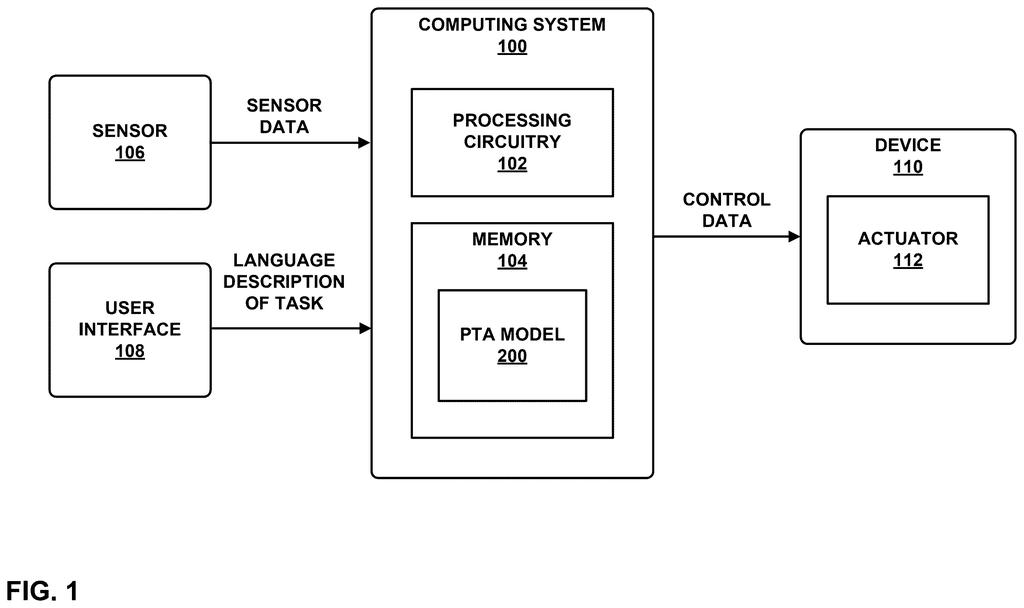
The patent covers a perception-to-action (PTA) model: an AI that takes in sensor data, usually camera images, plus a written or spoken task like 'pick up item X and move it to location Y,' and produces commands for a device. When the model handles images and language together, it is called a vision-language-action model.
The core idea is a choice between two execution modes:
- Thinking mode: the model first produces intention data (its observations, reasoning and planned steps, such as 'item X is on the floor') and then the action commands.
- Non-thinking mode: the model outputs the action commands directly, with no plan.
You or the system can choose the mode. You can add a 'think' or 'act' tag to your instruction, or the system can measure its own confidence (how similar the scene is to inputs it has seen, and how complex it looks) and switch to thinking when confidence falls below a threshold.
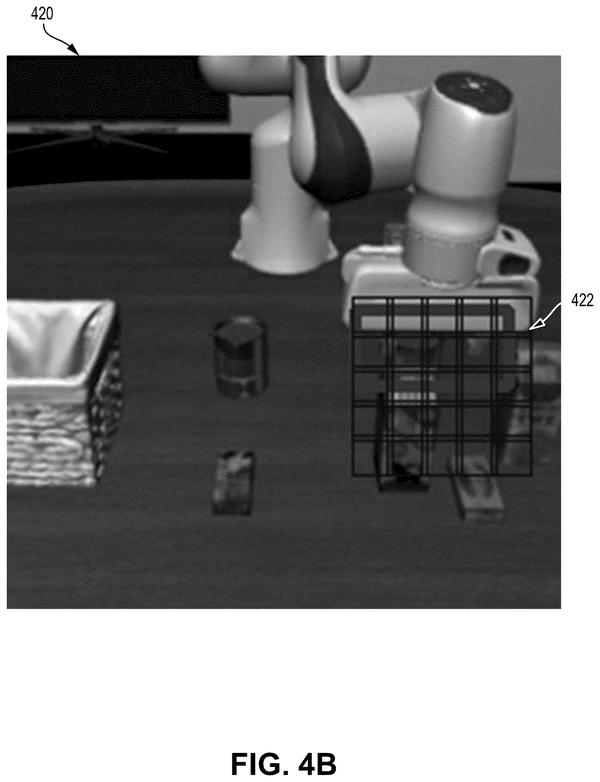
In the filing's example, the model's plan moves to the table before picking up the item, which would leave the robot arm blocked. A person can edit the plan, and the model redoes its commands. The filing also describes a training fix: short actions like picking and dropping get under-represented in the data, so a balancing factor shifts sampling toward a more even mix.
Why this matters for robots and phone chips
The practical payoff is a robot or app that stays quick on routine jobs and slows down only when a job is new or tricky. The filing says the fast mode has low delay and low cost, which suits small devices such as robot and smartphone chips, while the thinking mode needs less training data to do well. For you, the editable plan is the interesting part: you could catch a bad idea before a machine acts on it.
The examiner's first review rejected the claims as filed, which is routine at this stage and usually followed by amendments. The filing also says the idea could apply beyond robot arms, to virtual avatars, apps, and driver-assistance systems.
Qualcomm's third filing we've tracked since October on our agents that act for you watchlist follows the cooking mistake coach and the self-grading robot AI.
Source: US 2026/0358811 A1 at the USPTO (PDF). Full patent text and figures are in the official publication.
Get our take in your Top Stories
Liked this breakdown? Add Patentlyze as a preferred source on Google, and our plain-English take shows up more often in your Top Stories the next time Qualcomm patent news breaks.
Add Patentlyze on Google
One click.
There are more where this came from
We read every patent application Big Tech publishes and send you the ones worth knowing. Plain English, free, every week.
The drawings · 6 sheets
6 drawing sheets from US 2026/0358811 A1 · click any drawing to enlarge


More from Qualcomm
All 624 Qualcomm patents →
More in AI / ML
All 2,637 AI / ML patents →
Microsoft
Microsoft Patents an AI That Builds Apps From a Written Description
Samsung
Samsung Patents a Robot Brain With One Mode for Reaching and Another for Gripping
Nvidia
Nvidia Patents a System That Automatically Tests and Scores Robot Software
Samsung
No comments yet