
Samsung
Samsung · AI / ML · Filed May 20, 2026 · USPTO published Oct 8, 2026 · Oct 8 release
Samsung Patents a Robot Vacuum Map That Uses Your Photos and AI to Fill in the Gaps
Your robot vacuum draws a floor plan of your home, but it often mistakes the couch for a wall. Samsung's patent application fixes that with a few phone photos and an image-generating AI that paints in the rest.
- Publication number
- US 2026/0310206 A1(US20260310206A1)
- Applicant
- SAMSUNG ELECTRONICS CO., LTD.
- Filed · Published
- May 20, 2026 · Oct 8, 2026
- Inventors
- Dongnam BYUN, Dongchan KIM, Jinyoung HWANG, Kiwoong PARK
- Status when we published
- Waiting for an examiner
- Document
- 17 claims
- US classification
- 701/28
- Parent application
- Continuation of PCT/KR2024/015112 (filed Oct 4, 2024)(PCTKR2024015112)
What Samsung's photo-based robot vacuum map does
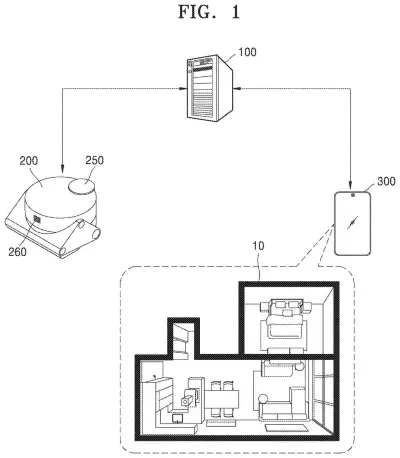
Every time your robot vacuum finishes a run, it hands you a map of your home in the app. That map is usually a flat, bare outline, and it can be wrong: a sofa or a bookshelf near the floor gets read as if it were a wall, so rooms look smaller or oddly shaped.
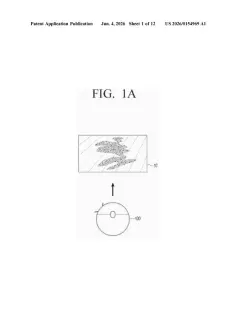
Samsung's patent application describes a way to upgrade that outline into a realistic floor plan. The app points out a few spots to photograph, and your phone snaps them. Those photos are flattened into a top-down view and pasted onto the map at the right place.
Whatever is still blank gets filled in by an image-generating AI, which is told things like "a living room with a sofa and a dining table." The result is a map that looks like your actual home.
… registering, based on depth information included in the captured image, an actual image to the initial map, the actual image being obtained from the captured image …
Translation: The system uses the 3D data from your photos to line them up with the vacuum's existing floor plan.
How Samsung turns phone photos into a floor plan
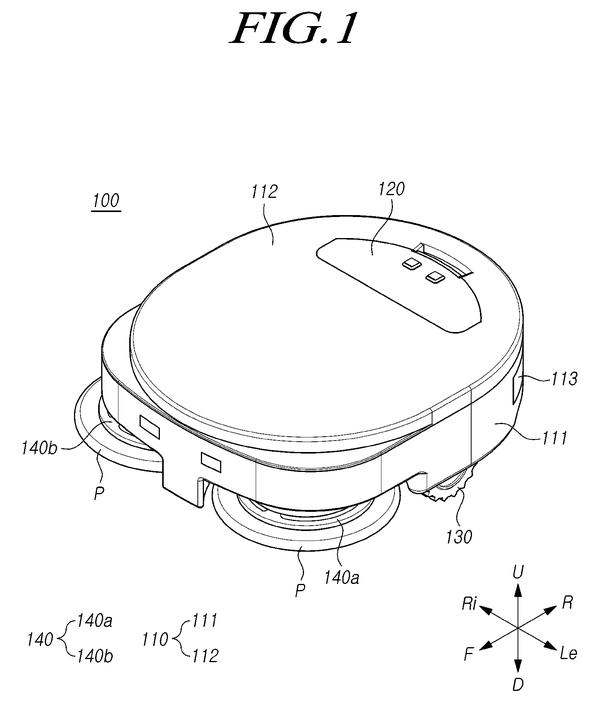
The system starts with an initial map built from LiDAR (a sensor that bounces laser light off surfaces to measure distance) scans taken by a robot cleaner. Because the robot scans close to the floor, furniture often gets mistaken for walls, which distorts the room borders.
Next, the system picks areas of interest to photograph. It looks for inward-pointing corners in the map's border (vertices of 180 degrees or more) and suggests a spot to stand and a direction to face, shown as an icon on your phone. The photos can also come from the robot's own camera.
To place each photo, the system estimates depth from the image and turns it into a point cloud (a cloud of 3D dots). It flips the view to top-down and slices out the layout at the same height the LiDAR scanned. It then matches that layout's border to the map's border to find the right spot, and pastes the top-down image there.
Finally, it finds the generation required area: everything inside the cleaned-up border that has no photo. It builds text prompts from room types and detected objects, such as "a layout of a master bedroom with a bed." It feeds those prompts and the map to a generative model, which fills in the blanks. The filing says the same step could add a piece of furniture you don't own yet, such as an air purifier next to the bed.
… determining a generation required area for which image generation is required in the initial map to which the actual image is registered …
Translation: It figures out which parts of the map are missing or blank and need to be filled in.
Why your robot vacuum's map could look like home
The practical payoff is a robot vacuum app that shows a map you recognize. A floor plan that looks like your own living room is easier to read when you tell the robot to clean one room or skip another. It also corrects border mistakes caused by furniture.
The furniture-suggestion idea is the part with the most obvious commercial angle. The filing describes asking the AI to show where an air purifier or an audio device might fit in your rooms, which could connect Samsung's home-appliance business to its smart-home app. It is only a patent application, and Samsung hasn't announced a product that does this. Note that the AI-painted areas are generated guesses, not photographs of your home.
Samsung's 50th filing we've tracked since May in our home robot work builds on ideas like robots watching each other and deciding whose turn for attention.
Source: US 2026/0310206 A1 at the USPTO (PDF). Full patent text and figures are in the official publication.
Get our take in your Top Stories
Liked this breakdown? Add Patentlyze as a preferred source on Google, and our plain-English take shows up more often in your Top Stories the next time Samsung patent news breaks.
Add Patentlyze on Google
One click.
There are more where this came from
We read the new patents from Big Tech, carmakers and more and send you the ones worth knowing. Plain English, free, every week.
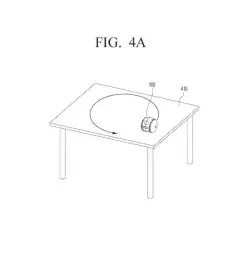
The drawings · 18 sheets
18 drawing sheets from US 2026/0310206 A1 · click any drawing to enlarge


Show the other 10 sheets


More from Samsung
All 1,662 Samsung patents →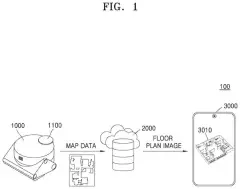
More in AI / ML
All 2,745 AI / ML patents →
Nvidia
Nvidia Patents a System That Automatically Tests and Scores Robot Software
Nvidia
Robot AI Learns From Demo Videos, Then Self-Improves Via Trial and Error
Amazon
Amazon Patents an AI Inspection Station That Checks Warehouse Robots for Damage
Sony
No comments yet