
A New Salesforce Patent Lets One AI Check Another's Work While It's Still Working
Today, AI helpers usually hand back just an answer. Salesforce's filing has them share their inner monologue as they go, so a boss AI can step in and fix a wrong turn before the work is finished.
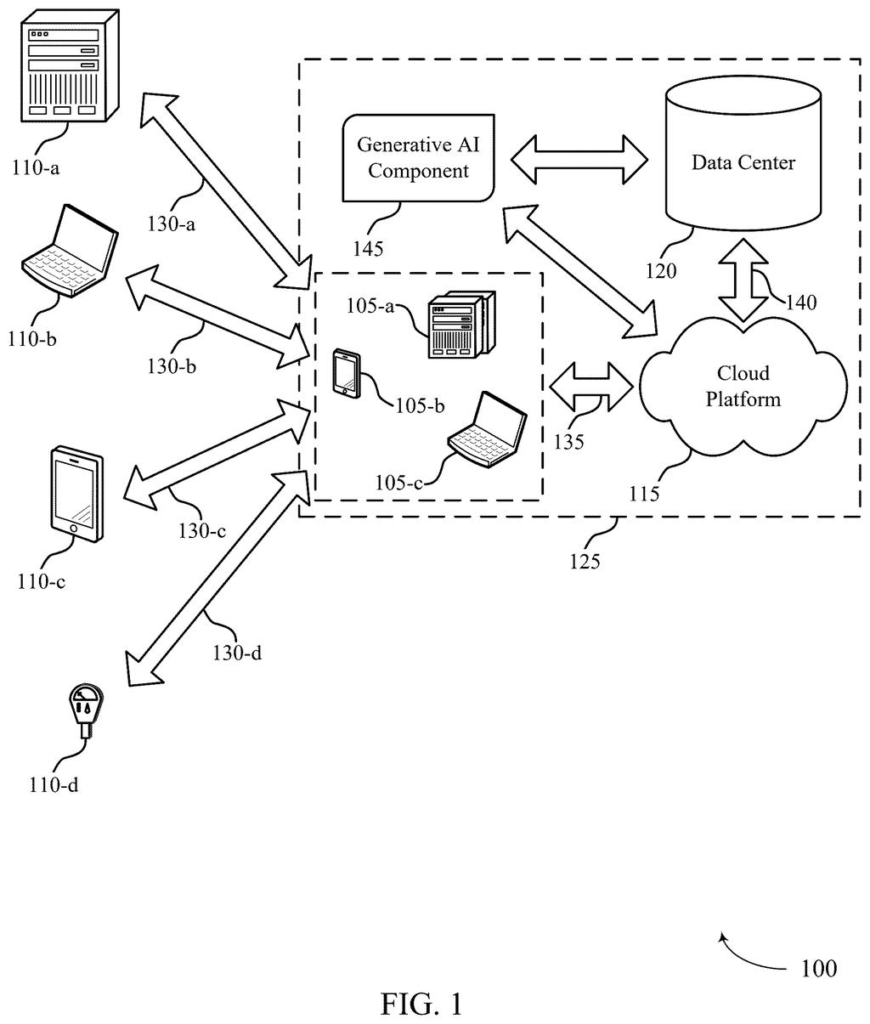
What Salesforce's AI progress reports do
Right now, when an AI system splits a big job among several AI helpers, the boss AI usually sees only the finished answers. It can't see how a helper got there, and the helper often doesn't know what the bigger goal was. If one helper goes off track, nobody finds out until the work is done and has to be redone.
Salesforce's filing describes a fix. The boss AI tells each helper the overall goal, not just its small piece. The helpers then send back progress notes on their thinking at set moments, such as after each step or when they feel unsure.
Say you ask for the fastest, most fuel-efficient road trip route with rest stops along the way. The boss AI checks each helper's notes against your request and nudges any helper that drifts, before that helper finishes.
… calculating, from the first reasoning log, a first deviation metric for at least one intermediate step of the one or more intermediate steps, wherein the first deviation metric quantifies a reasoning deviation between the goal condition and the at least one intermediate step …
Translation: The system measures how far the working agent's current logic strays from the ultimate goal.
How the boss AI scores each step against the goal
The claims describe a loop between two AI agents (software programs, often built on large language models, that do tasks on their own). The first agent, the coordinator, receives a job and splits it into sub-tasks plus a goal condition, meaning what the finished job must achieve. It sends a second agent one sub-task and that goal.
While working, the second agent keeps a reasoning log: the steps it took, alternatives it weighed, why it chose them, how confident it was, and which sources (databases, websites, APIs) it used. It sends the log when a trigger fires, such as:
- A step finishing, or a set number of steps finishing
- A request from the coordinator
- A low confidence score on the latest step
The coordinator then calculates a deviation metric. In one version, it turns the goal and the steps into lists of numbers (vectors, which capture meaning) and measures the distance between them. Past a threshold, it sends a correction message naming the step, and can add extra grounding data (reference material the agent leans on) to the helper. The helper adjusts, and the loop repeats until the sub-task is done.
How much the helper shares depends on a reporting setup: a summary, a partial log, or a full log, based on how the two agents relate. Sensitive items can be included, left out, or anonymized.
The first agent then output a correction message based on the deviation metric exceeding a threshold.
Translation: The supervisor agent steps in with corrections if the worker strays too far off track.
Why auditable AI teams matter for Salesforce
If you or your company use AI assistants for multi-step jobs, a mistake caught halfway costs less than one caught at the end. The filing says correcting a helper mid-task spares it from redoing the whole sub-task, which saves time and computing cost. It also leaves a paper trail: the description points to legal and healthcare settings, where why an AI decided something can matter as much as the decision itself.
The privacy dial matters too. Agents set up by different organizations may not fully trust each other, so the patent lets the shared detail shrink to a summary or strip out sensitive data. Salesforce's description is built around its cloud and customer-management software, so business AI helpers that work in teams are the obvious home for this.
This is the 15th Salesforce filing we've tracked since July on AI agents working together, following their patents on a self-grading AI trio and agents showing work mid-task.
Of the AI filings you could read this week, this one sits close to a finished feature. It needs no new hardware, only software: helper agents that write down their steps, a coordinator that compares those steps to the goal, and a rule for when to send them.
The hardest piece is the comparison. Turning a goal and a list of steps into numbers and measuring the gap is a common way to compare meaning. Someone still has to pick the threshold that decides when a helper is off track, and set it too tight and the coordinator nags constantly.
The shortest route to a product is a business tool where a coordinator AI already manages several helpers. Add the goal to each handoff, ask for a log after every step, and send corrections when the gap grows. The privacy levels would need the most care, since the logs can hold customer data.
Get our take in your Top Stories
Liked this breakdown? Add Patentlyze as a preferred source on Google, and our plain-English take shows up more often in your Top Stories the next time Salesforce patent news breaks.
There are more where this came from
We read every patent application Big Tech publishes and send you the ones worth knowing. Plain English, free, every week.
The drawings
13 drawing sheets from US 2026/0339757 A1 · click any drawing to enlarge


Show the other 5 sheets


Want this weekly breakdown for a company we don't cover? Patentlyze Pro →
Be the first to weigh in