
Samsung Patents an AR Headset Lens That Focuses Where Your Eyes Actually Look
Your eyes never look at everything in your field of view with equal sharpness, and Samsung thinks AR headset lenses should work the same way. A new patent carves the lens aperture into zones that match how the human eye actually rotates and focuses.
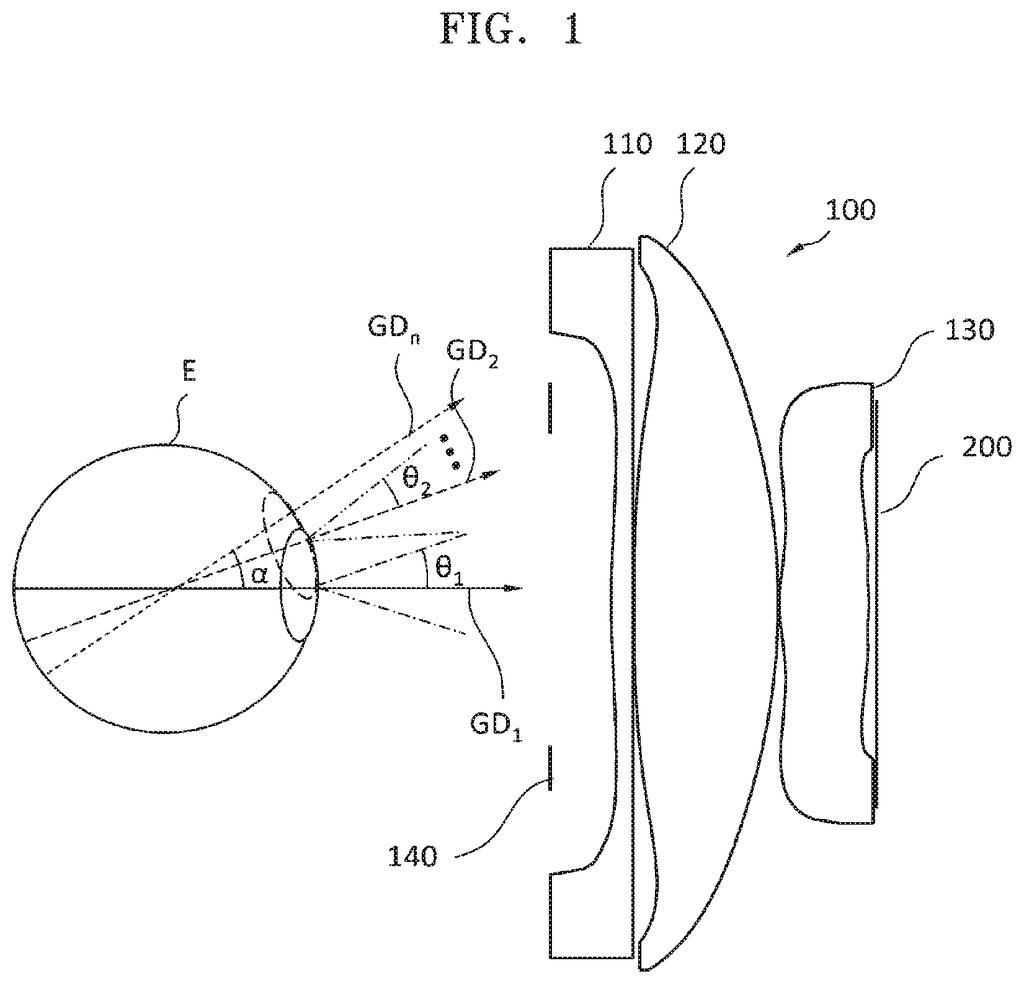
How Samsung's gaze-matched AR lens cuts corners you never see
Current AR and VR headsets use lenses that treat your whole field of view the same: they try to render everything in high detail all the time. That wastes a lot of processing power on the edges of the image your eye barely registers.
Samsung's patent describes a lens divided into distinct zones, each tuned to a different direction your eye can rotate. The zone your eye is currently aimed at delivers full, sharp detail. Zones at the edges of your vision deliver lower resolution because your eye isn't pointed there, and you wouldn't notice the drop in quality anyway.
The design borrows from how your own eye works: your fovea (the tiny central region of your retina) sees in sharp detail, while the surrounding area handles only rough shapes and motion. Samsung wants the headset lens to mirror that biology, so the display only has to work hard where it counts.
… wherein the aperture stop area includes a plurality of sub-stop areas that have different optical paths corresponding to a plurality of gaze directions by eye rotation, respectively …
Translation: The lens uses different sections to match whichever direction your eyes turn.
How sub-stop zones steer light for each gaze direction
The patent covers a catadioptric lens (a hybrid design that uses both reflective mirrors and refractive glass to fold the optical path and shrink the physical size of the headset) sitting between the user's eye and a small internal display.
Inside that lens, the aperture stop (the opening that controls how much light passes through) is split into multiple sub-stop areas. Each sub-stop area corresponds to a different direction the eye can rotate within the full viewing angle. Because the eye follows a different optical path through the lens depending on where it's looking, each sub-stop can be engineered with its own optical characteristics.
The key characteristic is a resolution gradient: within a defined central angle range (the area where your gaze is directly aimed), the image is rendered at full resolution. Outside that range, the lens deliberately allows lower resolution. This mirrors the fall-off in detail sensitivity that the human visual system itself has beyond the fovea.
The apparatus also includes a camera that captures real-world imagery, making this a video see-through design: you see a camera feed of the world rather than looking through transparent glass, which gives the system more control over what's displayed at each optical zone.
An orientation of the plurality of sub-stop areas are based on a human visual system.
Translation: The layout is specifically designed around how human eyes actually work.
What fovea-matched optics mean for AR headset comfort
For anyone who has tried a current AR or mixed-reality headset, the two biggest complaints are image sharpness and how long the battery lasts. These two problems are connected: rendering a fully sharp, high-resolution image across your entire field of view is expensive for the processor and the battery. A lens that physically constrains resolution at the edges means the display hardware doesn't have to produce that detail in the first place, which can lower power draw and heat.
Several Samsung filings on AR optics this year point toward a serious push into headset hardware. If this optical approach works at scale, it could reduce the bulk and weight of future headsets by allowing smaller, lower-power display panels without users perceiving any loss in quality.
Samsung's 53rd filing we've tracked in our AR glasses race watch since May builds on work like fixing floating images to your gaze and tracking hands during fast moves.
Claim 1 is broad. It covers any head-mounted display that uses a catadioptric lens with a split aperture stop where different zones correspond to different gaze directions and deliver different resolutions inside versus outside a central angle range. That description doesn't lock in any specific material, any specific number of zones, or any specific display technology, which gives Samsung a wide fence around the core concept.
In practice, that breadth means a granted patent here could complicate any competitor building a video see-through headset with foveated optics baked into the lens itself, rather than handled purely in software. Most current foveated rendering systems work at the software or chip level; doing it in the physical lens structure is a different approach that this claim would cover directly.
The honest caveat is that "designed to have an optical characteristic" where resolution differs inside and outside a viewing angle range is a functional description, and patent offices often push back on claims that define a result rather than a specific structure. The examiner will likely ask Samsung to tighten how the sub-stop areas are physically defined. Whether the claim survives in this form or a narrower one will determine how much real-world blocking power it carries.
There are more where this came from
We read every patent application Big Tech publishes and send you the ones worth knowing. Plain English, free, every week.
The drawings
14 drawing sheets from US 2026/0276998 A1 · click any drawing to enlarge


Want this weekly breakdown for a company we don't cover? Patentlyze Pro →