
Samsung Patent Links Gesture and Voice Input to Personalized Device Control
Every shared TV or smart display in a house faces the same problem: it has no idea who's actually standing in front of it. Samsung's latest patent tries to fix that by pairing a physical gesture with a specific spoken word, creating a two-factor identity check that doesn't need a login screen.
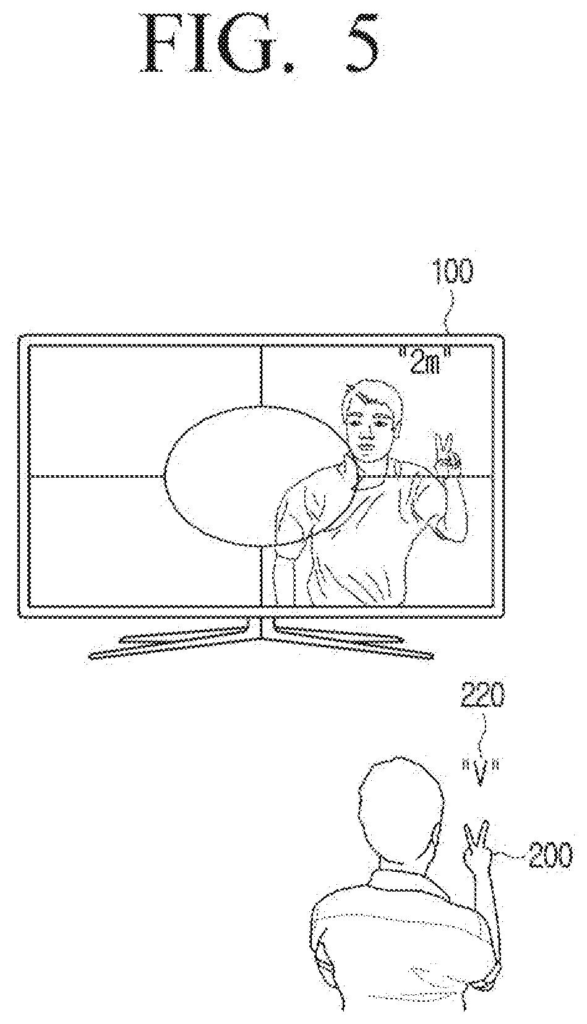
How Samsung pairs your move with your voice to ID you
Every time someone walks up to a shared TV or smart speaker, the device has to guess who they are, and usually it doesn't bother. Samsung's patent describes a way for a device to actually tell family members apart without passwords or menus.
Here's how you'd set it up: you make a gesture (a wave, a hand shape, something the device can sense), and based on how you specifically make that gesture, the device suggests a word or phrase for you to say aloud. That gesture-plus-word combo becomes your personal key. Later, when you walk up and do the same gesture while saying the same word, the device recognizes it's you and loads your account.
The result is that different people in the same household get their own personalized experience on the same device, without any screen tapping or profile-switching menus. It's meant to feel like the device just knows who you are.
based on a gesture for account registration being identified according to sensing data obtained through the interface, provide at least one candidate word to be selected by a user based on feature information of the gesture …
Translation: The system suggests words to use for your profile based on how you moved during registration.
How gesture features and spoken words combine into an account key
The system works in two phases: registration and recognition.
During registration, the device's sensors capture a gesture and extract what the patent calls "feature information" (essentially a detailed fingerprint of how that specific person moves: timing, angle, speed, shape). Based on those motion characteristics, the system generates candidate words, a short list of suggested words the user can pick from. The user selects one and says it. Both the motion fingerprint and the chosen word are stored together as that user's account record.
During recognition, when someone later makes a gesture and speaks a word, the device compares the incoming motion data and voice to every account stored in memory. It looks for the account where both the gesture's feature profile and the spoken word match. If it finds a match, it runs whatever operation is tied to that account, loading a personal profile, setting preferences, authorizing a command.
- The gesture alone isn't enough: the spoken word also has to match the stored account.
- The word alone isn't enough: the gesture's physical characteristics have to align too.
- This two-factor structure means one person impersonating another would need to replicate both the exact word and the specific physical style of the gesture.
The patent covers a generic "electronic apparatus," so the interface doing the sensing (camera, radar, accelerometer) is left open.
Based on the user voice with the at least one candidate word and the gesture, control the electronic apparatus to perform an operation based on the account information corresponding to the user voice and the gesture of the user from among a plurality of pieces of account information stored in the memory.
Translation: It recognizes both your voice and physical movement together to execute specific commands for the right user profile.
What this means for shared Samsung devices at home
Shared devices are a genuinely unsolved problem in consumer electronics. Smart TVs, home assistants, and kitchen displays all technically support multiple profiles, but almost no one switches between them because it's annoying. If Samsung can make the profile switch happen automatically, tied to something as natural as how you raise your hand and say a word, that's a real quality-of-life change for households with more than one person.
Samsung's push into multimodal interaction shows up across several recent filings. The practical target here looks like Galaxy home devices or smart displays where multiple people share the same screen daily. The two-factor nature (gesture shape plus voice) also adds a layer of security that single-factor voice recognition, which can be fooled by a recording, doesn't provide.
Samsung's 1177th filing in our Samsung coverage since May adds to a thread that includes the journal generation patent and the handwriting cleanup application.
Samsung's cameras, microphones, and motion sensors are already built into its smart TVs and displays, so this idea doesn't require new hardware to exist. The only thing that needs to be built is the software layer that learns your gestures and pairs them with your voice, which is a refinement of tools Samsung already develops.
The real question is whether it works reliably in a real living room, where light shifts, distances vary, and other people move through the frame. The patent doesn't specify how forgiving the system needs to be when a match is imperfect, and that gap is where many identity features fail before they ever reach consumers.
If the accuracy holds up under those everyday conditions, the shortest route to a product is a software update pushed to devices already in homes, no new purchase required. That makes this less of a research bet and more of an engineering execution problem, which is a much shorter road.
Get our take in your Top Stories
Liked this breakdown? Add Patentlyze as a preferred source on Google, and our plain-English take shows up more often in your Top Stories the next time Samsung patent news breaks.
There are more where this came from
We read every patent application Big Tech publishes and send you the ones worth knowing. Plain English, free, every week.
The drawings
13 drawing sheets from US 2026/0259657 A1 · click any drawing to enlarge


Show the other 5 sheets


Want this weekly breakdown for a company we don't cover? Patentlyze Pro →
Be the first to weigh in