
Samsung Files Patent for Carved Channels in a Screen's Metal Back to Cool Its Chips
Samsung Display wants to cool your screen by cutting tiny channels into the metal plate behind it, so air can carry heat away from the chips that run the picture.
What Samsung's grooved screen backing actually does
Imagine you're driving on a hot day with your car's dashboard screen set to full brightness. Behind that glass, the small chips that run the picture are heating up, and heat is bad news for a screen. It can leave brightness uneven, cause ghost images to burn in, and shorten the display's life.
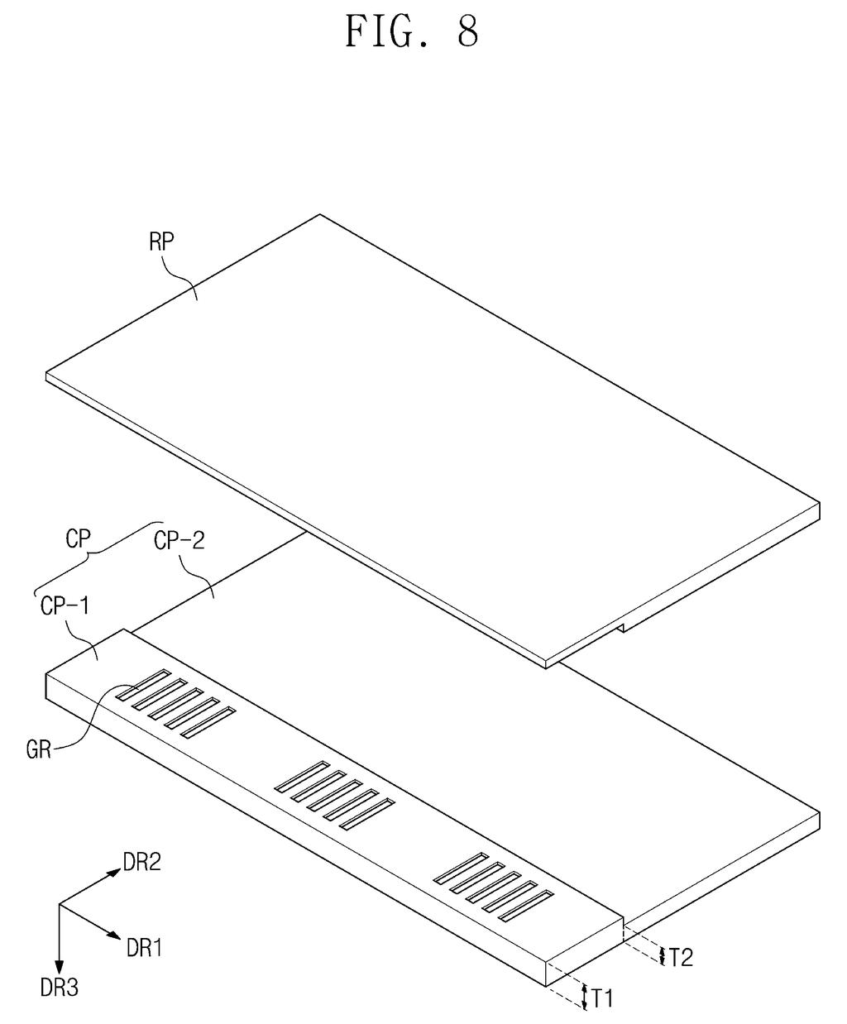
Samsung Display's patent application tackles this with a very simple idea: grooves. The metal plate on the back of the screen gets shallow channels cut into it, and the chips and their circuit board sit right on top of those channels.
The grooves are a bit longer than the circuit board, so their ends stick out into open space. Air can move through, pick up heat, and carry it away. The filing also describes a thicker metal layer around the hot spot to soak up even more warmth.
… at least one groove is defined in the rear surface of the cover panel, wherein the integrated chip overlaps the at least one groove in a plan view …
Translation: The metal backplate features carved channels positioned directly beneath the main processor chip.
How the grooves sit under the display chips
The patent covers a display with a cover panel on the back of the screen. That panel is a sandwich: a cushion layer that absorbs bumps, and a metal layer (aluminum, in one version) that spreads heat and blocks electromagnetic interference. One or more grooves are pressed into the outer face of the metal layer.
The driver chips, such as the timing controller (the chip that tells each pixel when to light up) and the power management chip (which hands out electricity), are mounted on a circuit board that gets folded around to the back. When it lands, it sits over the grooves, but only partly. The ends of each groove stay uncovered, which the filing calls the non-overlapping area, so air has a way in and out.
The claims describe a few extras:
- Several grooves, with a wider gap between the group under the timing controller and the group under the power chip.
- A thicker metal layer around the grooved area, since that spot runs hottest.
- An electronic device version aimed at vehicles.
There is also a manufacturing method. Either a release paper (the protective sheet peeled off before assembly) with raised bumps, or a metal jig, is pressed into the panel to form the grooves. The release paper's thickness is matched to the panel's so the total stays even when it is glued to the screen.
Why cooler screens matter for your next device
The practical payoff is a screen that holds up better under heat. As displays get brighter and refresh faster, the chips behind them work harder, and car screens in particular sit in sunlit cabins for years. Better cooling could mean steadier brightness and fewer burn-in problems over the life of your device.
The filing lists phones, tablets, laptops, TVs, smart watches and smart glasses as places this could go, plus dashboards and mirror displays in cars. It is a manufacturing-friendly change, because the grooves are pressed into a layer that already exists rather than adding a new part. Samsung has where Samsung's display hardware work is heading spelled out in plenty of other filings, but this one is about a practical, low-cost fix.
Samsung has filed its 115th application we've tracked in our Samsung display technology watchlist since May, adding to work like the auto-dimming always-on screen and the 3D jagged-line fix.
If this works, you would notice it mostly by not noticing anything. Your screen stays evenly bright after an hour of video, and a car display doesn't dim or show ghost images after a summer parked in the sun.
The idea is simple and cheap: cut channels into a metal plate that is already there, and park the hot chips over them. There are no fans, no exotic materials and no software to update.
The filing gives no temperature numbers, so we can't say how much cooler things get. Still, a small physical change that protects a screen you paid for is easy to appreciate, even if you will never see it.
Get our take in your Top Stories
Liked this breakdown? Add Patentlyze as a preferred source on Google, and our plain-English take shows up more often in your Top Stories the next time Samsung patent news breaks.
There are more where this came from
We read every patent application Big Tech publishes and send you the ones worth knowing. Plain English, free, every week.
The drawings
10 drawing sheets from US 2026/0323851 A1 · click any drawing to enlarge


Show the other 2 sheets


Want this weekly breakdown for a company we don't cover? Patentlyze Pro →
Be the first to weigh in