
Samsung Files Patent for a Phone Assistant That Fact-Checks Its Own Suggestions Before Showing You
Samsung's patent application describes a phone that guesses your next move, then fact-checks those guesses against your calendar and habits before it bothers you.
What Samsung's self-checking assistant does
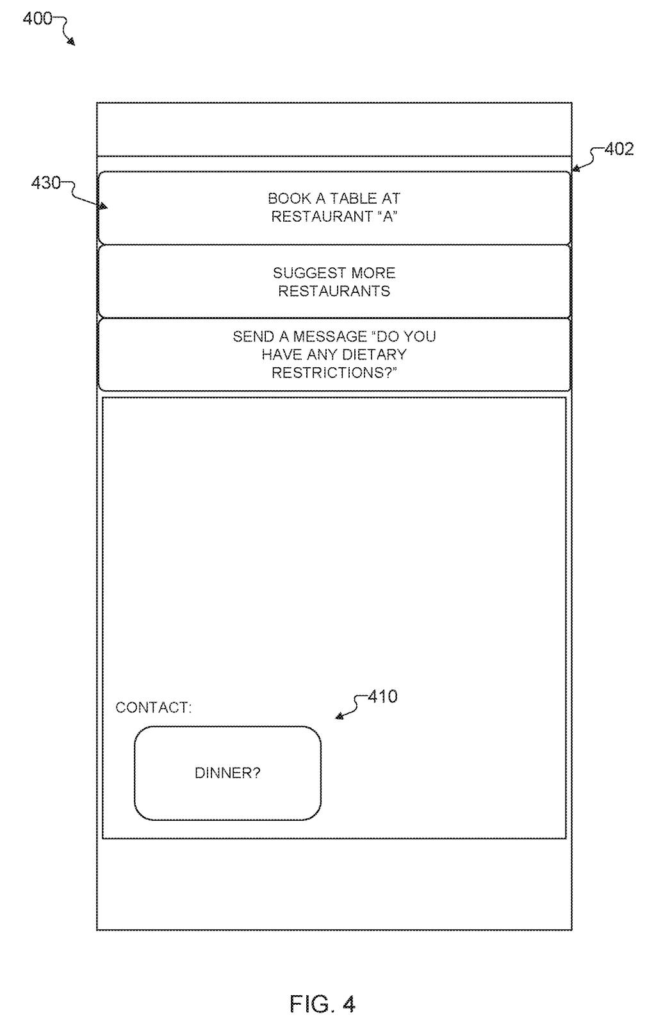
Every time you open a chat to plan dinner with a friend, you run the same little checklist in your head. Are you free that night? Where should you eat? Does your friend have any food restrictions?
Samsung's patent application describes a phone that runs that checklist for you, without being asked. It uses AI to brainstorm several things you might do next, then checks each idea against what your phone already knows, such as your schedule, location, favorite cuisines and contacts. Ideas that don't hold up get dropped, which is meant to stop the AI from making things up.
What's left shows up as a short list of options you can tap, like booking a table or texting your friend a suggested message. Nothing happens unless you pick one, and your choices feed back in so the next round of suggestions fits you better.
… proactively generating, by the at least one processing device, multiple actions using one or more machine learning models; obtaining, by the at least one processing device, reference data relevant to the data inputs and the context information; verifying, by the at least one processing device, the multiple actions using the reference data; …
Translation: The phone creates a list of potential suggestions and checks them against outside information before showing them to you.
How the three AI agents vet each suggestion
The system starts when an event happens, such as you opening a messaging app. It collects the screen contents and other context, formats them into key-value pairs (simple labeled entries, like "time: 7 pm"), and hands them to one or more machine learning models, such as large language models (AI trained on huge amounts of text).
Three AI agents then work in sequence:
- Path generation: the first agent plays the role of you and imagines feasible next actions, based on current context, your history and your past interactions.
- Path exploration and reasoning: the second agent checks each action against reference data and gives it a likelihood score. Only actions scoring above a threshold, which can depend on your stored preferences, survive.
- Path execution: the third agent picks the top few and writes the function calls (machine-readable instructions) the device needs to carry them out.
The reference data comes from a user knowledge graph (a web of linked facts about you, covering your profile, devices, media habits and activities) and a data grounding service, which ties loose text to those facts. The filing says this helps prevent hallucinations (AI inventing details). A ranker model then orders the survivors by your past choices, how well they fit the current screen, and your preferences.
Much of this can run on the device itself, with some steps optionally handled by a server. Whatever you pick is logged to refine future suggestions.
… generating one or more actionable task recommendations based on the one or more selectable actions. In addition, the method includes initiating presentation of the one or more actionable task recommendations on a display.
Translation: It turns the verified ideas into useful suggestions that finally pop up on your screen.
What this means for your phone's suggestions
Assistants that act without being asked only work if their suggestions are right. A wrong guess costs you attention, and enough of them teach you to ignore the feature. This filing's answer is a built-in verification step that checks each idea against your own data before you see it. The filing lists phones, watches, TVs and smart speakers as possible hosts, so the idea could show up across many devices.
This is a patent application, and the examiner's first review rejected the claims as filed, which is routine at this stage and usually followed by amendments. The claims as written are broad, so the final scope could narrow. Even so, it shows how Samsung is thinking about AI that offers help on its own while keeping you in charge of what actually happens.
Samsung's 28th filing we've tracked since June in our AI assistants that remember you watch builds on earlier applications like asking before forgetting memory and replies that know your contacts.
The benefit you would notice is fewer wrong guesses. Anyone who has had a phone suggest a restaurant that was closed, or a meeting time that clashed with an appointment, knows how annoying an AI that sounds sure and is wrong can be. Checking suggestions against your own calendar and habits before showing them targets exactly that failure.
The catch is what powers it. To check anything, the system needs a detailed picture of you: your age, location, sleep and health patterns, even who is in your family. The filing says much of that is built on the device, which helps, but you would want to know exactly what stays there.
The core idea is sensible and the claims are broad. How it is carried out will decide whether it feels helpful or intrusive.
Get our take in your Top Stories
Liked this breakdown? Add Patentlyze as a preferred source on Google, and our plain-English take shows up more often in your Top Stories the next time Samsung patent news breaks.
There are more where this came from
We read every patent application Big Tech publishes and send you the ones worth knowing. Plain English, free, every week.
The drawings
6 drawing sheets from US 2026/0320033 A1 · click any drawing to enlarge


Want this weekly breakdown for a company we don't cover? Patentlyze Pro →
Be the first to weigh in