
Samsung Patents a System Where Physical Objects Trigger Audio Streaming
Samsung has filed a patent for a system that lets a physical object, held against a device, automatically pull up and play the audio content linked to it. No searching, no typing, just tap and listen.
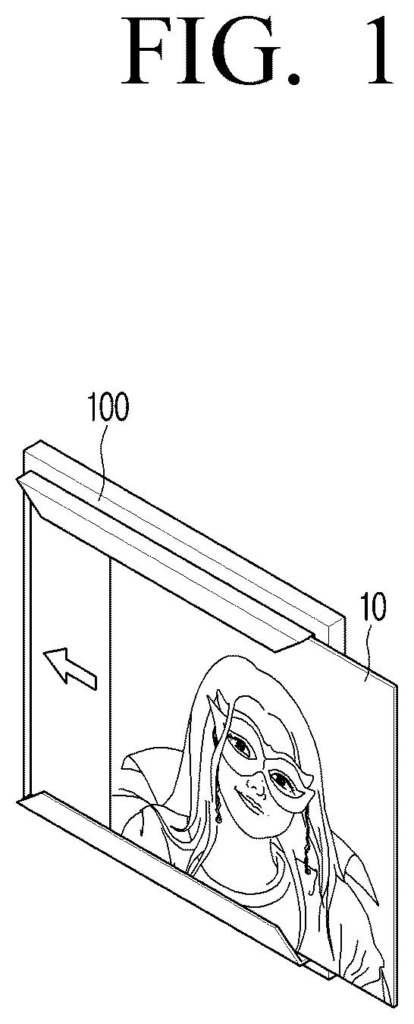
What Samsung's tap-to-stream audio idea actually does
Imagine you pick up a small card, a figurine, or a keepsake, press it against your speaker, and the music or story tied to that object just starts playing. That's the core idea in this Samsung patent.
The device detects that something has been attached or held against a specific spot. It reads a tiny bit of identifying information from that object, uses it to look up the matching audio online, then plays it through the speaker. The object itself doesn't store the audio; it just holds a key that points to the content.
Think of it as a modern, wireless version of dropping a vinyl record on a turntable. The physical thing you're holding tells the machine what to play, but the actual sound lives in the cloud. Samsung is essentially patenting the link between the physical world and audio streaming.
identify whether an object corresponding to an audio content is attached to a first position of the electronic apparatus, based on identifying that the object is attached to the first position, acquire metadata corresponding to the audio content from the object through the communication circuit …
Translation: The device figures out when a physical item is attached and reads its embedded data.
How the device reads the object and fetches the audio
The system works in three steps once an object is placed against the device:
- Detection: The processor checks whether an object is physically attached to a designated spot on the device.
- Metadata retrieval: Using its communication circuit (likely NFC or a similar short-range wireless protocol), the device reads metadata from the object. Metadata here means a small packet of identifying information, think of it like a label that says "this object corresponds to Album X" without storing the album itself.
- Content fetch and playback: The device sends that metadata to an external server or streaming service, gets back the actual audio, and plays it through the speaker.
The claim is deliberately broad. It says any object attached to a first position on an electronic apparatus. That covers a wide range of hardware: a smart speaker, a phone, a tablet, or a dedicated streaming device could all qualify.
The object itself is equally vague in the claim. It could be a chip-embedded card, a toy, a wristband, or a physical album cover. What matters is that the object can communicate metadata wirelessly when placed in contact with the device.
… obtain, from an external apparatus through the communication circuit, the audio content corresponding to the acquired metadata, and output, through the speaker, the obtained audio content.
Translation: It downloads the matching audio file from another device and plays it out loud.
What this means for physical media in a streaming world
For consumers, this is about reducing the friction between owning something physical and hearing something. Streaming killed the ritual of physical media, but it also killed the tactile, deliberate act of choosing what to play. A system like this could bring that back without requiring CDs or cassettes, just a small object that acts as a pointer.
For the industry, Samsung's interest in bridging physical products and digital audio is worth watching in the context of smart home speakers and connected devices. If this concept reaches products, it could change how labels, artists, or toy makers think about packaging physical goods as interactive streaming accessories rather than just collectibles.
Samsung's 30th filing in the audio patents we cover since May adds to a run that includes a circular track menu and a TV and speaker converter.
Claim 1 is written at a very high level of abstraction. It does not specify what kind of object, what communication protocol, or what external service is involved. That breadth is a double-edged sword: it makes the claim harder to design around, but it also makes it harder to get granted without a fight from prior art. NFC-triggered content playback is not new territory.
The specific combination described here, object attachment at a defined position triggering a metadata lookup that fetches streaming audio, is at least a coherent and narrow enough sequence that it could survive examination if Samsung can point to that specific chain as novel. But the claim as written would need to survive comparisons to existing NFC-to-stream systems, smart toy platforms, and products like Spotify Codes.
This reads as a defensive or exploratory filing rather than a finished product blueprint. It reserves territory around a concept, rather than describing a mature implementation. Whether Samsung builds anything from it, or simply holds the patent as leverage, is a separate question entirely.
There are more where this came from
We read every patent application Big Tech publishes and send you the ones worth knowing. Plain English, free, every week.
The drawings
13 drawing sheets from US 2026/0299879 A1 · click any drawing to enlarge


Want this weekly breakdown for a company we don't cover? Patentlyze Pro →
Be the first to weigh in