
Sony Patents a System That Automatically Quiets Audio You Can't Hear Anyway
Your brain already filters out sounds that get buried under louder ones. Sony wants its hardware to do the same thing before the audio even reaches your ears.
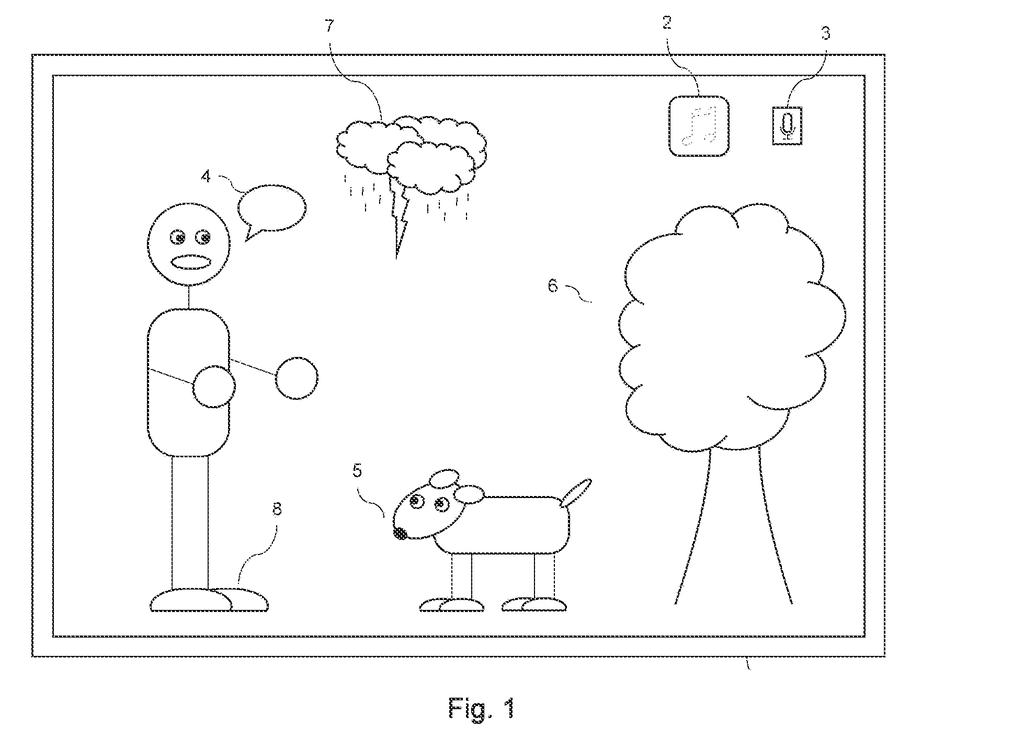
How Sony's masking-pattern audio mixing actually works
Ever tried to follow a conversation at a loud party while music blares in the background? Your brain unconsciously ignores sounds that are drowned out by louder ones. That mental filtering trick is called auditory masking, and it's why you can't hear a whisper over a fire alarm.
Sony's new patent applies that same logic to audio mixing. The system listens to all the incoming audio channels at once, figures out which sounds will be covered up by louder ones anyway, and turns those buried channels down. The result is a cleaner mix without anyone having to manually adjust faders.
For PlayStation games, which layer dozens of simultaneous sounds (dialogue, footsteps, explosions, ambient noise), a system like this could automatically keep the most important audio clear, in real time, without needing a sound engineer in the loop.
… an analysis unit configured to analyse the input audio to determine one or more masking patterns; an attenuation unit configured to attenuate one or more channels of the input audio in accordance with the one or more masking patterns …
Translation: It figures out what sounds are already hidden by other noises and turns those hidden sounds down.
How the system analyzes and attenuates competing audio channels
The patent describes a four-part pipeline. A receiving unit takes in the raw audio input, which could be multiple channels playing at the same time. An analysis unit then examines that audio to identify masking patterns (the technical term for when one sound is loud enough to make another inaudible to the human ear).
Once the system knows which sounds are being masked, an attenuation unit turns those channels down in proportion to how thoroughly they're being covered. Attenuation just means reducing volume, so a sound that's almost entirely masked might be turned down almost completely, while a partially masked sound gets only a small reduction.
Finally, an output unit sends the cleaned-up, re-balanced audio downstream, whether to speakers, headphones, or a recording pipeline.
The claim is deliberately broad. It doesn't specify a particular type of masking algorithm, a particular device, or even a particular audio format. That breadth is a common patent strategy: describe the functional goal rather than one implementation, leaving room to cover multiple technical approaches under the same filing.
What this means for PlayStation game audio and beyond
Modern games and streaming apps are mixing more audio tracks simultaneously than ever. When sounds collide, the result is often muddy audio that fatigues the listener. A real-time system that drops imperceptible sounds before they reach the output stage could improve clarity without the lag of manual mixing or the complexity of full spatial audio processing.
For you as a player or listener, the practical hope is that dialogue stays clear even during chaotic action sequences, and that headphone listeners in particular get a less cluttered soundscape. Whether Sony applies this to a console, a cloud-streaming backend, or audio production software is an open question the patent doesn't answer.
Sony's 22nd filing in our audio patent coverage since May follows work like spatial audio compression and language-aware noise cancellation among the applications we've tracked.
The science behind this patent is decades old: your brain naturally ignores quieter sounds when louder ones drown them out, and audio engineers have exploited that fact since the MP3 era. Sony is describing a real-time, dynamic version of that same trick applied to incoming audio streams.
Nothing here requires new hardware to exist first. The four-step pipeline Sony describes, receive audio, analyze it, reduce certain channels, output the result, could run as a firmware update on existing devices or as a background process in a streaming service. The shortest route to a shipping feature is almost entirely a software problem.
What keeps this from feeling like a product blueprint is how little it specifies beyond the basic pipeline. No particular algorithm is claimed, no target device is named. That makes it a solid defensive position for Sony but a thin signal for anyone waiting to see this on a feature list.
There are more where this came from
We read every patent application Big Tech publishes and send you the ones worth knowing. Plain English, free, every week.
The drawings
4 drawing sheets from US 2026/0290401 A1 · click any drawing to enlarge


Want this weekly breakdown for a company we don't cover? Patentlyze Pro →
Be the first to weigh in