
Samsung Files Patent to Make Only What You Look At Appear 3D in VR
Instead of dimming a VR scene to tell you where to look, Samsung's patent application would make just the thing you're looking at pop out in 3D while the rest stays flat.
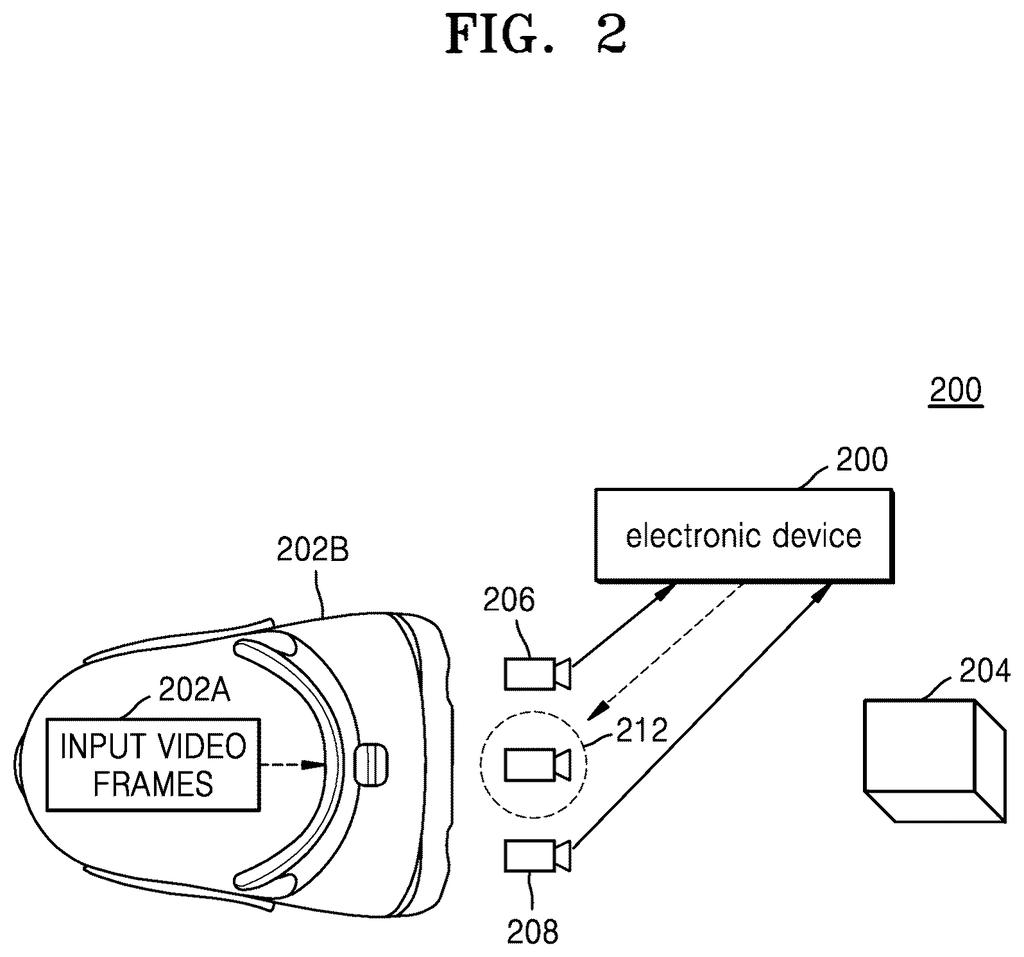
What Samsung's selective-3D VR trick does
A VR training lesson wants you to notice one red valve in a room full of machinery. The usual trick is to dim everything else or shine a spotlight on the valve. That works, but it hides the rest of the room, and the sudden darkness can pull you out of the experience.
Samsung's patent application takes a different route. A headset normally shows each eye a slightly different picture, which is what makes a scene look 3D. Samsung's idea is to give that full 3D treatment only to the thing you're meant to look at. Everything else shows the same flat image to both eyes, like a painted backdrop, but it stays fully visible.
The object of interest can be picked by where you're looking, where you're pointing, or by a marker a developer placed ahead of time. Look somewhere else and the 3D effect follows you.
… identifying an object of interest from among the plurality of objects, in each of the first right eye image frame and the first left eye image frame; …
Translation: The system figures out exactly what the user is looking at within the scene.
How the headset splits a scene into flat and 3D
The claims describe a pipeline that starts with two views of the same scene: a left-eye frame and a right-eye frame. They can come from a headset's cameras, a stereo camera, or a fully computer-built VR world. The system picks an object of interest in both frames, using eye gaze, head gaze, a pointer such as a controller's laser, or a marking placed in the video ahead of time.
Next it builds a center eye image, a view from a spot halfway between the two eyes. To do that, it makes a depth map (a grayscale picture of how far away each thing is), groups pixels at similar distances into clusters, works out the interpupillary distance (the gap between your pupils), and shifts the camera viewpoint toward the middle by half of that gap.
Then comes the assembly:
- Cut the object of interest out of the center image and fill the hole with a simple blur or a generative AI fill. That gives a shared background frame.
- Combine each eye's object-only frame with that background to make a new left frame and a new right frame.
- Show the result: the object in true 3D, the backdrop flat.
If something, such as a leaf, partly covers the target flower, the system cuts that blocker out and lays it back on top so it doesn't hide the focus. When your attention moves, the process restarts with the new target.
Why this beats dimming everything else in VR
The practical payoff is a new way to steer your attention in a headset without taking anything away from the scene. The filing lists a few uses: a remote instructor highlighting objects for a student wearing a headset, VR onboarding where buttons and menus pop out in 3D while other elements stay flat, and shared headset videos where the subject stands out.
For filmmakers, the description compares it to the blurred backgrounds of flat movies: a way to show the viewer what matters. It is a patent application, so nothing here says Samsung will ship it. But if a headset ever did this, you would likely feel it as a subtle pull toward one object instead of a spotlight.
That makes this Samsung's 74th filing we've tracked in the AR glasses race since May, a run that includes a room-brightening headset camera fix and glare-blocking driving glasses.
If you've used a VR training app, you know the spotlight trick: the room goes dark and a glowing circle tells you where to look. It works, but it hides things you may want to see, and it reminds you that you're wearing a headset.
Samsung's approach keeps the whole room visible and lets depth do the pointing. You would notice it when a single object takes on real solidity while everything around it settles into a calm, flat backdrop. That is a gentle cue, and it suits lessons, tours and films where the creator wants your eyes in one place.
The open question is comfort. Mixing flat and 3D in one scene could feel odd to some people, and the filing offers no test results. Still, the idea is easy to grasp and addresses a problem VR makers clearly have.
Get our take in your Top Stories
Liked this breakdown? Add Patentlyze as a preferred source on Google, and our plain-English take shows up more often in your Top Stories the next time Samsung patent news breaks.
There are more where this came from
We read every patent application Big Tech publishes and send you the ones worth knowing. Plain English, free, every week.
The drawings
13 drawing sheets from US 2026/0342950 A1 · click any drawing to enlarge


Show the other 5 sheets


Want this weekly breakdown for a company we don't cover? Patentlyze Pro →
Be the first to weigh in