
Samsung Patents a Way to Tell Which Devices Are in the Same Room Using Wi-Fi
Your phone already knows which Wi-Fi networks are nearby. Samsung wants to use that information to figure out which other gadgets are physically in the same room as you, without GPS, cameras, or Bluetooth pairing.
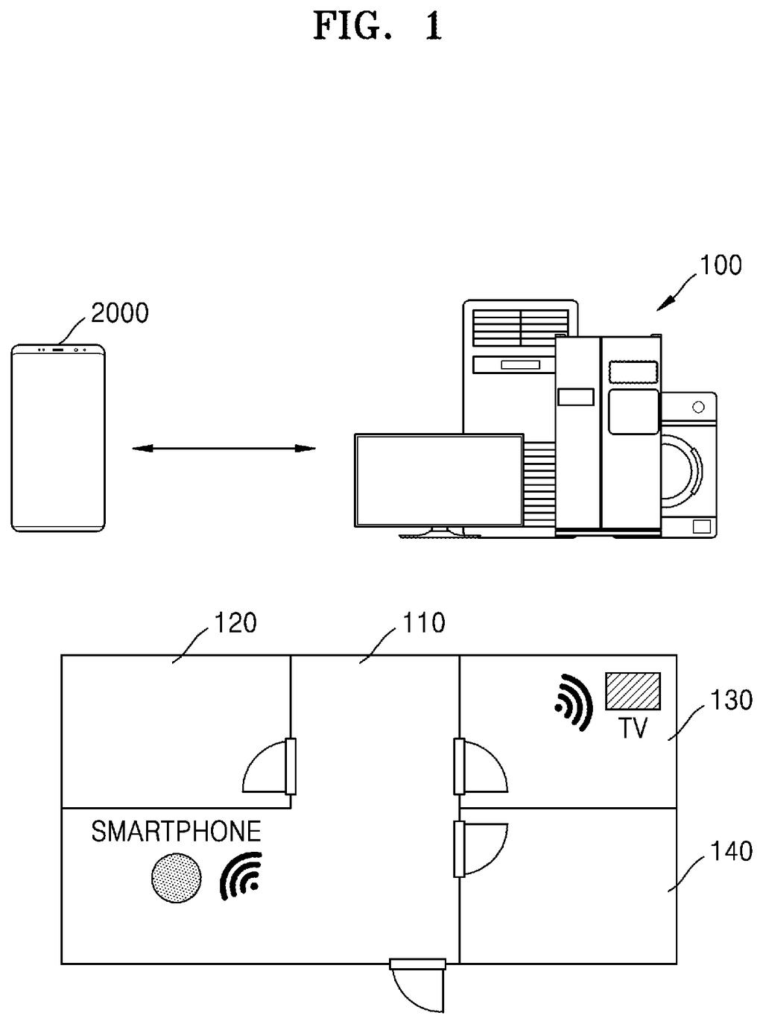
How Samsung's room-detection idea actually works
You're sitting in your living room with your phone, your tablet, and maybe a smart TV all running nearby. Each of those devices can "see" the same Wi-Fi routers around them, and the strength of those signals tells a story about where each device is sitting.
Samsung's patent describes a system that compares those signal-strength readings across your device and other nearby devices. If the pattern of signals looks similar, the system concludes you're all in the same room. If the patterns diverge, it assumes you're farther apart. A built-in AI model does the matching, and when it gets a call wrong, a user can correct it, teaching the model to do better next time.
The practical idea is that your devices could automatically coordinate based on physical proximity, without requiring you to manually tell them "we're all in the same space right now."
… estimating, by applying the first Wi-Fi RSSI and the plurality of second Wi-Fi RSSIs as input data to a copresence estimation model, an estimation result that indicates whether the one or more other devices are present in a same space as the user device …
Translation: The system uses Wi-Fi signal strengths to figure out if another device is in the exact same room.
How the model reads Wi-Fi signals and learns from mistakes
The system works by collecting RSSI (Received Signal Strength Indicator) readings, which are basically numbers measuring how strongly a device can hear each nearby Wi-Fi network. Every device in range of the same router will see it, but at slightly different volumes depending on walls, distance, and layout.
Samsung's approach feeds two sets of those readings into a copresence estimation model (an AI trained to judge whether two devices are in the same physical space): one set from your device, one from another device. The model compares the two profiles and outputs a yes-or-no judgment on whether the devices share a location.
When the model makes a wrong call, the user can flag it. That correction, combined with historical signal data that gets filtered to remove outliers or irrelevant readings, gets fed back into the model to update it. The system is essentially self-improving: it gets more accurate over time as it accumulates real-world corrections from the specific environments where it operates.
Key components include:
- Live RSSI collection from the user's device and from other enrolled devices
- A machine-learning copresence model running the comparison
- A feedback loop where user corrections generate a labeled training dataset
- A filtering step on historical data to clean up noise before retraining
… receiving feedback based on the estimation result; generating, based on the feedback, a feedback dataset including the first and second Wi-Fi RSSIs …
Translation: It collects user feedback to help improve how accurately the system detects nearby devices.
What this means for shared-space device features
The concrete payoff here is automatic spatial awareness for a group of devices. Features that currently require manual setup, like telling a smart home hub which devices belong to a room, or triggering a TV to take over audio from your phone when you walk in, could happen on their own if the phone already knows you're in the same space as those devices.
For everyday users, you'd most likely notice this in smart home or multi-device handoff scenarios: music that follows you between rooms, calls that shift automatically to the nearest screen, or shared-space settings that kick in without any app setup. The self-correcting training loop is what separates this from simpler proximity detection methods, which tend to degrade in complex real-world environments full of thick walls and overlapping signals.
Samsung's 1263rd filing in our Samsung coverage since May follows applications like the spam call blocker and the AI security scanner, showing a continued focus on automated protection.
The practical payoff is simple: your phone figures out which of your other devices are in the same room as you, without you having to tell it. That matters the moment you want music to follow you from the kitchen to the bedroom, or when you want your laptop and phone to share a task automatically.
The feedback loop is where this either works or dies. If the system guesses wrong and you correct it a few times, it learns your home. But that only happens if correcting it feels easier than ignoring it, which is a real question about how Samsung surfaces that interaction.
The whole thing runs on the signal strength your router already broadcasts, so no new hardware is needed. For most people, the first sign this is working will simply be that their devices feel more coordinated, and the first sign it is failing will be that they stop noticing it at all.
There are more where this came from
We read every patent application Big Tech publishes and send you the ones worth knowing. Plain English, free, every week.
The drawings
14 drawing sheets from US 2026/0280733 A1 · click any drawing to enlarge


Want this weekly breakdown for a company we don't cover? Patentlyze Pro →