
Sony
Sony · Software · Filed Jul 15, 2025 · USPTO published Nov 19, 2026 · This week's release
A New Sony Patent Spots Players About to Quit and Steps In Mid-Game
Sony has described a server that watches how you play and guesses when you are about to give up on a game for good. Before you put the controller down, it can offer a tip, suggest an easier mission, or tell the game to go easier on you.
- Publication number
- US 2026/0364452 A1(US20260364452A1)
- Applicant
- SONY INTERACTIVE ENTERTAINMENT INC.
- Filed · Published
- Jul 15, 2025 · Nov 19, 2026
- Inventors
- Nobuyuki NAKAMURA
- Status when we published
- Waiting for an examiner
- Document
- 7 claims
- US classification
- 463/31
- Examiner
- DOSHER, JULIE GRACE (Art Unit 3715)
- Parent application
- National Stage Entry of PCT/JP2023/004194 (filed Feb 8, 2023)(PCTJP2023004194)
What Sony's quit-prediction patent actually does
Every time you lose to the same boss for the fifth time in a row, a small voice in your head says it might be time to stop playing. Sony's patent application is about catching that moment before you act on it.
Your console reports what you do in a game (which levels you played, what gear you picked up) to a Sony server. The server compares your path with the paths of earlier players who never came back. If you look like one of them, it steps in while you are still playing, with a tip, a help video, a suggestion to try a different mission, or a lower difficulty at the spot where people tend to quit.
It works like a coach who notices you are about to walk off the field and calls you over for a quick word.
… perform an assistance process related to a game play before the user ends the game play, in a case of determining from the history of the play data of the user that there is a high possibility that the user withdraws from the game.
Translation: The server steps in to help right before a frustrated player decides to quit.
How the server spots a player about to quit
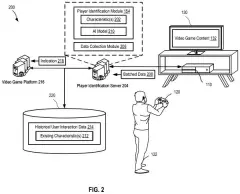
The system has two halves. On your console, the game reports events (finishing a quest, equipping a weapon, using a healing item) to the system software. The software stamps each one with your account, the game and the time, then sends it to a Sony server as play data.
On the server, an analysis step studies the play data of many players and compares those who cleared the game with those who dropped it. It looks for a withdrawal pattern: a sequence of activities, plus the gear you hold, that often comes before quitting. In the filing's example, players who go through activities A, D, H and J without a certain piece of equipment tend to leave at J. The server can also train a machine-learning model (software that learns from examples labeled "quit" or "finished") to make the same call.
While you play, the server checks your latest history in real time. If you match a pattern, it acts before you end the session. The filing describes several kinds of help:
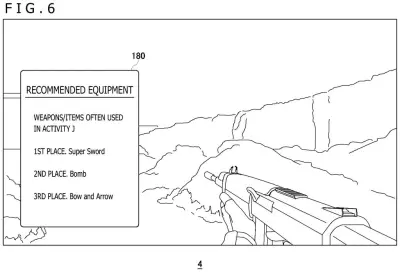
- A list of weapons and items other players used in that stage
- A help video, or a link to one
- A card suggesting an easier or more popular activity, which can launch it when selected
- An instruction to the game to lower difficulty at the trouble spot, such as weakening an enemy step by step, then restoring the setting once you win
"Withdrawn" means gone for a long stretch (about half a year in one example). A few days off does not count.
Why a game that eases off could keep you playing
If you have ever abandoned a game after getting stuck, this is aimed at you. Instead of leaving you stranded, your console could surface tips, point you to an easier quest, or make a brutal fight a bit softer. For game studios, the appeal is plain: players who quit stop playing, and the filing gives them a way to find the exact spot where people leave.
There is a trade-off. A game that eases difficulty or reroutes you could feel patronizing to players who want the challenge, and the filing does not say whether you could switch it off. It also depends on each game reporting detailed events, so studios would have to build that in.
This is the 178th Sony filing we've tracked since May in our PlayStation playbook, joining earlier applications like heart-rate game music and a cloud connection test game.
Source: US 2026/0364452 A1 at the USPTO (PDF). Full patent text and figures are in the official publication.
Get our take in your Top Stories
Liked this breakdown? Add Patentlyze as a preferred source on Google, and our plain-English take shows up more often in your Top Stories the next time Sony patent news breaks.
Add Patentlyze on Google
One click.
There are more where this came from
We read every patent application Big Tech publishes and send you the ones worth knowing. Plain English, free, every week.
The drawings · 9 sheets
9 drawing sheets from US 2026/0364452 A1 · click any drawing to enlarge


Show the other 1 sheets

More from Sony
All 722 Sony patents →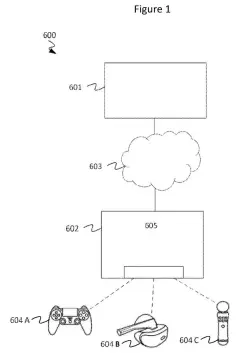
More in Software
All 814 Software patents →
Sony
Sony Files Patent for a Digital Ball That Changes as the Game Unfolds
Sony
Sony Patents a Game Helper That Listens for Panic in Your Voice
Sony
Sony Files Patent to Let Everyone on the Couch Control a Game by Voice
Sony
No comments yet