
Tesla Files Patent for a Solar Panel Mount That Fits Into Tile Roofs
Mounting solar panels on a tile roof is one of the trickiest installation jobs in residential construction. Tesla's latest patent describes a hardware stack designed to make that process cleaner and more watertight.
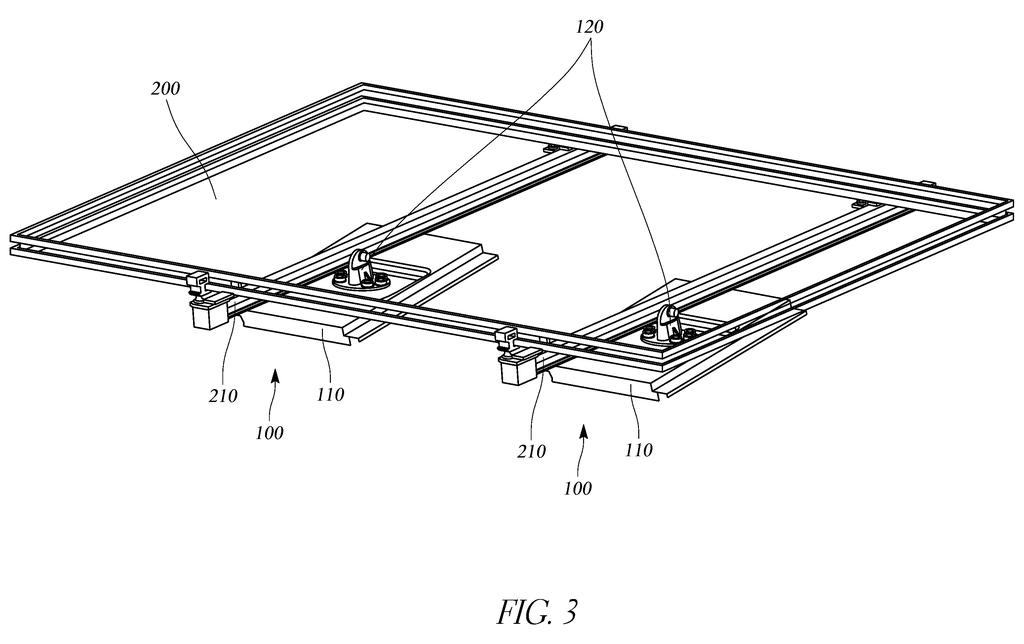
How Tesla's tile-roof solar mount fits together
Every time a solar installer drills into a tile roof, they're threading a needle: pull a tile, anchor a metal bracket, seal everything up, and hope water never finds a gap. Do it wrong and you trade lower electricity bills for a leaky ceiling.
Tesla's patent describes a purpose-built mounting kit where a shaped metal piece called a flashing slides in to physically replace one of your existing roof tiles. The flashing becomes the anchor point for the rail that eventually holds your solar panels. A spacer and gasket sandwich the flashing against the roof deck from the other side, and a set of threaded inserts keeps the bolts from working loose over time.
The idea is that every part has a defined job and a defined position, so there's less room for installer error and fewer spots where rainwater can sneak through.
a flashing sized to replace one or more tiles of the tile roof; a plurality of fasteners; a rail mount including a plurality of fastener flanges arranged in a mounting pattern, the rail mount positioned on a first side of the flashing …
Translation: The system uses a metal plate that takes the place of roof tiles to provide a base for attaching the solar panel rails.
Inside the flashing, spacer, and fastener stack
The system is built around a flashing, a flat metal piece sized to drop into the gap left by removing one or two tiles from a tile roof. Because it matches tile dimensions, the surrounding tiles can nestle back against it without leaving an awkward hump or gap.
On top of the flashing sits a rail mount, the bracket that solar panel rails eventually attach to. The rail mount has multiple fastener flanges (small raised tabs with holes in them) arranged in a fixed pattern so installers know exactly where every bolt goes.
Underneath the flashing, on the interior side of the roof, a spacer distributes the clamping load across the roof decking. A gasket sits against the spacer to create a compressible seal. The whole sandwich is held together by threaded fasteners that pass through fastener retainment inserts inside the flanges, which are essentially captured nuts that prevent the bolts from spinning free or pulling through the bracket over years of thermal expansion and contraction.
- Flashing: replaces a removed tile, becomes the anchor base
- Rail mount + inserts: sit on top, accept the solar rail
- Spacer + gasket: sit below, distribute load and seal against water ingress
- Fasteners: clamp all layers to the structural roof deck
The spacer is configured to be positioned on an opposite side of the flashing from the rail mount, and the plurality of fasteners are configured to secure the rail mount, the flashing, and the spacer to a roof decking of the roof.
Translation: The mount uses a spacer and screws to lock the flashing and rail hardware directly into the wooden base of the roof.
What this means for solar on tile roofs
Tile roofs cover a large share of homes in the Sun Belt states where rooftop solar makes the most economic sense. The curved, overlapping profile of clay or concrete tiles creates a real mechanical problem: standard flat-bracket mounts don't sit flush, and any gap is an invitation for water. A purpose-built flashing that physically takes the place of a tile sidesteps the geometry problem at the source rather than papering over it with sealant.
For Tesla's Energy division, which sells both the Powerwall battery and the Solar Roof product, having a credible story for existing tile roofs matters as much as the all-in-one Solar Roof shingle system. Most homeowners aren't replacing their entire roof to go solar, and this kind of mounting hardware is the unglamorous infrastructure that makes retrofits possible. Solar installation hardware is one of the quieter but steadily active areas tracked among new Big Tech patents, and Tesla's specificity here, down to the fastener insert geometry, suggests the company is engineering for manufacturing repeatability, not just concept validation.
Tesla's 29th filing in our Tesla coverage since May joins ideas like the hands-free trunk opener and the bacteria-blocking cabin filter.
The problem this patent targets is genuinely frustrating and expensive. Water intrusion from a bad solar mount on a tile roof can cost far more to repair than the panels ever save in the first few years, and it's one of the top complaints in residential solar installation reviews. The damage often doesn't show up immediately, which makes it worse.
That said, this is an incremental hardware solution to a well-understood problem, not a departure from existing practice. Flashing-based tile mounts are already standard in the industry. What Tesla's filing adds is a specific geometry for the fastener retainment inserts and the spacer-gasket arrangement, which could matter for factory consistency and installer training if Tesla is scaling a direct installation business.
The filing reads like engineering documentation for a production part rather than a speculative invention. Whether the specific fastener-insert arrangement is distinct enough from prior art to survive examination is a question for the patent office, but the underlying engineering logic is sound.
There are more where this came from
We read every patent application Big Tech publishes and send you the ones worth knowing. Plain English, free, every week.
The drawings
6 drawing sheets from US 2026/0254399 A1 · click any drawing to enlarge


Want this weekly breakdown for a company we don't cover? Patentlyze Pro →