Latest cybersecurity patents, Page 17
Fraud detection, encryption, sign-in and privacy controls from Microsoft, Google, IBM, Apple and others. The cybersecurity and privacy patent applications we have broken down from the companies we track, newest first.
- in the Nov 12 release
- 8
- in November so far
- 27
- filings tracked
- 341
- last 90 days
- 143
Recent filings
Newest first · 341 total-
Microsoft · Published Jul 9
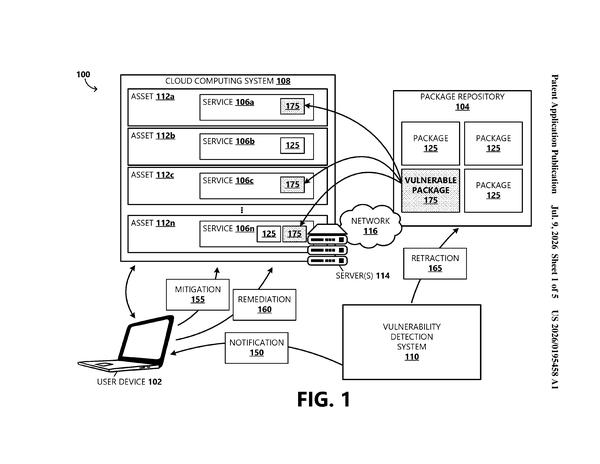
Microsoft Patents a System That Hunts Down Dangerously Flawed Code in the Cloud
Every time a developer downloads a software package with a known security flaw, someone needs to find out quickly. Microsoft's new patent describes a system that automates exactly that, from detection to notification, before a vulnerability turns into a breach.
-
Microsoft · Published Jul 9
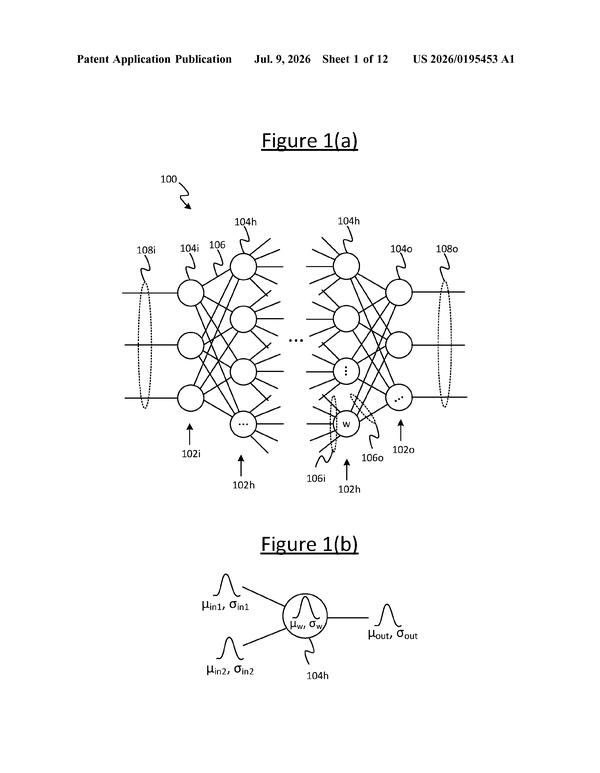
New Patent Judges Apps by the Company They Keep to Catch Malware
Most malware detectors look at an app in isolation. Microsoft's new patent flips that around, teaching a model to judge whether an app is dangerous by looking at which other apps share its DNA.
-
Google · Published Jul 2
Google Patents a Method to Test Product Changes Without Exposing Individual User Data
Every time a tech company tests a new feature or ad, it collects real data about real people. Google is patenting a system that lets it run those experiments and still draw useful conclusions, without handing over anything that could be traced back to you.
-
Google · Published Jul 2
Google Patents a System for Counting User Trends Without Seeing Individual Data
Google wants to answer questions like 'how many users spent more than $50?' without ever actually looking at what any single user spent. This patent describes the math that makes that possible.
-
Google · Published Jul 2
Google Patents a Two-Lock Verification System to Stop Stolen Digital Passes
Temporary digital tokens, the kind that let your phone pay at a register or unlock a door, can be silently intercepted and replayed by an attacker nearby. Google's new patent describes a way to catch that attack before the token is ever accepted.
-
Google · Published Jul 2
Google Patent Covers Secure Ad Selection That Keeps User Data Private
Google has filed a patent for an ad-selection system where no single computer ever holds enough information to know who you are or what ad you'll see. The trick is splitting the decision across multiple machines using cryptographic puzzles that only work when combined.
-
Google · Published Jul 2
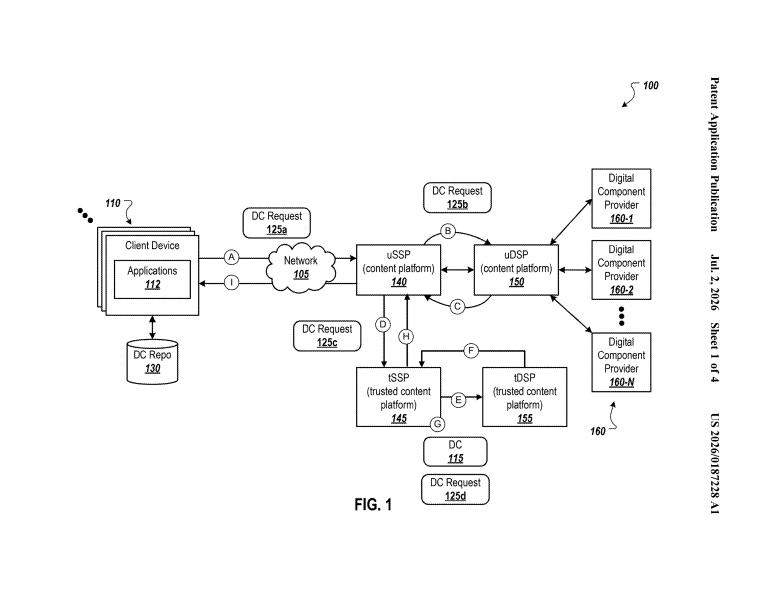
Google Patent Shows Two Protected Systems Sharing Ad Tasks Without Exposing User Data
Google wants to serve you targeted ads without any single server ever knowing who you are and what ad you saw at the same time. The trick is splitting the job between two isolated computing environments that can't leak data to each other.
-
Microsoft · Published Jul 2
Microsoft Patent Would Use Cryptographic Identity Checks to Gate File Access
Imagine a file that can only be opened if you are who you say you are, in the right place, at the right time, and a third-party server agrees with all three. That's the system Microsoft just filed a patent for.
-
Microsoft · Published Jul 2
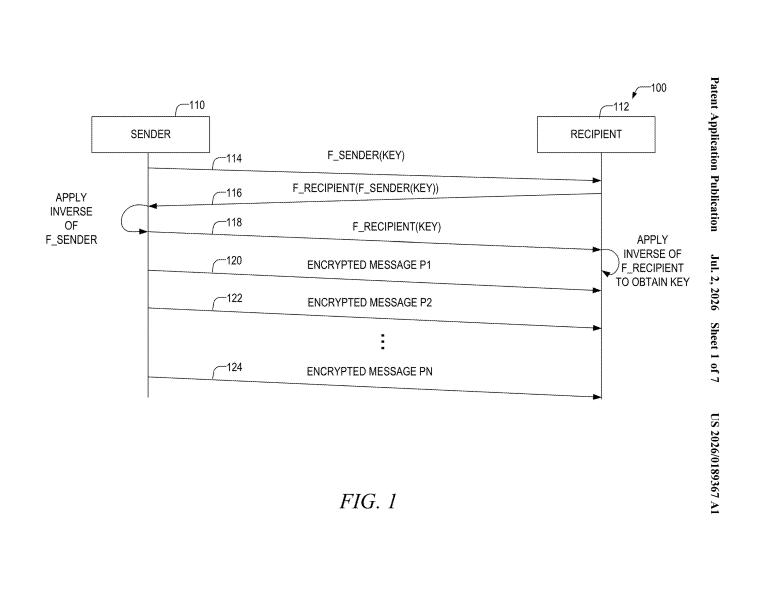
Microsoft Patents a Low-Power Security Method That Protects Data on Small Connected Devices
Locking down a smart thermostat or a cheap sensor with the same encryption used on a laptop is overkill -- and often impossible. Microsoft's new patent tries to fix that with an encryption approach designed specifically for devices that can barely spare a battery tick.
-
Microsoft · Published Jul 2
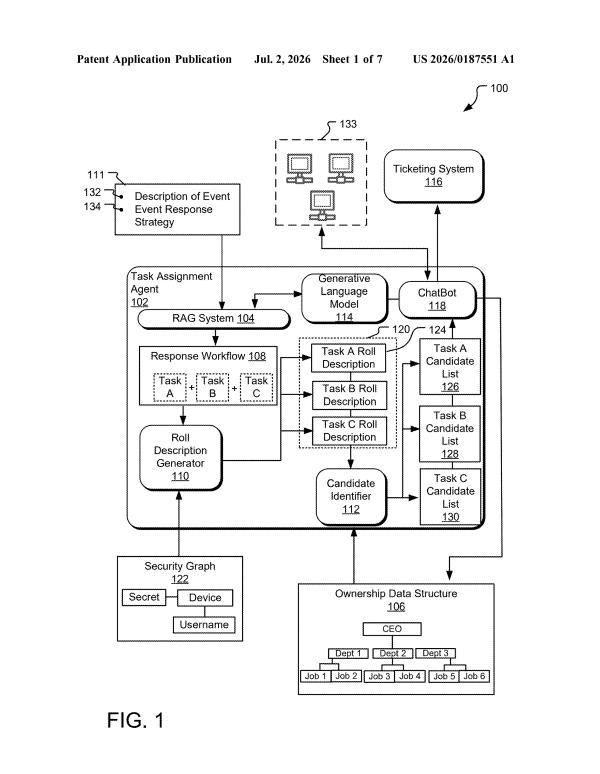
Microsoft Patents a System That Automatically Assigns Security Fixes to the Right Employee
When a security alert fires inside a large company, someone still has to figure out who owns the affected system and is actually qualified to fix it. Microsoft wants to automate that entire routing step.
-
Microsoft · Published Jul 2
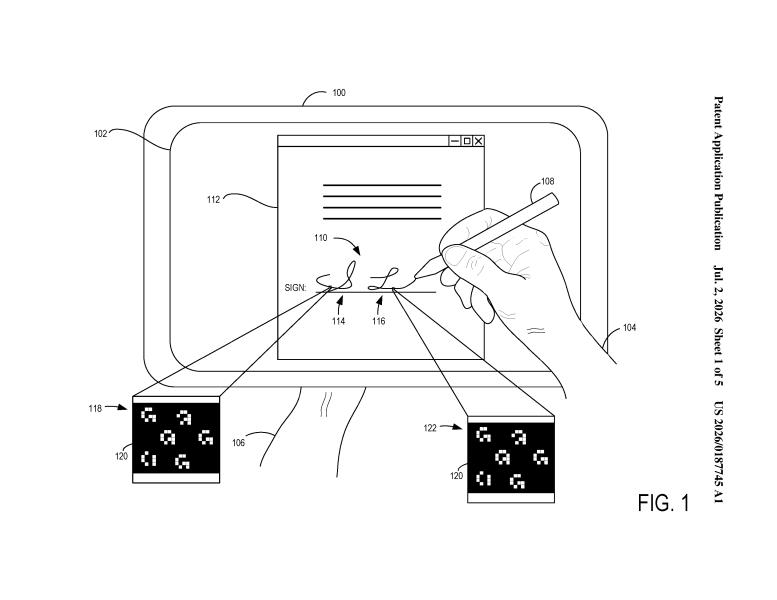
Microsoft Patents a Way to Hide Your Identity Inside Every Stylus Stroke
Every time you write or draw with a stylus, Microsoft's new patent could embed your identity invisibly into the ink itself. The stroke looks normal to you, but the pixels tell a different story.
-
Microsoft · Published Jul 2
Microsoft Patents a System That Builds and Destroys VPN Tunnels on Demand
Most VPNs stay open as long as you leave them on. Microsoft is patenting a system that flips that around: a VPN tunnel opens only when a specific software task needs it, and disappears the moment that task is done.