
Microsoft Patents Light-Based System That Stores and Recalls Data Like a Brain
Microsoft is patenting a way to run a type of AI memory network using lasers instead of traditional computer chips — an approach that could process information at the speed of light rather than waiting on silicon.
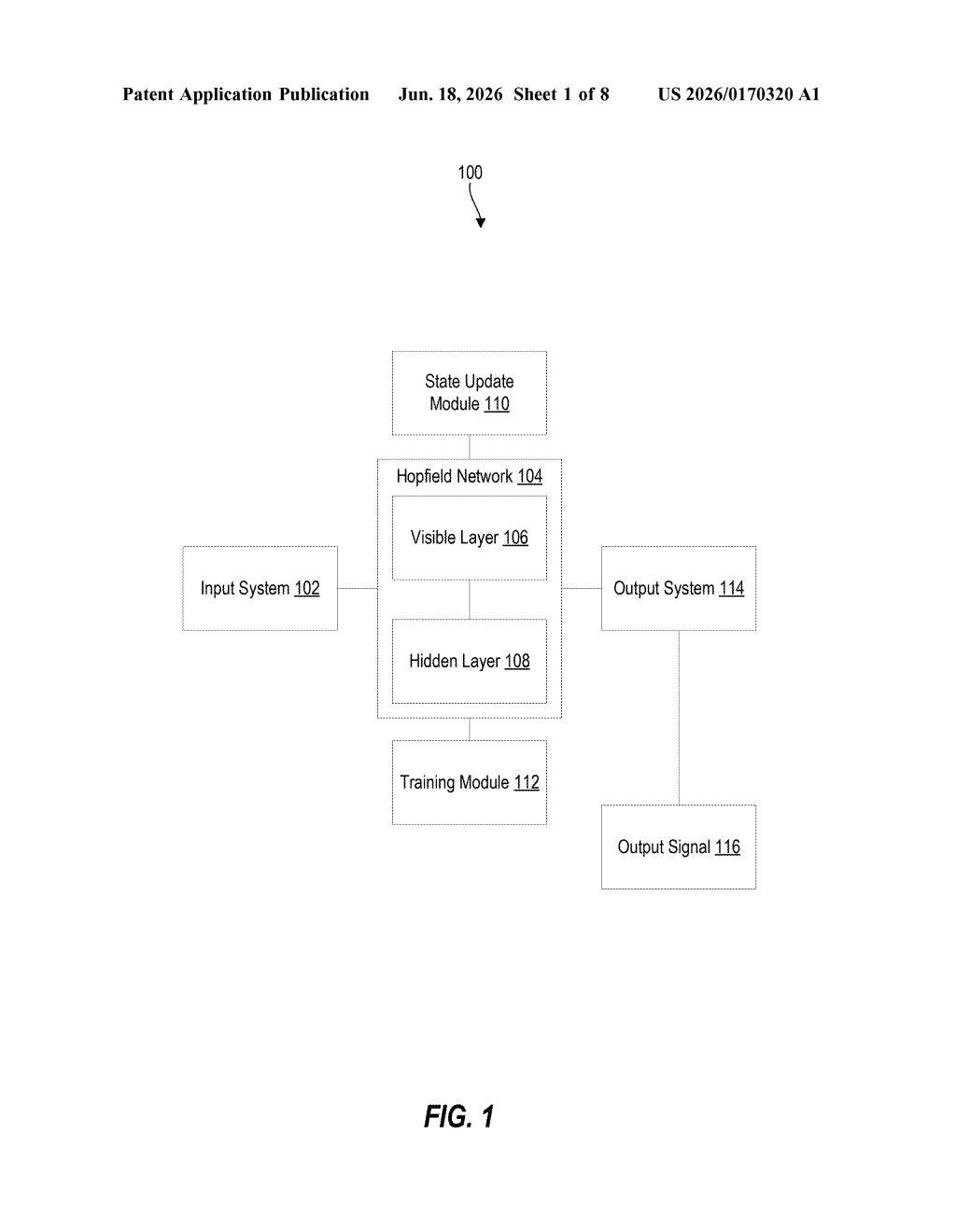
What Microsoft's laser-based memory network actually does
Imagine your brain trying to remember a half-forgotten face from a blurry photo. You fill in the gaps from memory, and eventually the full picture clicks into place. That's roughly what a Hopfield network does — it's a type of AI system designed to store patterns and retrieve complete ones even when given incomplete or noisy input.
What makes Microsoft's patent unusual is what it's built from. Instead of running this memory system on ordinary computer chips, Microsoft describes using lasers — specifically, lasers that lock onto each other's light signals and influence each other's behavior. Each laser acts like a tiny artificial neuron, and the way they interact mimics how neurons in a network vote on a stored memory.
The patent also describes a two-layer design — a visible layer that takes in patterns (like your blurry photo) and a hidden layer that helps the system store more patterns without needing an overwhelming number of connections. Together, they're supposed to reach a correct answer faster and more efficiently than an all-software approach.
How injection-locked lasers act as artificial neurons
The patent describes a hybrid Hopfield network — a classic AI architecture originally designed in the 1980s to store and retrieve patterns, similar to associative memory. Microsoft's version has two distinct layers:
- Visible layer: The neurons here receive the input — a partial or noisy pattern — and are all connected to each other. Their job is to hold the query and eventually output the recovered pattern.
- Hidden layer: A smaller set of neurons that each connect to a subset of visible neurons. The patent is specific that the number of hidden neurons is intentionally kept below a theoretical maximum (calculated using a combinatorial formula involving factorials), which is a way of controlling complexity and storage capacity without the network becoming unmanageably large.
- State update module: An iterative process (meaning it runs in repeated cycles, each time nudging neuron states closer to a stored answer) that drives the network toward what's called an attractor state — essentially the best-matching stored memory.
The physical implementation relies on injection-locked lasers — a technique where one laser's light is fed into another, forcing it to sync up and oscillate at the same frequency. Microsoft proposes using this synchronization behavior as the physical analog of neuron activation and connection weights. Optical control devices route light between lasers in a controlled pattern to implement the network's connections.
What this means for the future of AI hardware
Hopfield networks have seen a major revival recently — researchers discovered that modern versions can store exponentially more patterns than the original 1980s design, which has renewed interest in them as memory components inside larger AI systems. Microsoft's angle is to run these networks optically, which could in theory be far faster and more energy-efficient than silicon, since light moves faster than electrical signals and doesn't generate the same heat.
For you, this probably won't show up in a laptop anytime soon. Optical computing is still largely a research-stage technology. But if Microsoft (or anyone) can make it practical, it could reshape the hardware underneath AI data centers — the expensive, power-hungry machines that run the models you interact with every day.
This is a research-stage patent that sits at the intersection of two genuinely interesting areas — modern Hopfield networks and optical computing — but both are early enough that it's hard to know if this becomes a product or stays a whiteboard idea. The engineering specificity in the claim (the factorial-based hidden-neuron count formula) suggests real theoretical work behind it, not just a placeholder filing. Worth watching if you follow AI hardware trends.
There are more where this came from
We read every patent application Big Tech publishes and send you the ones worth knowing. Plain English, free, every week.
Want this weekly breakdown for a company we don't cover? Patentlyze Pro →