
Nvidia Patents an AI Factory Inspector That Compares Parts Against Multiple Perfect Samples at Once
Most automated factory inspection systems check a part against a single "ideal" image. Nvidia's new patent describes an AI that checks against many ideal images simultaneously, making defect detection far more reliable when no two good parts look exactly the same.
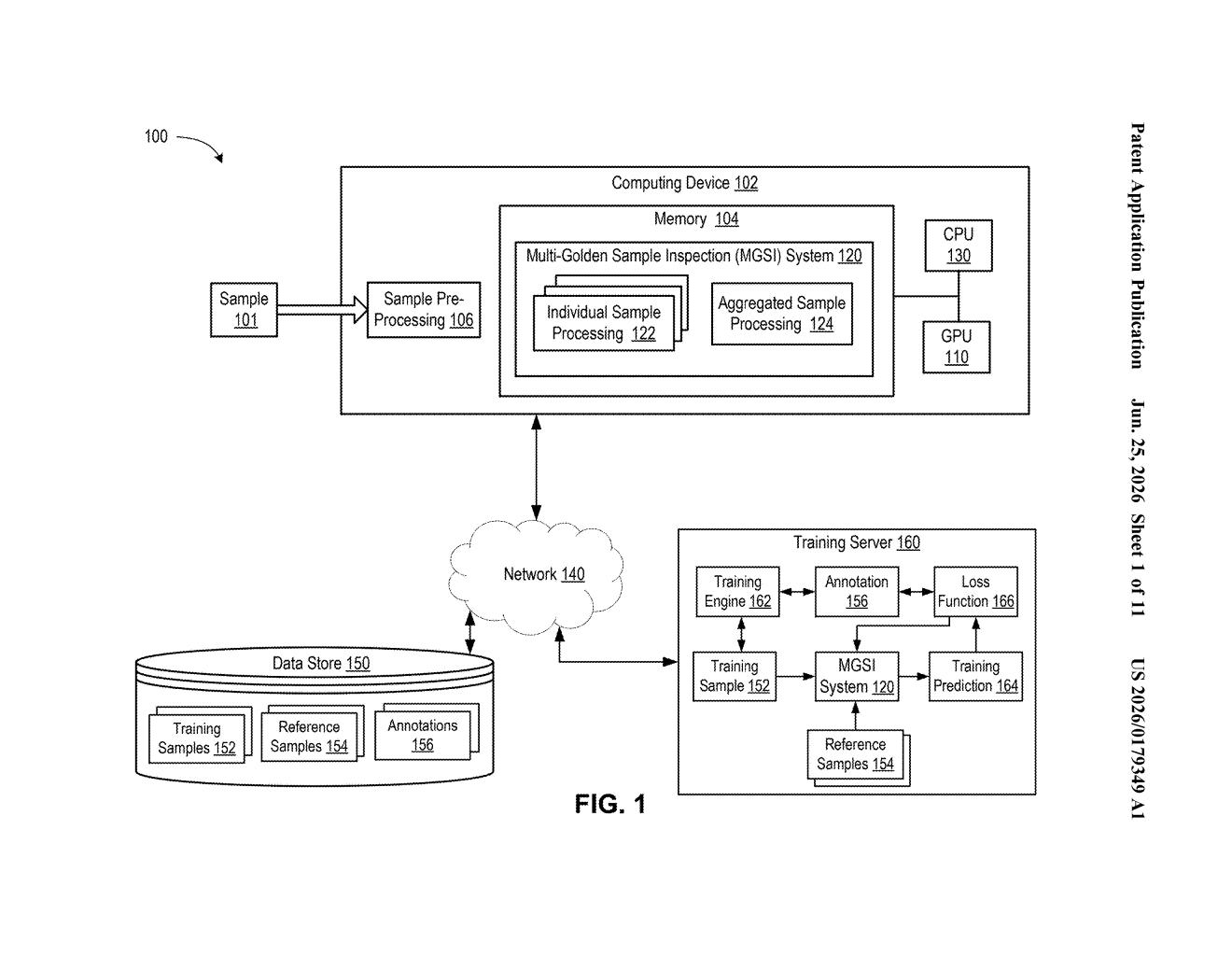
How Nvidia's multi-reference defect detector works
Imagine a factory inspector whose job is to reject any circuit board that doesn't look quite right. The tricky part: "right" can mean many things. Lighting shifts, angles vary, and even two perfectly good boards won't look identical. If the inspector only has one reference photo to compare against, they'll make mistakes.
Nvidia's patent describes an AI system built to handle exactly that problem. Instead of comparing a product image to a single "golden" example, the system compares it to many reference images at the same time. It figures out how the product differs from each reference, then pools all those differences together before making a judgment call.
The result is a system that can tell a real defect from a harmless variation with much greater confidence. And critically, the patent says the output feeds directly back into the manufacturing line, so the process can be adjusted on the fly when something goes wrong.
How the neural network builds and aggregates differential features
The system uses a backbone neural network (a general-purpose image-understanding model, similar in concept to what powers face recognition) to convert a photo of a product into a compact numerical description called a sample feature.
At the same time, it holds a library of reference features, each one a numerical description of a known-good "golden" product image. The system then computes a differential feature for each reference, essentially a vector that captures how the sample differs from that particular reference image.
- All those differential features are then aggregated (combined, for example by averaging or attention-weighted pooling) into a single summary.
- A prediction head reads that summary and outputs one or more characteristics of the sample, such as whether a defect is present and what kind it is.
- Those characteristics loop back to adjust manufacturing operations in real time.
The multi-reference design matters because a single golden image may not cover every valid appearance a good part can have. Using a diverse set of references makes the comparisons statistically richer and reduces false alarms from harmless surface variation.
What this means for AI-driven manufacturing quality control
Factory floor AI is a fast-growing segment, and Nvidia has been positioning its hardware and software (particularly the Metropolis platform) squarely at industrial inspection. This patent is a direct step in that direction: it describes a trainable, deployable pipeline that could run on Nvidia GPUs and report back to process controllers.
For you as a consumer, better automated inspection means fewer defective products make it out of the factory. For chip and electronics manufacturers specifically, where a single flawed solder joint can kill a board, a system that cross-references multiple ideal images before flagging a defect could meaningfully cut both scrap rates and the cost of recalls.
This is solid, practical work rather than a flashy AI showcase. The core idea, using multiple reference images instead of one, is straightforward but genuinely useful in production environments where "perfect" is a range, not a single image. It fits neatly into Nvidia's broader push into industrial AI and is the kind of patent that tends to ship inside an SDK or platform update.
There are more where this came from
We read every patent application Big Tech publishes and send you the ones worth knowing. Plain English, free, every week.
Want this weekly breakdown for a company we don't cover? Patentlyze Pro →