
Google Files Patent for AI That Learns Faster by Organizing Data Into Grids
Google has patented a new way to train machine learning models on structured, tabular data by combining two older techniques, boosting and matrix factorization, into a single architecture. It's a methodical engineering move aimed at squeezing better predictions out of the kind of messy, real-world data that fills spreadsheets and databases.
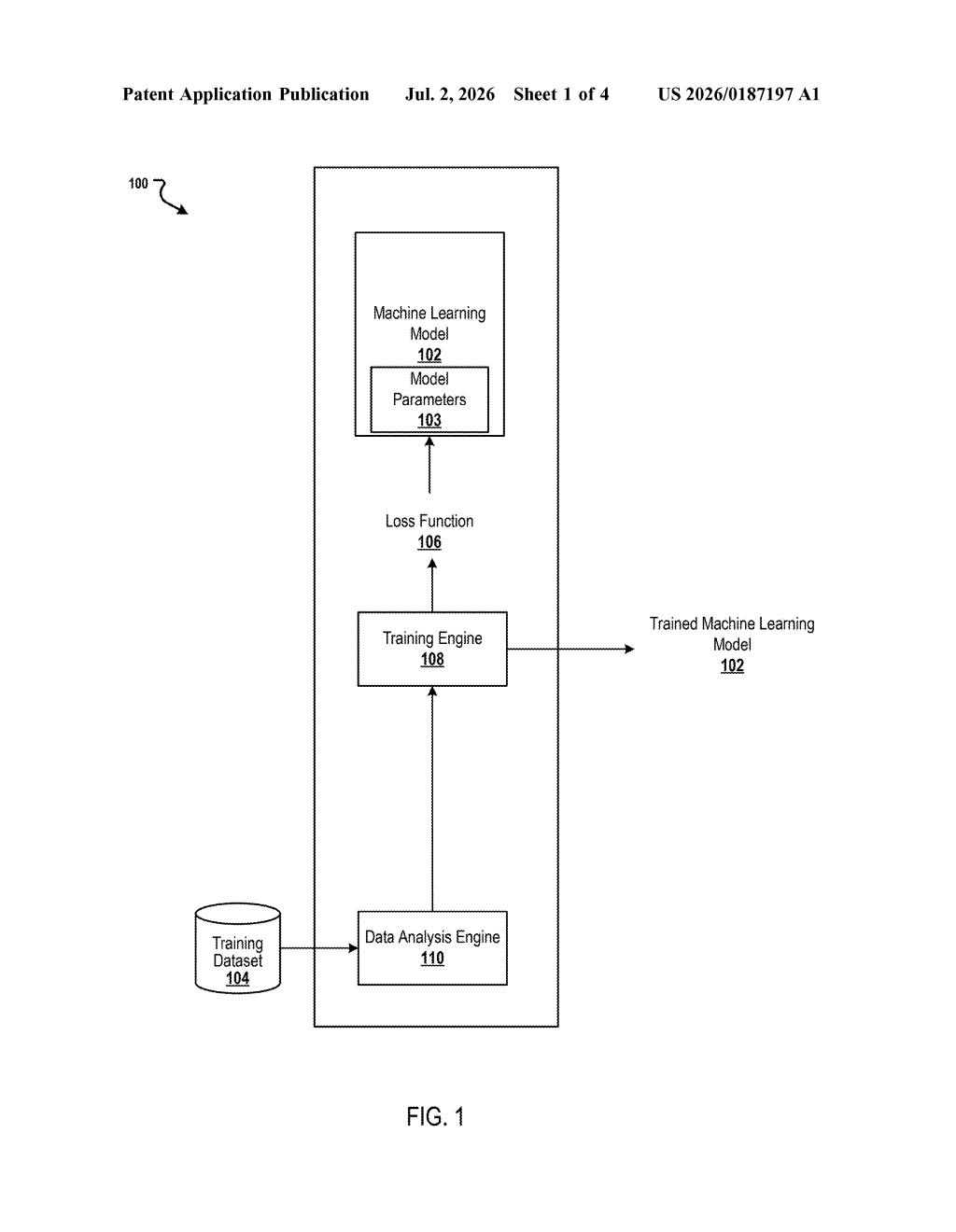
What Google's boosting-plus-factorization model actually does
Imagine you're trying to predict whether a customer will cancel a subscription. You have a table of data: age, location, plan type, how many times they've called support. That kind of data is notoriously tricky for AI to learn from because it mixes numbers and categories, and some columns have lots of missing or rare values.
Google's patent describes a training method that converts all of that messy table data into a series of matrices (basically organized grids of numbers). Each feature in your data gets represented as a list of adjustable numbers, and the model learns by tweaking those numbers until its predictions get better.
The clever part is that it borrows from two well-established approaches: boosting (a technique that stacks weak predictions to build a stronger one) and matrix factorization (a technique used in recommendation systems to find hidden patterns). Combining them in one training loop is the core idea here.
How the four-matrix system trains on structured data
The patent describes a four-matrix pipeline for training a machine learning model on structured data (think rows and columns, not images or text).
The process works in steps:
- A first matrix is built from the raw training data. Numeric features (like age or price) get converted into categorical buckets, and categorical features (like city or product type) get encoded as numbers. This is called a sparse representation because most entries are zero.
- Second, third, and fourth matrices are derived from that first one. These capture different aspects of the data relationships that the model will use during training.
- Each feature is then represented as a vector (a list of adjustable numbers, sometimes called an embedding). The model learns by tuning those numbers to minimize a loss function (a measure of how wrong the model's predictions are).
The training loop combines the loss signal from the fourth matrix with the structure of the first matrix, letting the model learn both local patterns (from boosting) and global relationships (from matrix factorization) at the same time. The canceled first claim is a procedural patent-prosecution detail and doesn't change what the remaining claims cover.
What this means for Google's AI infrastructure bets
Tabular data, the kind stored in business databases and recommendation engines, is still the dominant format for enterprise AI. Most of Google's ad-targeting, search ranking, and cloud-based prediction services run on exactly this type of data. A training architecture that handles mixed numeric and categorical features more efficiently could reduce compute costs or improve accuracy across those pipelines.
That said, this patent is squarely in foundational ML research territory. It isn't tied to a specific consumer product, and the techniques it draws on (gradient boosting and matrix factorization) have been standard tools for over a decade. The contribution here is the specific combination and the four-matrix formulation, not a wholesale reinvention of how AI learns.
This is a solid but unglamorous research patent. The combination of boosting and matrix factorization is a legitimate technical idea with real applications in ad ranking and recommendation systems, which happen to be core Google businesses. It's not a flashy AI announcement, but it's the kind of infrastructure-level work that shows up in production systems.
Get our take in your Top Stories
Liked this breakdown? Add Patentlyze as a preferred source on Google, and our plain-English take shows up more often in your Top Stories the next time Google patent news breaks.
There are more where this came from
We read every patent application Big Tech publishes and send you the ones worth knowing. Plain English, free, every week.
Want this weekly breakdown for a company we don't cover? Patentlyze Pro →