
Microsoft's New Patent Teaches AI Agents to Stop Talking Over Each Other
When you have dozens of AI agents running inside the same application, deciding which one should handle an incoming message is harder than it sounds. Microsoft is filing patents on how to do it well.
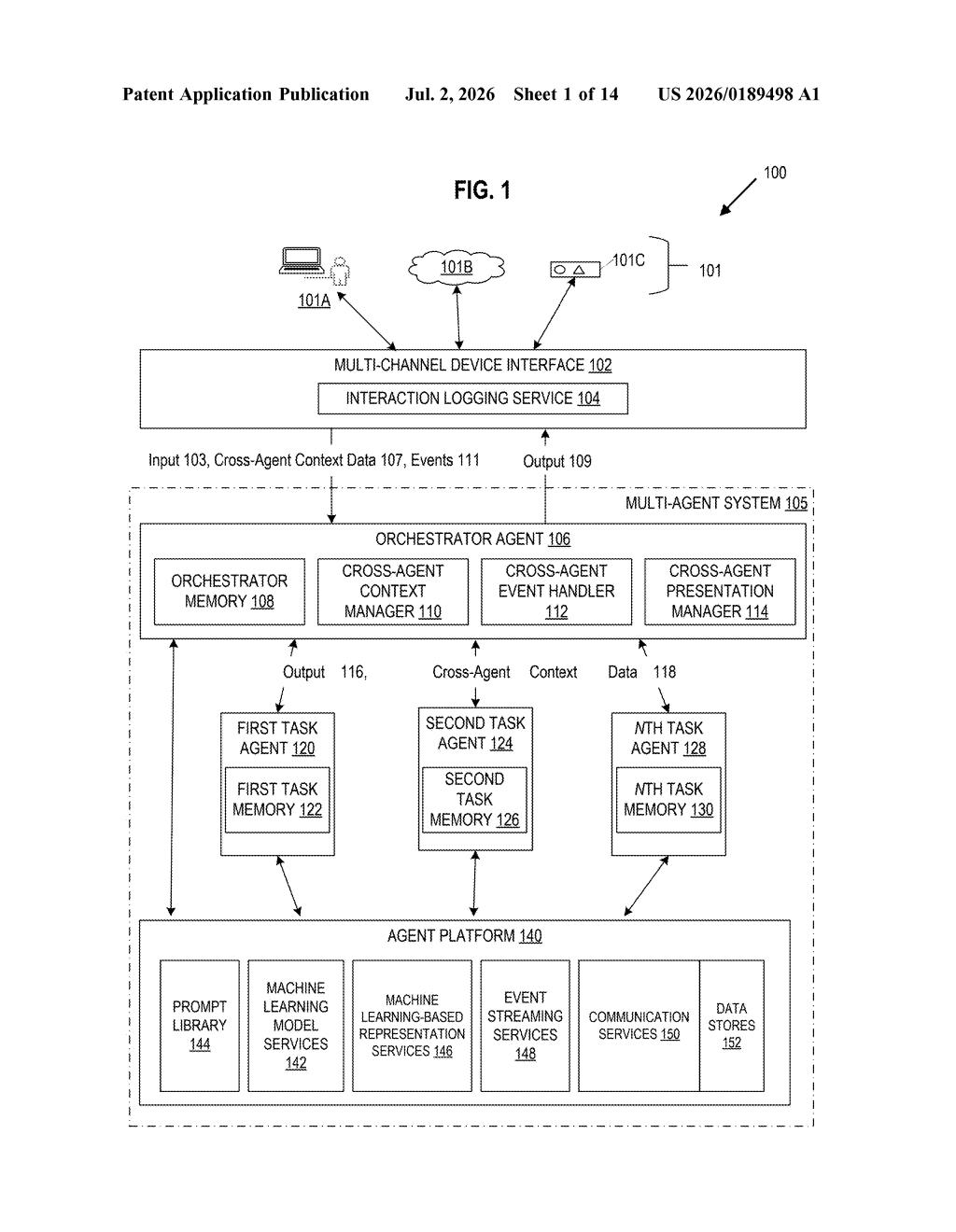
What Microsoft's AI agent traffic cop actually does
Imagine a busy customer-service center where dozens of specialists sit side by side. When a call comes in, someone at the front desk has to decide instantly which specialist should take it, not by job title alone, but by knowing who has already been working on that customer's case. Microsoft's patent describes a system that does exactly this for software programs made up of multiple AI agents.
In a multi-agent application, several AI programs work in parallel, each handling a specific type of job. The patent covers a layer that watches all incoming events (messages, requests, data changes) and figures out which agent is the best fit to respond, based on what that agent has already been doing.
The key idea is that the routing decision isn't random or purely rule-based. It uses each agent's history to understand its current state, then sends the event to the agent most likely to handle it usefully. That agent then completes a follow-up task in response.
How the system matches events to agents using task history
The patent describes a coordinator that sits above a pool of task agents (individual AI programs each responsible for a specific type of work) and manages an event stream (a continuous flow of incoming messages, triggers, or data updates).
The coordinator does three things in sequence:
- It watches the event stream for everything coming into the system.
- It checks each incoming event against the known state of each task agent, where that state is built from the agent's history of prior tasks, not just a static label.
- It routes the event to whichever agent's state best matches the event, and then collects that agent's output from the resulting task.
The phrase "state established using historical data" is the meaningful part here. Rather than a simple lookup table ("billing questions go to Agent B"), the system builds a richer picture of what each agent has been doing and what kind of work it is currently set up to handle. This lets the routing decision adapt as agents complete tasks and shift context.
The patent is written at a fairly abstract level, covering the coordination logic rather than the internal workings of any individual agent.
What this means for AI-powered business software
As companies build more complex AI workflows, they are moving from single-model chatbots toward multi-agent systems where many specialized AI programs collaborate. Microsoft's Azure and Copilot platforms are already pushing in this direction. The problem of orchestrating those agents cleanly, without events getting lost or routed to the wrong place, is a real engineering challenge, and this patent is a claim on one approach to solving it.
For you as an end user, the practical payoff would be AI-powered tools that handle context more reliably. An AI assistant that actually remembers which sub-system was working on your request, and hands off correctly instead of starting from scratch, is the goal this kind of infrastructure supports.
This is infrastructure-layer intellectual property for enterprise AI pipelines, not a consumer feature announcement. It is genuinely useful territory for Microsoft to protect given its investment in Copilot and Azure AI, but the patent itself is abstract enough that it covers a pattern many developers are independently working toward. Watch for this to show up in Azure AI Foundry or Copilot Studio tooling rather than anything with a splashy product name.
Get our take in your Top Stories
Liked this breakdown? Add Patentlyze as a preferred source on Google, and our plain-English take shows up more often in your Top Stories the next time Microsoft patent news breaks.
There are more where this came from
We read every patent application Big Tech publishes and send you the ones worth knowing. Plain English, free, every week.
Want this weekly breakdown for a company we don't cover? Patentlyze Pro →