
Qualcomm Patents a Faster Way to Run a Core AI Calculation on Chips
One of the most common calculations in AI, the softmax function, is also one of the most expensive to compute on small chips. Qualcomm thinks it has a faster path through the math.
What Qualcomm's AI math shortcut actually does
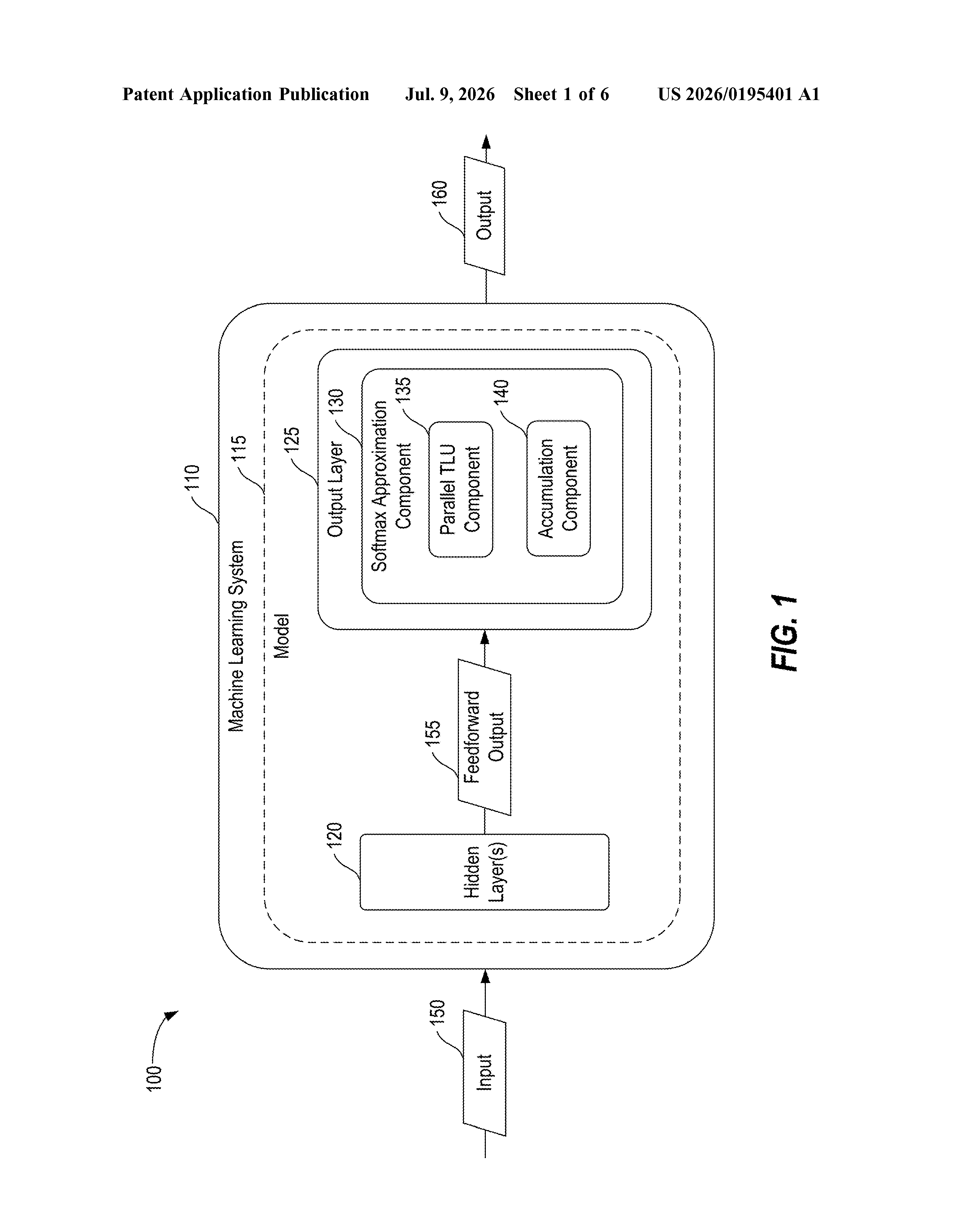
Imagine an AI model that has to pick the most likely word to finish your sentence. Before it can pick, it has to run a calculation that scores every possible next word and then converts those scores into probabilities that all add up to 100%. That calculation, called softmax, happens millions of times per second inside large AI models, and doing it with ordinary math is slow and power-hungry.
Qualcomm's patent describes a shortcut: instead of computing the underlying exponential math from scratch each time, the chip looks up pre-calculated answers in a compact table stored in memory. It's similar to how old-school calculators used log tables rather than recomputing logarithms by hand. The lookup is layered in stages ("hierarchical") so the chip can cover a wide range of values without needing a huge table.
The result is an approximation, not an exact answer, but for AI models that approximation is typically close enough. The chip gets the answer much faster and burns less energy doing it.
How the hierarchical table lookup replaces live computation
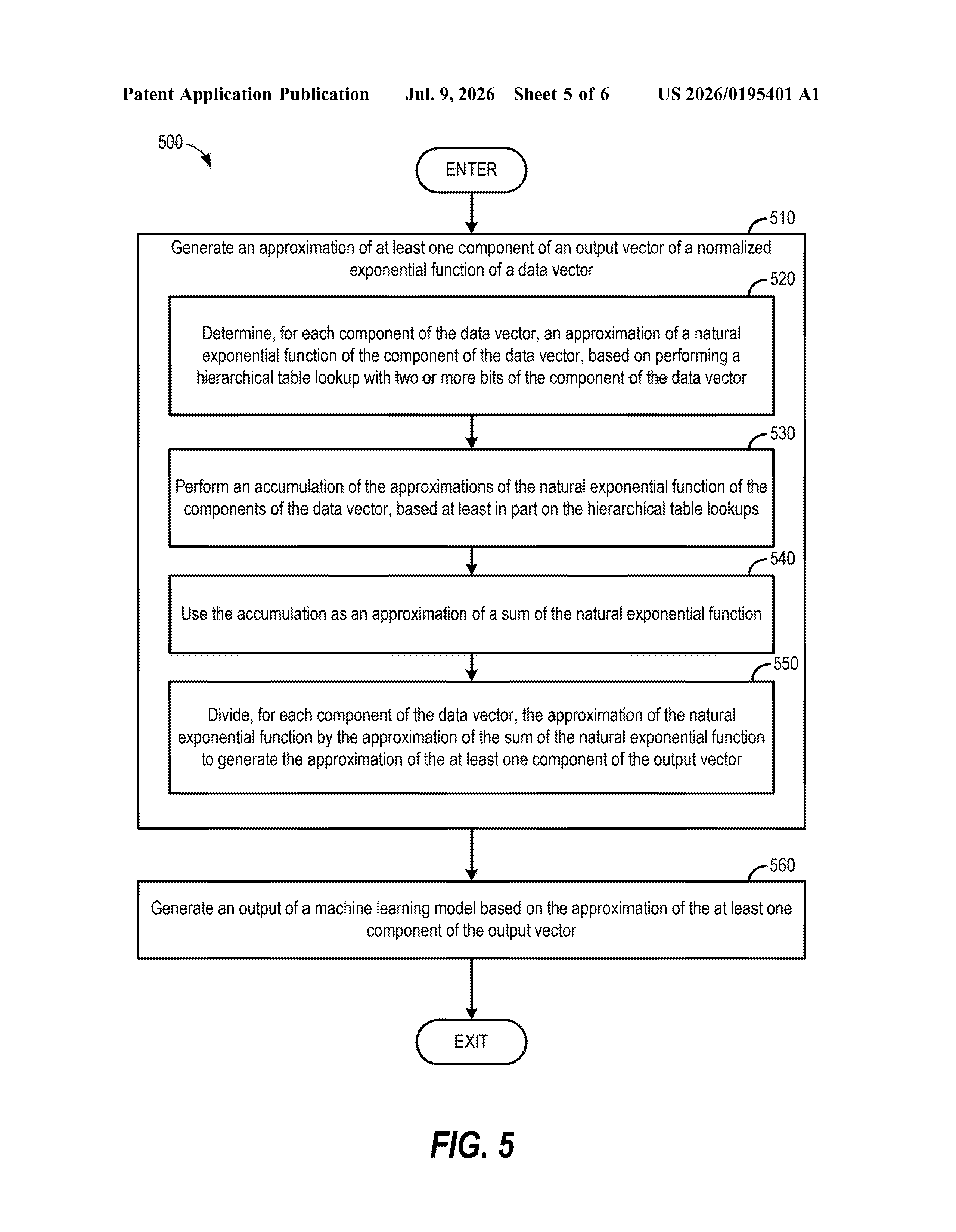
The patent targets the softmax function, a foundational operation in neural networks, especially the transformer-style models behind today's AI assistants. Softmax takes a list of raw scores and converts them into a probability distribution by (a) computing the natural exponential (e^x) of each score, (b) summing all those exponentials, and (c) dividing each individual exponential by that sum.
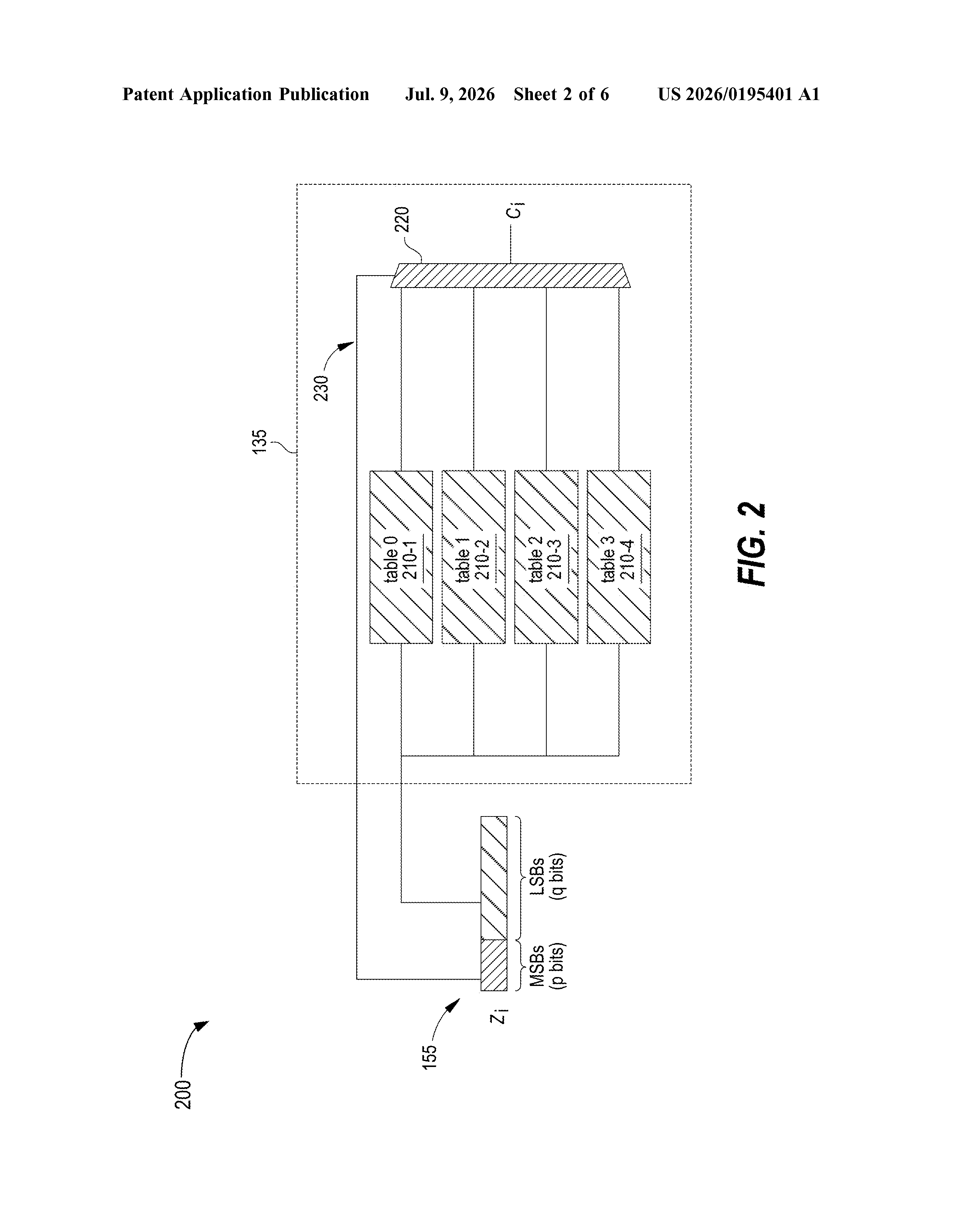
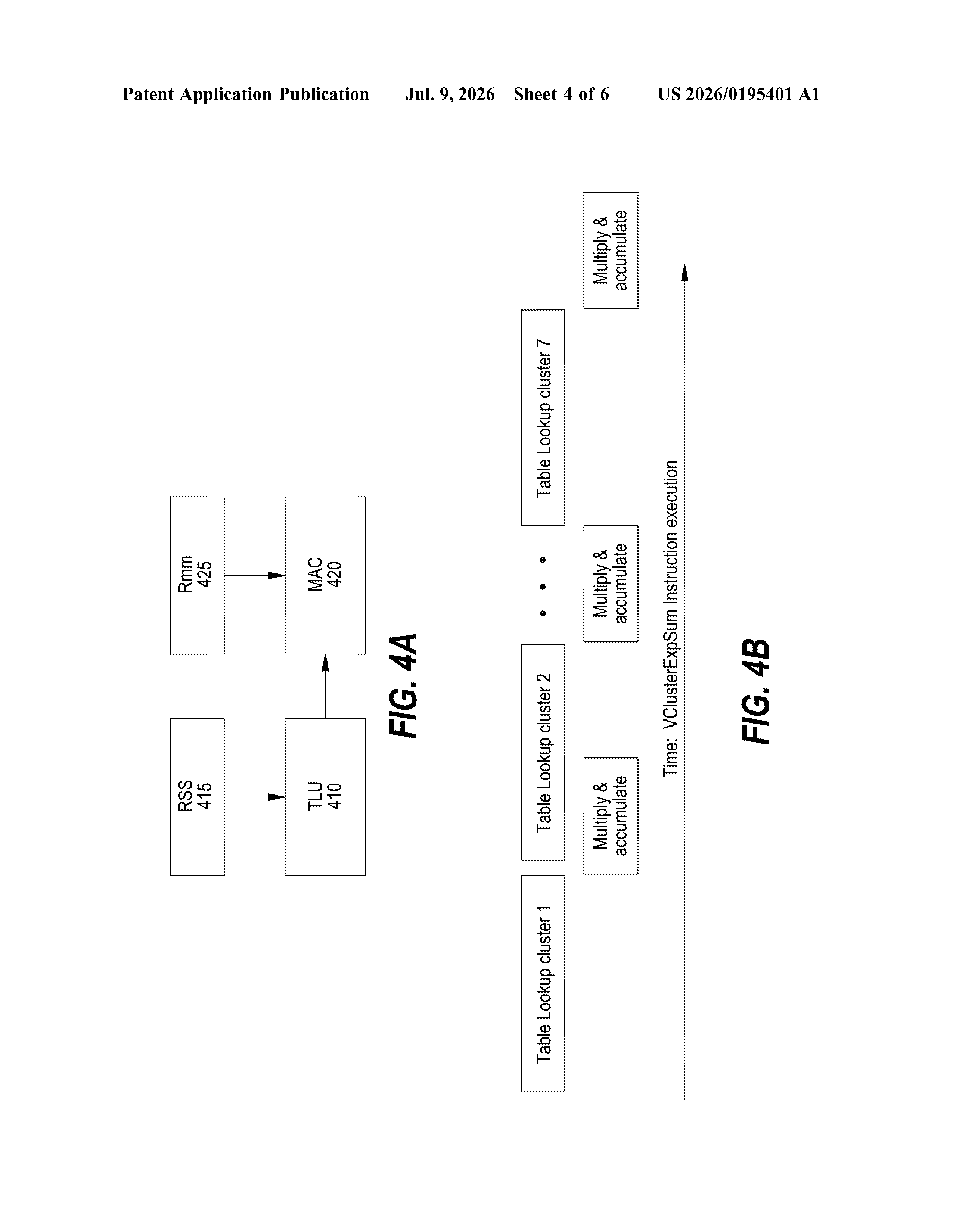
Step (a) is the bottleneck. Computing e^x in silicon requires a series of multiplications and additions that take time and energy. Qualcomm's approach replaces that live computation with a hierarchical table lookup: the chip splits each input value into groups of bits, looks up partial results for each group in a small pre-stored table, then combines those partial results. Because the table is structured in layers, a relatively small amount of stored data can approximate e^x across a large input range.
The patent then describes how the chip:
- Runs this lookup for every element in the input data vector in parallel
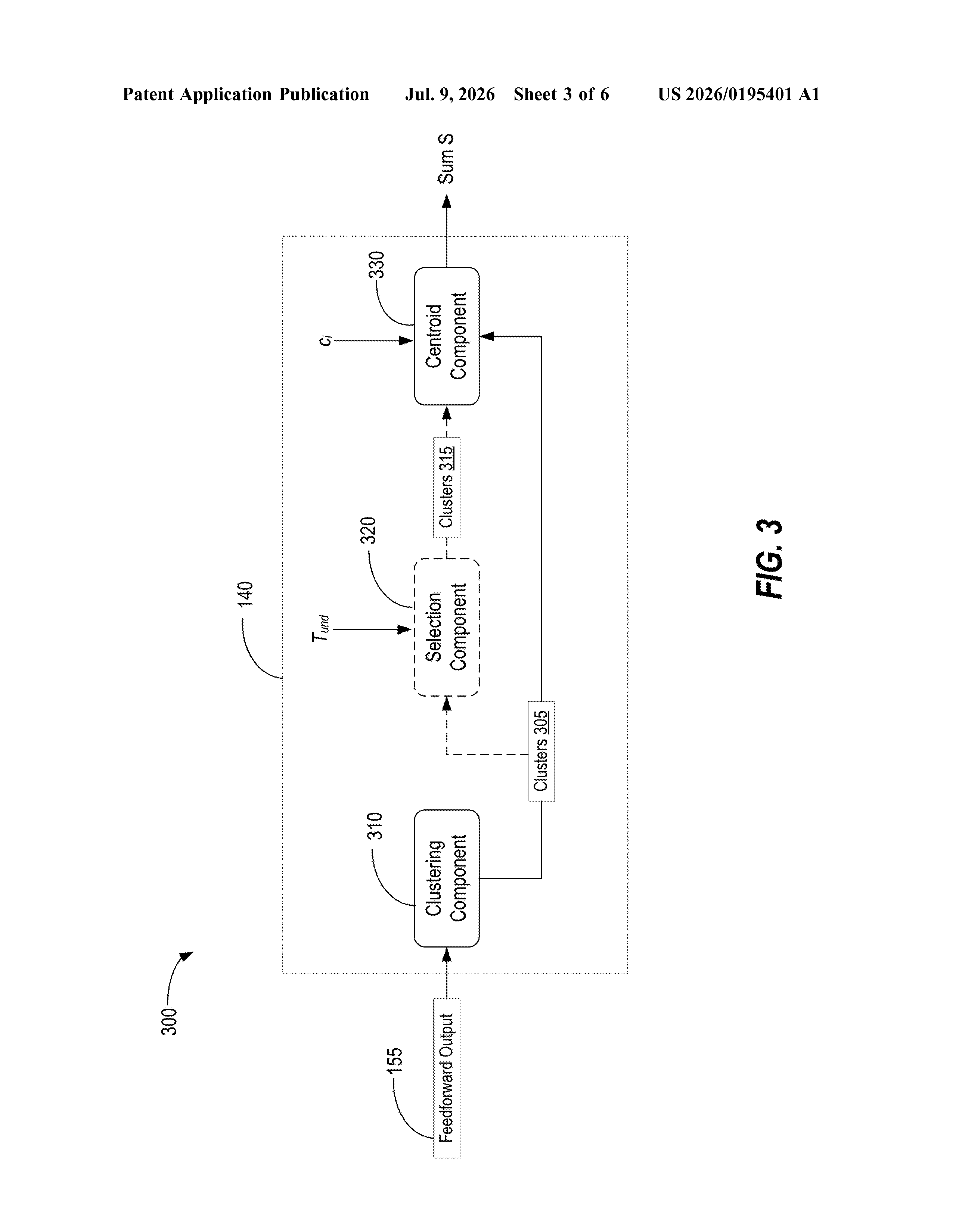
- Accumulates (sums) all the approximated exponentials
- Divides each individual approximation by that running sum to produce the final softmax output
The output feeds directly into the next layer of the AI model, so the approximation must be consistent and bounded, which the patent's hierarchical structure is designed to guarantee.
What this means for AI on phones and edge devices
Softmax shows up in nearly every transformer-based AI model, from large language models to image classifiers to speech recognizers. On a data-center GPU there is plenty of headroom to do the math the slow way. On a phone chip or a dedicated AI accelerator, every wasted computation drains your battery and slows your response time.
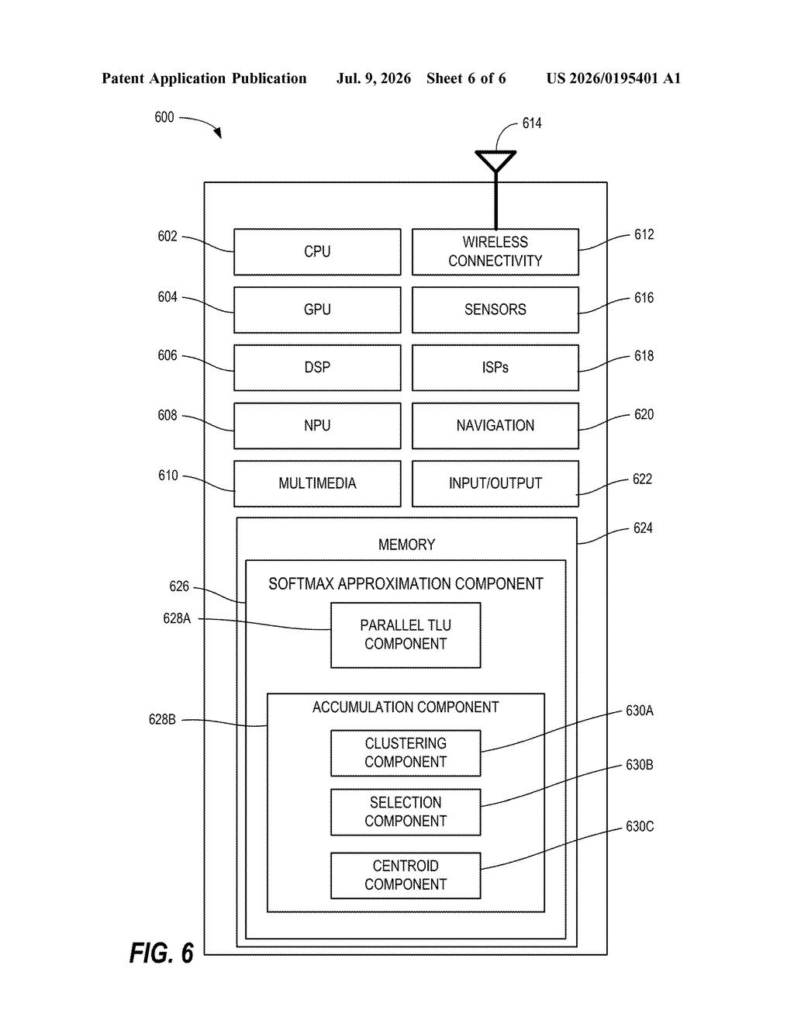
Qualcomm builds the Snapdragon chips that power most premium Android phones, and it has been pushing hard to run AI models locally on those devices rather than in the cloud. A patent like this, focused on cutting the cost of a specific and very common operation, fits squarely into that strategy. If the technique works as described, it could let Qualcomm's on-device AI run faster or at lower power without changing the model itself.
This is unglamorous but genuinely useful chip engineering. Speeding up softmax is not going to make headlines the way a new AI model will, but it is exactly the kind of low-level optimization that separates chips that run AI well from chips that merely run AI. Qualcomm filing this now, as the race to do more AI on-device heats up, makes complete sense.
Get our take in your Top Stories
Liked this breakdown? Add Patentlyze as a preferred source on Google, and our plain-English take shows up more often in your Top Stories the next time Qualcomm patent news breaks.
There are more where this came from
We read every patent application Big Tech publishes and send you the ones worth knowing. Plain English, free, every week.
The drawings
6 drawing sheets from US 2026/0195401 A1 · click any drawing to enlarge
Want this weekly breakdown for a company we don't cover? Patentlyze Pro →