
Qualcomm Patent Reveals AI Models That Shrink Themselves Mid-Task to Save Power
What if your phone's AI could drop parts of itself when the battery is running low or the chip gets too hot, without you ever noticing a crash or a slowdown? That's the core idea in this Qualcomm patent.
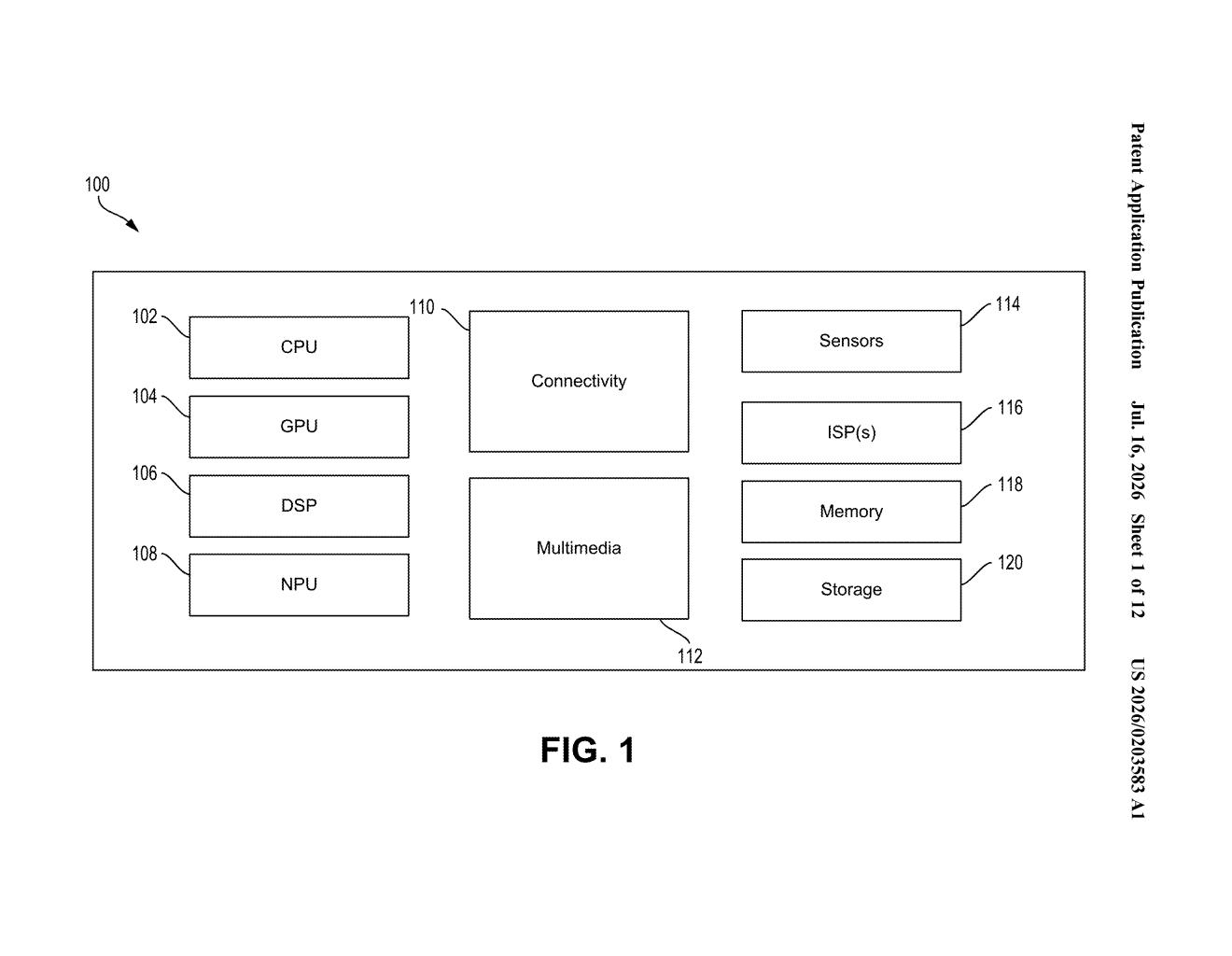
What Qualcomm's on-the-fly AI trimming actually does
Imagine your phone is running an AI feature, say, live translation or a photo enhancement tool, and the battery drops to 15%. Right now, the device either keeps grinding away at full power or the feature gets shut off entirely. Qualcomm's patent describes a third option: the AI model restructures itself on the spot, skipping certain steps it doesn't strictly need, so it keeps working but uses less energy.
The system uses sensor readings from the device itself, things like temperature, battery level, or chip workload, to decide which parts of the AI can be safely skipped at that moment. Those skippable parts are bypassed using built-in shortcuts called skip connections, which the model was designed to support from the start.
The key detail is that this all happens while the AI is already running, not before or after. There's no restart, no mode switch you'd have to trigger manually. The model just adapts to the conditions your device is dealing with right now.
How skip connections let the chip bypass AI layers in real time
The patent describes a device (a phone, a wearable, or any edge processor running an AI model) that monitors its own hardware sensors in real time. When conditions change, say the chip temperature spikes or battery drops, the processing system identifies which layers of the neural network can be bypassed.
This works because the AI model is built with skip connections, which are pre-designed shortcuts that let the system jump over one or more processing layers and still produce a usable result. Think of it like a recipe that says "if you're short on time, skip steps 4 and 5 and it'll still taste fine." The model was trained knowing some of its layers are optional under certain conditions.
The reconfiguration happens during inference (meaning while the AI is actively processing a task, not during a setup phase). The system:
- Reads sensor data continuously
- Identifies which skip connections match the current resource situation
- Activates those shortcuts so the reduced model runs instead of the full one
The reduced configuration isn't a separate, smaller model loaded from storage. It's the same model, just running with certain layers bypassed. This avoids the overhead of swapping models entirely, which is slow and memory-intensive.
What this means for AI on phones, earbuds, and edge devices
Most AI features on mobile devices today are brittle: they run at full cost or not at all. This patent points toward a future where on-device AI adjusts its own complexity in response to your device's real conditions, which matters a lot as more AI workloads move off the cloud and onto phones, earbuds, and IoT sensors. Qualcomm supplies the chips in a huge share of Android phones and many edge devices, so a capability like this baked into their silicon could affect millions of products.
For you as a user, the practical upside is AI features that stay on longer during a long day instead of getting killed to preserve battery, and chips that don't run as hot during sustained AI tasks. It's not glamorous, but battery life and heat are two of the most consistent complaints about always-on AI features on mobile hardware.
This is genuinely useful engineering, not a flashy concept. The hard part of running AI on small devices has always been the all-or-nothing power trade-off, and Qualcomm is describing a credible, architecturally sound way to soften that. Whether it ends up in a shipping product depends on how much accuracy you actually lose when those layers get skipped, which the patent doesn't fully address.
Get our take in your Top Stories
Liked this breakdown? Add Patentlyze as a preferred source on Google, and our plain-English take shows up more often in your Top Stories the next time Qualcomm patent news breaks.
There are more where this came from
We read every patent application Big Tech publishes and send you the ones worth knowing. Plain English, free, every week.
Want this weekly breakdown for a company we don't cover? Patentlyze Pro →