
Meta Patents Virtual Buttons That Live on Your Wrist in AR
Imagine glancing at your wrist and seeing a virtual button floating there, ready to tap, with no physical hardware required. That's the core idea behind Meta's latest AR patent.
What Meta's wrist-button system actually does
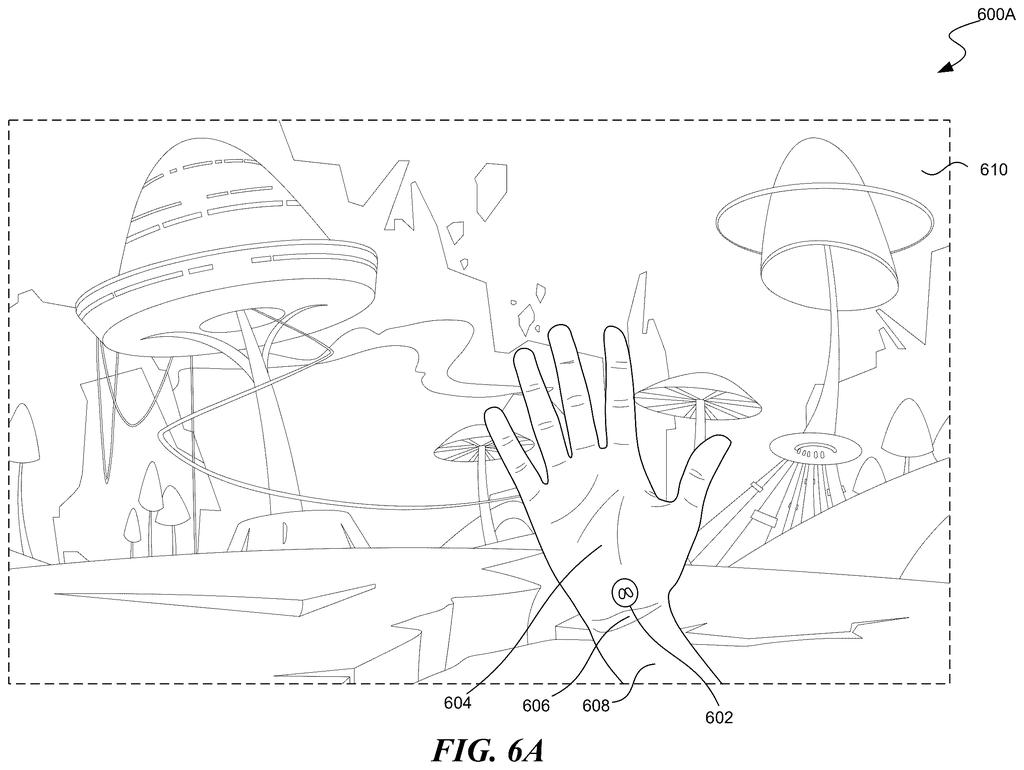
Picture wearing a pair of AR glasses and wanting to pull up a menu. Instead of reaching into thin air or speaking a voice command, you flip your wrist toward your face and a small virtual button appears right on your inner wrist, exactly where a watch face would sit.
Tapping that button once could open a menu of apps or settings. A double-tap or a long press could trigger different shortcuts, like skipping a song or jumping to a notification tray. You don't need to find a controller or touch a physical button anywhere on the headset itself.
Meta's patent also describes putting different buttons on each wrist, so your left hand might handle system settings while your right hand handles app-specific controls. It's a way to bring familiar muscle memory (glancing at your wrist, the way you check a watch) into a world where the interface is entirely digital.
How the headset detects and locks buttons to your wrist
The patent describes a method for wrist-locked virtual objects, meaning digital UI elements (think buttons, icons, or menus) that are anchored to a specific spot on a user's wrist or forearm inside an XR (extended reality) environment.
Here's the basic sequence the system follows:
- The headset's cameras detect when your wrist or forearm enters the field of view and comes within a threshold distance.
- A first virtual object (a button or icon) appears, locked to that wrist position so it moves with your arm naturally.
- When the system detects intent to interact, either a finger approaching or a tap gesture, a second virtual object (a menu or expanded control panel) appears.
Intent detection is a key piece here. The system doesn't wait for a full tap; it reads the approaching hand as a signal to prepare the next layer of UI, which reduces the delay between wanting to interact and actually seeing the options.
The patent also covers different tap types (single, double, long press) mapping to different functions, and placing distinct button sets on each wrist to separate system-level controls from app-level ones.
What this means for the future of AR navigation
For AR headsets to replace phones as everyday devices, interacting with them needs to feel as quick and low-effort as unlocking your phone screen. Right now, most headsets rely on hand-tracking that requires deliberate gestures in open space, which feels unnatural in public. Anchoring controls to the wrist borrows from one of the most intuitive habits humans already have: looking at their wrist for quick information.
This also has direct implications for Meta's Quest and Orion product lines. If wrist-based UI becomes a standard interaction pattern, it reduces dependence on physical controllers without requiring users to learn unfamiliar gesture vocabularies. That's a meaningful step toward making AR headsets feel less like a gadget and more like an appliance.
This is a genuinely practical UX idea, not a speculative moonshot. Wrist-checking is one of the fastest, most automatic gestures people perform, and building AR menus around that habit is exactly the kind of design thinking that separates useful headsets from demo hardware. Whether Meta ships this in its current form matters less than the fact that the company is clearly thinking hard about reducing friction in AR interaction.
There are more where this came from
We read every patent application Big Tech publishes and send you the ones worth knowing. Plain English, free, every week.
The drawings
12 drawing sheets from US 2026/0211487 A1 · click any drawing to enlarge


Want this weekly breakdown for a company we don't cover? Patentlyze Pro →