
Samsung Patents an AI Tool That Can Rewind or Fast-Forward Objects in Your Photos
What if you could take a photo of a half-eaten apple and ask your phone to show you what it looked like fresh off the tree? Samsung's latest patent describes exactly that kind of AI photo editing, one object at a time.
What Samsung's object state photo editor actually does
Imagine you have a photo of a wilting flower and you want to see what it looked like in full bloom. Normally you'd need a professional photo editor and a lot of skill. Samsung is patenting a way to let your phone handle that automatically.
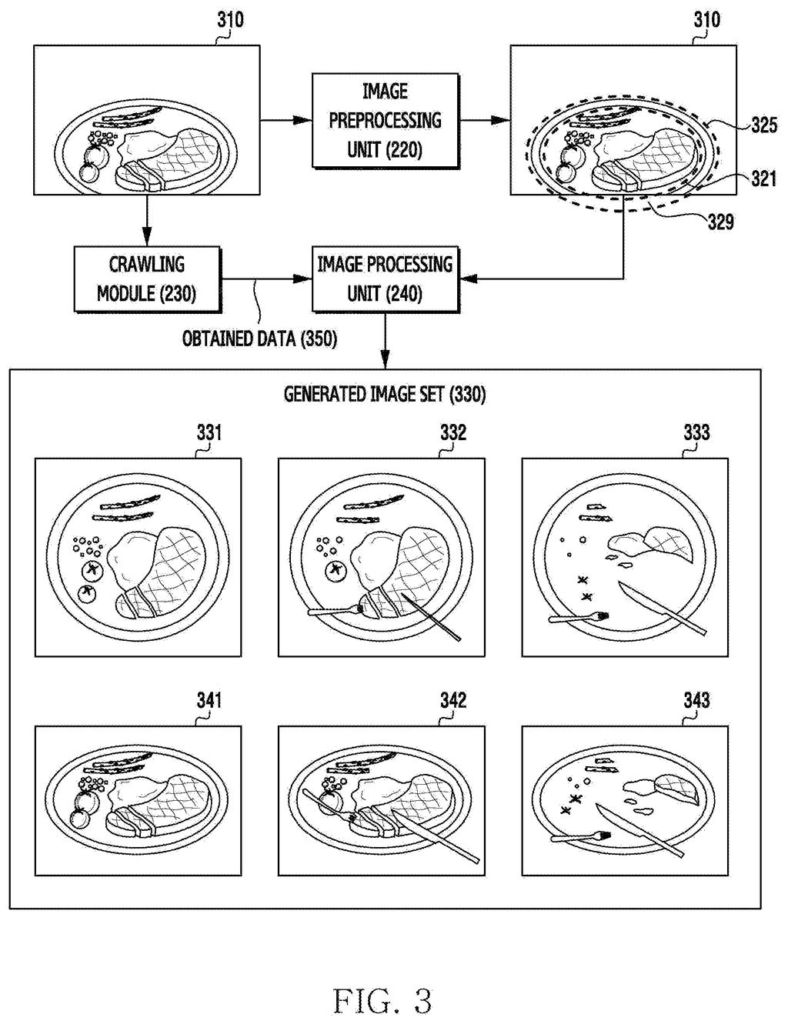
The system lets you tap on any object in a photo, then describe how you want it to look. You might say "make this unripe" or "show this open" and the phone builds a text instruction from your input, feeds it along with the original photo into an AI image generator, and gets back a version of the picture with that object transformed.
The key idea here is that the AI understands objects have a natural range of states, not just two extremes. A door can be fully open, slightly ajar, or closed. A piece of fruit can be unripe, ripe, or overripe. Samsung's system lets you move along that spectrum with a simple tap and a word.
How the AI selects objects and generates new states
The patent describes a device (most likely a phone or tablet) that breaks the photo-editing task into three steps.
- Object selection: The user picks a specific object in an image, either by tapping it or through an automated selection tool.
- State identification: The device reads a command or cue about what kind of change the user wants, described in the patent as "indication information" about an intended state change. Think of this as a translated signal of intent: you want the apple to look fresher, the door to look closed, the sky to look stormy.
- Prompt construction and image generation: The device builds a text prompt that captures the desired change, then passes both the original image and the prompt into a generative AI model (the kind of model that can synthesize realistic-looking images from text instructions). The model outputs one or more result images showing the object in its new state.
The phrase "range of different possible states" is doing a lot of work here. The patent is not just describing a simple before/after switch. It is framing each object as something that exists on a continuum, and the AI is supposed to understand where on that continuum the user wants to land.
What this means for Samsung's AI photo editing ambitions
Samsung has been investing heavily in on-device AI features for its Galaxy phones, and this patent fits neatly into that strategy. Tools like Google's Magic Eraser and Apple's Clean Up already let users remove objects, but changing the state of an object rather than erasing it is a meaningfully different capability. It is closer to what professional retouching tools do, brought down to a tap-and-type interaction.
For everyday users, this could mean fixing a photo where the subject had their eyes closed, adjusting a product shot without a reshoot, or just experimenting with how a scene might have looked at a different moment. Whether this ends up in a Galaxy phone's camera app or stays a research filing is an open question, but the direction Samsung is pointing is clear.
This is a genuinely interesting extension of the generative AI photo-editing category, not because the underlying technology is new but because Samsung is packaging it around the concept of object states, which is a more flexible and natural way for people to think about editing than typing free-form prompts. The biggest challenge will be making the state-range detection reliable enough to be useful rather than frustrating.
There are more where this came from
We read every patent application Big Tech publishes and send you the ones worth knowing. Plain English, free, every week.
The drawings
13 drawing sheets from US 2026/0220898 A1 · click any drawing to enlarge


Want this weekly breakdown for a company we don't cover? Patentlyze Pro →
Be the first to weigh in