
Google Patents a Color-Correcting Lens System for AR Waveguide Displays
Color fringing — that annoying rainbow halo you sometimes see on AR headset text — is a fundamental physics problem with waveguide displays. Google thinks a precisely placed corrective lens can solve it before the light even enters the waveguide.
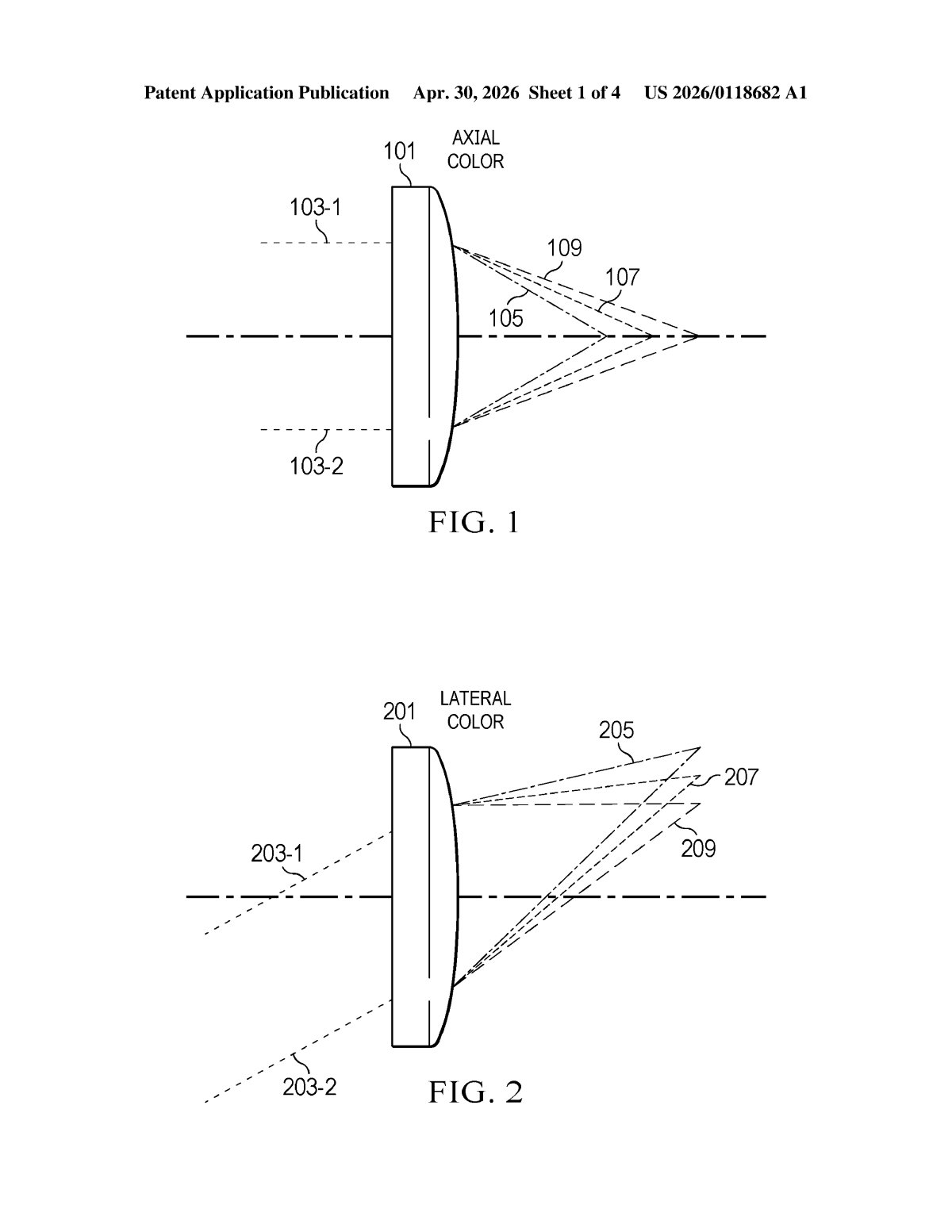
What Google's AR color-correction lens actually fixes
Imagine putting on a pair of AR glasses and reading some text, only to notice the letters have faint red and blue halos around them. That's called chromatic aberration, and it happens because red, green, and blue light don't focus at exactly the same point when passing through curved optical surfaces. It's a known headache in AR hardware design.
Google's patent describes placing a color-correcting lens right between the display's light source and the entrance of the waveguide — the thin piece of glass that guides the image to your eye. That lens nudges the three color channels so they land at the same focal point, producing a sharper, cleaner image before the light even starts its journey through the waveguide.
The system also uses curved, freeform mirror surfaces inside the waveguide to collimate (straighten) the light, and a pupil replicator to spread the image across a wider area so the display works even if your eye isn't perfectly centered.
How the corrective lens aligns red, green, and blue focal planes
At the heart of this patent is a curved lightguide — the waveguide element that carries display imagery from a projector to your eye in an AR headset. Inside it sits a curved collimator, whose job is to take diverging light from the display source and turn it into parallel rays that can propagate cleanly through the guide.
The core invention is the color correcting lens placed between the light source and the collimator's entrance surface. Different wavelengths of light (red, green, blue) refract at slightly different angles through curved optics — a phenomenon called chromatic focal shift. Left uncorrected, this means each color focuses at a slightly different depth, producing blur or fringing. The corrective lens pre-compensates for this by bending each color channel just enough so they all converge at a common focal plane inside the collimator.
Inside the curved collimator, freeform TIR (total internal reflection) mirrors — surfaces engineered in non-standard, sculpted shapes — bounce and collimate the light without needing traditional bulky lens stacks. TIR means the light reflects off the internal surface rather than passing through it, keeping the system compact.
Finally, a pupil replicator within the lightguide takes that collimated beam and copies it across a larger exit area, so the image remains visible across a reasonable range of eye positions — a critical requirement for any wearable display that can't be surgically aligned to your pupil.
What this means for Google's AR glasses ambitions
Chromatic aberration is one of the most persistent image-quality problems in thin waveguide AR optics, and it gets worse as you try to make the optics more compact and curved. Solving it with a dedicated corrective element — rather than elaborate software post-processing or thicker traditional lens assemblies — is a meaningful step toward AR glasses that look and feel more like normal eyewear.
Google has been investing in AR display optics for years, and this patent suggests active work on waveguide hardware that prioritizes optical quality at small form factors. If this approach makes it into a shipping product, you'd notice it as crisper text and cleaner edges on AR overlays — the kind of subtle improvement that makes the difference between a device you wear all day and one you leave in a drawer.
This is solid, unsexy optical engineering — exactly the kind of foundational work that separates AR devices people actually want to wear from the chunky prototypes that never leave the lab. The color-correcting lens placement is a clean, elegant solution to a real problem, and the combination with freeform TIR mirrors suggests Google is serious about compact form factors. It won't generate buzz, but it's the type of patent that quietly shows up inside a shipping product two years from now.
There are more where this came from
We read every patent application Big Tech publishes and send you the ones worth knowing. Plain English, free, every week.
Want this weekly breakdown for a company we don't cover? Patentlyze Pro →