
Salesforce Patents a Broker System for Spinning Up AI Agents Across Servers
Salesforce is patenting the plumbing that lets thousands of AI agents run simultaneously across different servers without stepping on each other. It's less about what the agents do and more about who's keeping track of all of them.
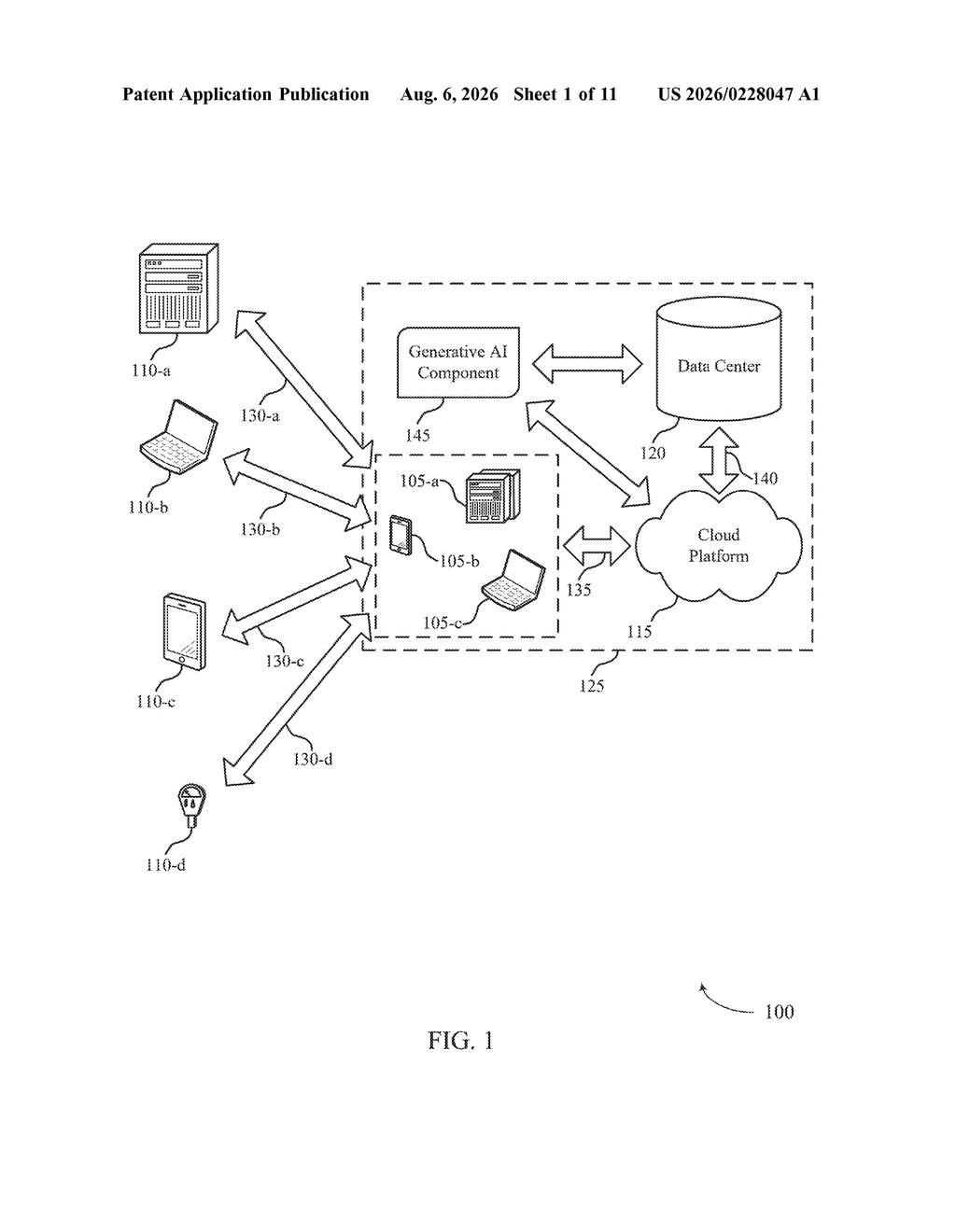
What Salesforce's AI agent routing system actually does
Imagine a busy call center where a manager assigns workers to specific tasks, tracks who is available, and routes incoming calls to the right person. Salesforce's patent describes something similar, but for AI agents running on computers.
When your company deploys an AI agent to handle, say, customer refunds, something needs to spin that agent up, tell it what to do, and keep it running on a server that has spare capacity. Salesforce's system separates that job into two roles: a broker that coordinates everything, and providers (the actual servers) that do the heavy lifting. Servers check in with the broker regularly to say they're still alive and ready, and the broker assigns work accordingly.
The practical effect is that a business running many AI agents at once doesn't have to manually manage which server runs which agent. The framework handles that automatically, which matters a lot when you're running dozens or hundreds of agents in parallel.
… an agent actor may be an autonomous digital agent that receives inputs and performs tasks based on the inputs and a dynamic behavioral state.
Translation: Autonomous software workers handle tasks by reacting to new data and changing their behavior.
How the broker spawns and tracks individual agents
The patent describes a two-tier architecture for running AI agents at scale.
Runtime providers are the servers that actually execute AI agents. When a provider comes online, it registers with a central runtime broker by announcing its address and the domain it belongs to (think of a domain like a department or tenant namespace). After registering, providers send regular heartbeat messages to the broker confirming they're still active.
Runtime brokers act as traffic controllers. When a new task needs an agent, the broker picks an appropriate provider based on domain matching, then sends a "spawn" command. The newly created agent gets a unique identifier. All subsequent messages meant for that agent flow through the broker, which uses the identifier to route them to the correct provider and then to the correct agent running on that provider.
Key mechanics include:
- Periodic heartbeats to detect failed providers
- Domain-based routing so agents are placed on appropriate servers
- Identifier-tagged messages so the broker always knows which agent to reach
- Resource management at the provider level once an agent is spawned
The design is explicitly distributed, meaning many providers can register with one broker, and the system can scale horizontally by adding more providers.
… transmitting, at a regular interval to the runtime broker, an indication of an active status of the runtime provider based at least in part on transmitting the registration message; …
Translation: Server providers constantly ping the broker to prove they are online and ready.
What this means for Salesforce's Agentforce platform
Salesforce has been aggressively building out Agentforce, its platform for deploying AI agents inside enterprise software. Running one agent in a demo is easy. Running hundreds simultaneously across a company's CRM, billing, and support systems requires exactly the kind of coordination infrastructure this patent describes. Getting this orchestration layer right is what separates a convincing demo from a production-grade product.
For you as a business customer, a reliable broker-provider system means AI agents that are less likely to crash silently, easier to scale up during peak demand, and deployable across multiple server environments without custom configuration. It's unglamorous infrastructure work, but it's the kind of thing that determines whether enterprise AI actually holds up under real workloads.
This is a foundational infrastructure patent, not a flashy AI capability. Salesforce isn't patenting a smarter agent here; it's patenting the coordination layer that makes many agents usable at enterprise scale. That's actually the harder problem, and if Agentforce is going to compete with Microsoft Copilot Studio and similar platforms, getting this right matters more than any individual agent feature.
There are more where this came from
We read every patent application Big Tech publishes and send you the ones worth knowing. Plain English, free, every week.
The drawings
11 drawing sheets from US 2026/0228047 A1 · click any drawing to enlarge


Want this weekly breakdown for a company we don't cover? Patentlyze Pro →
Be the first to weigh in