
Nvidia Patents a Processor That Tunes Its Own AI Settings on the Fly
Nvidia has patented a processor that watches how much work an AI model has to do and automatically tweaks the model's internal settings to match. Think of it as cruise control, but for AI inference.
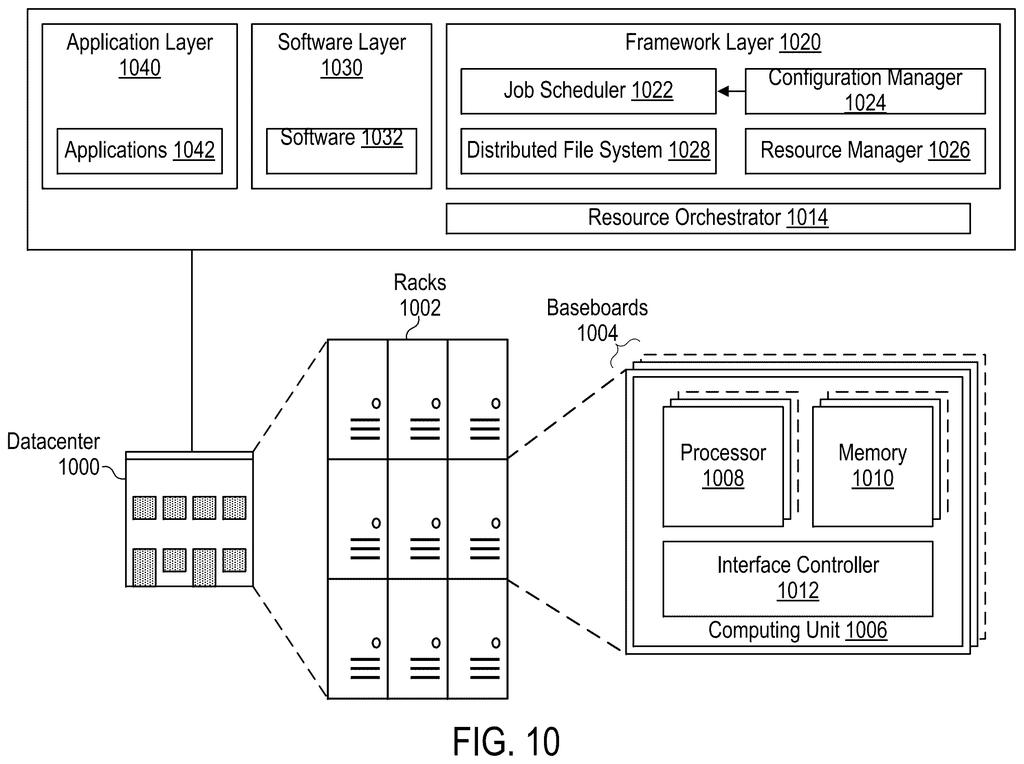
What Nvidia's self-adjusting AI processor actually does
Imagine you're driving on a highway and your car automatically shifts gears based on whether you're going uphill or cruising on flat ground. This Nvidia patent describes something similar for AI processing: a chip that can sense how much information an AI model needs to analyze at a given moment and adjust the model's internal dials accordingly.
Those internal dials are called hyperparameters. They control things like how complex the model's calculations are and how many resources it devotes to a task. Right now, those settings are typically fixed ahead of time by engineers, meaning the AI runs the same way whether it has a little work or a lot.
Nvidia's idea is to let the hardware itself handle that adjustment automatically. When a heavy workload arrives, the system pushes the settings up. When things are quieter, it can pull them back. The goal is to get the best possible results at any given moment without wasting computing power.
one or more circuits to cause one or more neural network hyperparameters of one or more neural networks to be modified based, at least in part, an amount of information to be inferenced by the one or more neural networks.
Translation: Hardware that adjusts AI settings depending on how much data needs to be processed.
How the circuit reads workload size and shifts hyperparameters
The patent describes a processor containing circuits whose job is to monitor the volume of data being fed into one or more neural networks (AI models) and then modify those networks' hyperparameters in response.
Hyperparameters are configuration values that sit above the model's learned weights. They govern things like how many processing steps the network takes, how deeply it analyzes inputs, or how aggressively it compresses its calculations. Unlike model weights (which are learned during training), hyperparameters are usually set once and left alone during actual deployment.
What this patent proposes is making that adjustment dynamic at inference time (that is, when the model is actively doing its job, not when it's being trained). The claim is deliberately broad: the circuits cause hyperparameter changes based on the amount of information to be inferenced, which could mean:
- Scaling up model complexity when a large batch of data arrives
- Scaling down complexity during idle or low-traffic periods to save power
- Distributing the adjustment across multiple neural networks running in parallel
The filing names a processor-level implementation, suggesting Nvidia is thinking about this as a hardware feature, not just a software scheduling trick.
Apparatus, systems, and techniques to modify neural network hyperparameterts of one or more neural networks.
Translation: Methods for changing the internal tuning knobs of artificial intelligence models.
What this means for AI inference chips and data centers
For data centers and cloud AI services, efficiency at inference time is a real cost driver. Models that run at full complexity 24/7, even during low-traffic windows, waste electricity and chip capacity. A processor that can automatically dial settings up or down based on actual demand could meaningfully reduce operating costs at scale.
For you as an end user, this kind of dynamic tuning could mean AI-powered apps and services that respond faster during peak demand and consume less energy when usage is light. It also fits squarely into Nvidia's broader push to sell not just graphics chips but complete AI infrastructure platforms where the hardware does more of the optimization work automatically.
This is a foundational, infrastructure-level patent rather than a flashy product announcement. The core idea, letting hardware automatically tune AI model settings based on workload, is genuinely useful for data center economics, and Nvidia is in the right position to bake this into its next generation of inference chips. That said, the claim as filed is broad and abstract enough that the actual implementation doing interesting work will be in the details Nvidia hasn't published yet.
There are more where this came from
We read every patent application Big Tech publishes and send you the ones worth knowing. Plain English, free, every week.
The drawings
30 drawing sheets from US 2026/0228560 A1 · click any drawing to enlarge


Want this weekly breakdown for a company we don't cover? Patentlyze Pro →
Be the first to weigh in