
Google Patents a Way to Search Documents by Reading Only the Parts That Matter
Search engines today often have to process every word in every candidate document before deciding which one answers your question. Google's new patent describes a way to skip most of that work without losing accuracy.
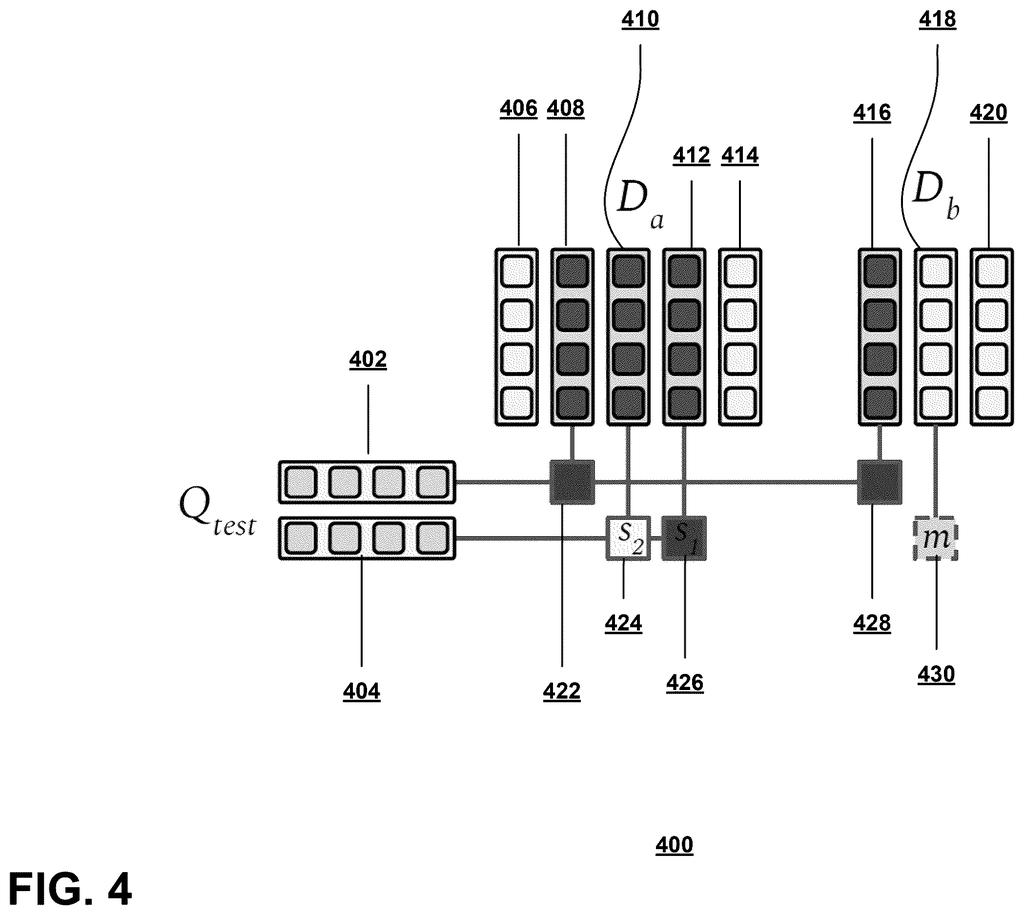
How Google's token retrieval cuts search down to size
Imagine you ask a question and a librarian has to read every page of every book in the library before telling you which one is most relevant. That is roughly how some search systems work today, and it is slow.
Google's patent describes a method where, instead of processing all the words in each candidate document, the system pulls out only the specific word level pieces most likely to match your question. Think of it like skimming only the sentences that seem relevant before committing to a full read.
The result, according to the filing, is a search process that is both faster and more accurate, because the system stops wasting attention on parts of a document that clearly do not help answer your question.
… identifying relevant documents to a query by using only retrieved token vectors of candidate documents rather than all token vectors of the documents.
Translation: Google's system speeds up searches by checking only the most important parts of a document instead of reading everything.
How the system picks which token vectors to actually score
Modern AI search systems often represent documents as a collection of vectors, one for each word or word-piece (called a token). To score how well a document matches a query, a system typically compares the query against all of those token vectors. For long documents with thousands of tokens, that is a lot of computation.
This patent proposes a contextualized token retriever: a system that, for any given query, retrieves only a selected subset of token vectors from each candidate document rather than the full set. The selection is context-aware, meaning the system chooses which tokens to pull based on what the query is actually asking about.
The core claim is that scoring documents against only the retrieved (relevant) token vectors, rather than all token vectors, produces better speed and better accuracy at the same time. This matters because the two goals normally trade off against each other: faster scoring usually means coarser, less accurate results.
- Query processing: the query is encoded into a vector representation.
- Token retrieval: only the most query-relevant token vectors are fetched from each candidate document.
- Scoring: relevance is computed using only those retrieved token vectors, not the full document.
What this means for AI search speed and accuracy
Search and retrieval are at the center of almost every AI product right now, from chatbot assistants that look up facts to enterprise tools that search internal documents. Any method that makes document retrieval faster without sacrificing accuracy has direct value, because today's systems often face a hard choice: be thorough and slow, or be fast and miss things.
This filing sits in the middle of a busy area of AI infrastructure research, and plain-English patent summaries of search and retrieval patents from Google have appeared with increasing frequency as the company races to make its AI search architecture more efficient. Whether the approach described here ends up in Google Search, Google Cloud's enterprise search tools, or some future AI assistant product is unknown, but the problem it addresses is real and the scale at which Google operates makes even small efficiency gains significant.
Google's 586th filing among the patents we've tracked in our Google coverage since May adds to a body that includes a privacy split across servers and a weather-aware rerouting system.
Running a full check on every word in every document, across billions of searches a day, costs an enormous amount of computing power. Cutting that work down by skipping words that clearly do not matter is a sensible, direct fix for that problem.
The patent claims this approach is both faster and more accurate. Those are big promises, and they should be treated as goals, not proven results, until real tests back them up.
There are more where this came from
We read every patent application Big Tech publishes and send you the ones worth knowing. Plain English, free, every week.
The drawings
6 drawing sheets from US 2026/0244629 A1 · click any drawing to enlarge


Want this weekly breakdown for a company we don't cover? Patentlyze Pro →
Be the first to weigh in