
Disney Patents a System That Projects Images Onto Moving, Reflective Surfaces in Real Time
A shiny, rippling costume or a flowing metallic fabric is basically the worst canvas imaginable for a digital projector. Disney just filed a patent for a system that watches the surface move and adjusts what it projects in real time.
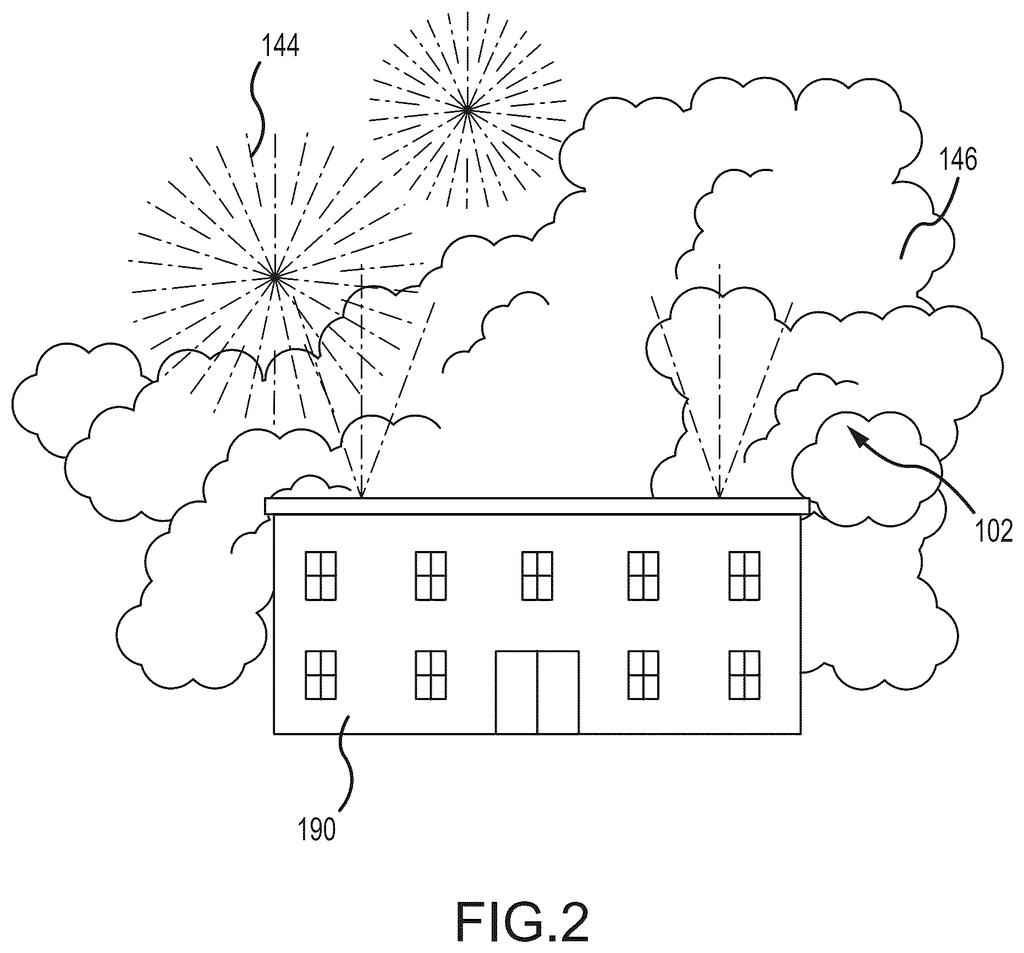
How Disney's projection system tracks moving reflective materials
Every time a performer in a glittery costume walks under a stage projector, the light scatters in a dozen wrong directions and the image falls apart. Disney's new patent describes a system designed to fix exactly that, automatically and on the fly.
The system uses a camera to watch the reflective surface, whether that's a rippling fabric, a metallic prop, or anything else that moves and bounces light. A controller figures out how the surface is behaving at any given moment, then decides what image to project so it actually looks right on that surface in that position. A separate sensor fires invisible light at the surface and reads the reflection to keep tracking it even when conditions change.
The result: instead of a blurry or washed-out mess, your eyes see a projection that fits the surface as it moves. You wouldn't need to know any of this is happening. You'd just see something that looks unexpectedly vivid on a surface that should, by all rights, be a projector's worst nightmare.
… a controller configured to: detect, based on the captured image, a dynamic characteristic of the light reflective material; and determine, based on the detected dynamic characteristic, content to be projected onto the light reflective material.
Translation: The system watches a moving reflective object and automatically decides what image to display on it based on its movement.
How the camera and infrared sensor guide the projector
The patent describes a closed-loop projection system with four main components working together:
- A camera that captures images of the reflective surface and feeds them to the controller.
- A controller that analyzes what the camera sees, detects how the surface is moving or changing (its "dynamic characteristic"), and selects or modifies content accordingly.
- A nonvisible-light source (think infrared) that illuminates the surface without interfering with what the audience sees.
- A sensor that reads the reflection of that invisible light to track the surface's shape and position in real time.
The key idea is that the controller doesn't just set a projection and hope for the best. It continuously monitors the surface through both the camera and the infrared sensor, then adjusts the projected content to match whatever the surface is doing at that instant.
Dynamic characteristic is the patent's term for things like how the surface is tilted, how it's rippling, or how its reflectivity is distributed across its area. By detecting those properties frame by frame, the system can warp or shift the image so it lands correctly despite constant movement. It's a feedback loop: surface changes, sensor detects it, controller corrects the projection.
The system may include a light source configured to emit nonvisible light in the area and a projector configured to project content onto a dynamic light reflective material in the area.
Translation: The device uses invisible light to track the object so it can project images onto it without the audience seeing the sensor.
What this means for Disney's theme park experiences
For anyone visiting a Disney park or watching a Disney live show, this kind of system could make the difference between a costume that glows convincingly and one that just looks like someone pointed a projector at it and shrugged. Reflective materials are genuinely difficult for projection systems, and the usual workaround is to avoid them or use materials that don't move. This patent describes a way to use them anyway.
The broader implication is that Disney is working to make digital projection a more reliable part of live, physical entertainment, where performers and props don't hold still on cue. Coverage of interesting tech patents in the entertainment and AR space shows this kind of real-time environment-sensing work appearing more often as projection hardware gets cheaper and more precise.
Disney's 30th filing we've tracked since June includes earlier work like the ride-hate warning system and the broken-equipment detector, all part of our Disney coverage.
The reader-facing payoff here is specific and observable: a show effect that actually works on a moving costume, rather than washing out or breaking apart when the performer moves. That's a concrete improvement to what you'd see sitting in the audience, not a background infrastructure change you'd never notice. Disney has long used projection mapping in its parks, and the failure mode this patent addresses (shiny surface ruins the effect) is one any theme park attendee has probably seen even if they couldn't name it. The filing is narrow enough in scope to be plausible as a near-term practical tool rather than a distant research concept.
There are more where this came from
We read every patent application Big Tech publishes and send you the ones worth knowing. Plain English, free, every week.
The drawings
10 drawing sheets from US 2026/0246909 A1 · click any drawing to enlarge


Want this weekly breakdown for a company we don't cover? Patentlyze Pro →
Be the first to weigh in