
Qualcomm Patent Splits Graphics Chip Work Across Current and Future Frames
What if a graphics chip could do less work by preparing multiple versions of each frame ahead of time, then just picking the right one once it knows what the next frame looks like? That's the core idea in Qualcomm's latest GPU patent.
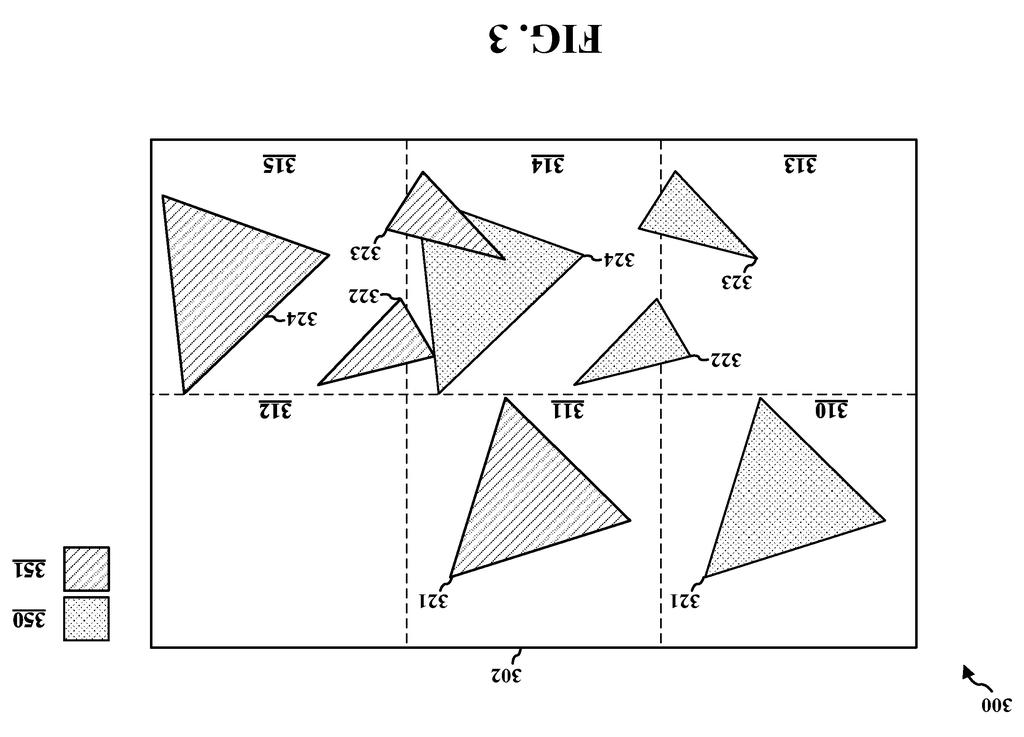
How Qualcomm's future-frame GPU shortcut actually works
Every time a game renders a new frame on your phone, the GPU is essentially flying blind, processing each image without knowing what comes right after it. That guesswork costs power and time.
Qualcomm's patent describes a GPU that plays the long game. Instead of committing to one way of drawing a frame, the chip prepares several versions of the rendering work in advance, each tied to a different possible condition in the next frame. Once the chip sees what the next frame actually needs, it simply picks the pre-built version that fits, rather than starting from scratch.
The result is that two GPU cores work together across time, not just across tasks. One core handles the current frame while sharing information with another core processing the frame that comes after. That coordination lets both cores do less redundant work, which matters a lot on a phone where every milliwatt of saved power adds up to real battery life.
construct a plurality of sets of graphics processing unit (GPU) commands associated with generating a first frame, wherein the plurality of sets of GPU commands are associated with a corresponding plurality of conditions associated with a second frame that is subsequent to the first frame; …
Translation: The chip prepares multiple different command options for the current frame depending on what will happen in the next frame.
How the GPU pre-builds commands and picks the winning set
The patent describes a GPU architecture where rendering work for one frame is adjusted based on information already computed for a future frame. The two key ideas are lookahead pre-computation and condition-gated command selection.
Lookahead pre-computation means the system builds a full set of GPU commands (the instructions that tell the chip how to draw each pixel) not just once, but in several variations. Each variation corresponds to a different possible state of the next frame: for example, a different lighting condition, a camera angle change, or a different level of scene complexity.
Condition-gated selection is the second half: once the GPU knows which condition in that next frame actually came true, it selects the right pre-built command set and runs with it. The claim specifies a shared resource between two GPU cores, which is the hardware bridge that lets the core handling Frame N see what the core handling Frame N+1 has already computed.
- Core 1 processes the current frame
- Core 2 begins work on the next frame simultaneously
- Core 1 adjusts its workload using Core 2's partial results and the shared resource
- The final command set is selected based on which predicted condition matched reality
This is fundamentally a speculative execution approach (doing work in advance on a prediction, then confirming or discarding it) applied to graphics rendering rather than to CPU arithmetic.
… altering a first workload associated with the first frame data at the first graphics processor core based on a portion of a second workload for the second frame data that has been previously executed by the second graphics processor core …
Translation: It adjusts the current frame's rendering task using data from a future frame that was already processed ahead of time.
What this means for mobile graphics and battery life
For mobile devices, graphics performance and battery life sit at opposite ends of a seesaw. Rendering more frames at higher detail drains the battery faster. Any technique that lets a GPU produce the same output with fewer total compute cycles is directly useful, and this patent targets exactly that trade-off by eliminating redundant work between adjacent frames.
Qualcomm's Snapdragon chips power a large share of Android flagship phones, so GPU efficiency improvements at the architecture level can flow into hundreds of millions of devices. The approach described here sits at the intersection of GPU scheduling and frame prediction, an area where Patentlyze tracks plain-English patent summaries of the chip-level moves that shape how phones feel to use.
Qualcomm's seventh filing we've tracked in our GPU rendering race watchlist since July follows earlier work on skipping pixel work and checking active sections to further reduce wasted effort in graphics processing.
This patent is really a new set of software rules, not a new chip. The shared hardware between processor cores must already exist, but the main idea is about how commands get sorted and chosen, which means it could ship in a driver update rather than a brand new piece of silicon.
That matters because driver updates move fast. A new chip takes years. This idea is specific enough that it could reach real products sooner than most processor patents do.
There are more where this came from
We read every patent application Big Tech publishes and send you the ones worth knowing. Plain English, free, every week.
The drawings
10 drawing sheets from US 2026/0245284 A1 · click any drawing to enlarge


Want this weekly breakdown for a company we don't cover? Patentlyze Pro →
Be the first to weigh in