
Samsung Patents a Watch Band Slot That Sits Flush With the Case Edge
The spot where your watch strap meets the case is usually the ugliest part of the device. Samsung is filing a patent to tidy that up with a recessed pocket that tucks the attachment point below the connector's outer surface.
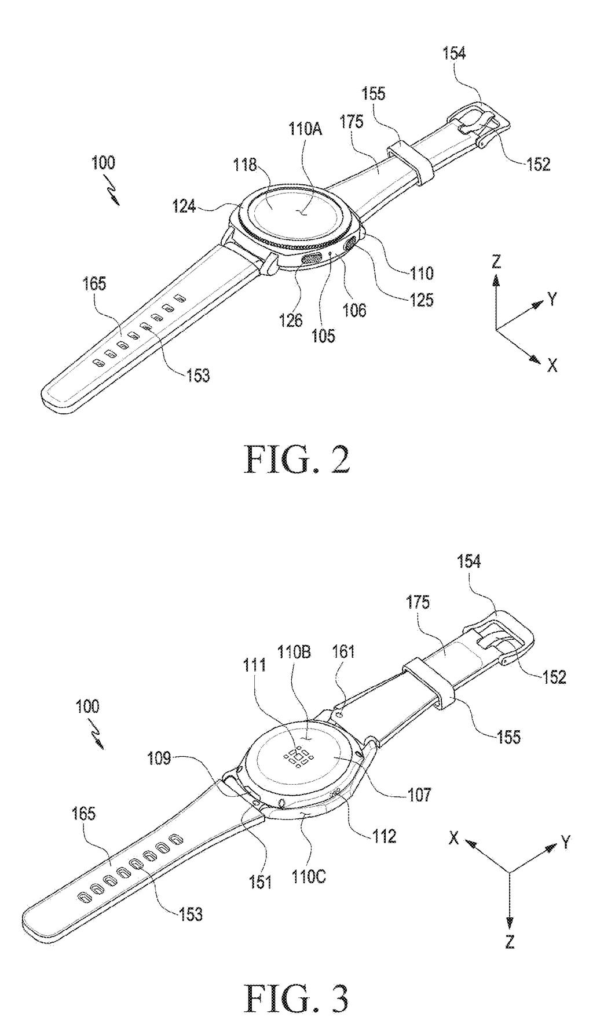
What Samsung's recessed strap connector actually changes
You snap a new band onto your smartwatch, and the little bar or hole where it clips in sticks out noticeably from the side of the case. It catches on sleeves, collects grime, and just looks a bit rough compared to the polished face of the watch itself.
Samsung's patent describes a connector that has a small recessed pocket carved into its outer surface, and the strap-insertion hole sits down inside that pocket rather than flush on the surface. The idea is that the strap end nestles into the recess, so the whole assembly looks and feels more integrated with the watch body.
This is a mechanical design patent, not a software or sensor story. It's about the physical junction between strap and case, a part of the watch most people never think about until it snags on something or breaks.
a coupling surface extending outward from the outer circumference wall, a coupling hole configured to allow insertion of at least a portion of the strap, and a recess recessed from the coupling surface …
Translation: The watch case features a specially shaped ledge and slot designed to hold the strap securely.
How the recess, coupling hole, and housing fit together
The patent describes a wearable electronic device (read: smartwatch) whose housing has an outer wall and a connector built into that wall specifically for attaching a strap.
That connector has three defined features:
- A coupling surface that extends outward from the outer wall of the housing, giving the connector its structural base.
- A coupling hole, which is the opening the strap slides or pins into.
- A recess, which is a depression carved back into that coupling surface, and at least part of the coupling hole sits down inside this depression.
The key geometric detail is that the hole isn't just punched through a flat surface. It's positioned inside a sunken pocket, so the strap end can be guided in and partially hidden by the walls of the recess. This keeps the attachment hardware from protruding in a way that creates a visible seam or snag point.
The patent covers this arrangement in combination with a display disposed in the housing, anchoring it specifically to a smartwatch-class device rather than a generic wearable clasp.
A wearable electronic device is provided. The wearable electronic device includes a housing including an outer circumference wall and a connector configured to be coupled with a strap, and a display disposed in the housing …
Translation: The invention covers a smart watch built with a flush mounting system for attaching bands.
What this means for Galaxy Watch hardware design
For Galaxy Watch hardware engineers and industrial designers, this is the sort of incremental refinement that accumulates into a noticeably better product over generations. The strap lug area is a known weak point, both aesthetically and structurally, and a recessed design can reduce the lever-arm stress on the connector when the strap gets pulled at an angle.
For most consumers, the practical payoff is a watch edge that snags less on cuffs and looks cleaner from the side. It's a narrow filing, and it won't redefine what a smartwatch is, but the strap-to-case junction is one of those small details that separates a product that feels considered from one that doesn't. Samsung's connector geometry work is part of the steady flow of wearable hardware refinements tracked across Big Tech patent news, alongside broader Galaxy Watch structural and display filings.
Samsung's 1090th filing in our Samsung coverage, tracked since May, follows work like the noise-blocking touch layer and the combined antenna and cooling vent.
The deeper hole makes the connector more complicated to build. That means more material, stricter factory precision, and a harder mold to produce.
Samsung is betting that a better-looking, longer-lasting strap connection is worth that extra cost. For a high-end watch, that bet probably makes sense.
The one real risk: the small pocket around the hole could collect dirt and grime, trading one flaw for another.
Get our take in your Top Stories
Liked this breakdown? Add Patentlyze as a preferred source on Google, and our plain-English take shows up more often in your Top Stories the next time Samsung patent news breaks.
There are more where this came from
We read every patent application Big Tech publishes and send you the ones worth knowing. Plain English, free, every week.
The drawings
17 drawing sheets from US 2026/0240288 A1 · click any drawing to enlarge


Want this weekly breakdown for a company we don't cover? Patentlyze Pro →
Be the first to weigh in