
Samsung Patents a System to Stop Multiple Chips From Reading Outdated Data
When dozens of processors share the same pool of memory, keeping them from stepping on each other's data is one of the hardest problems in computing. Samsung's new patent describes a way to manage that automatically.
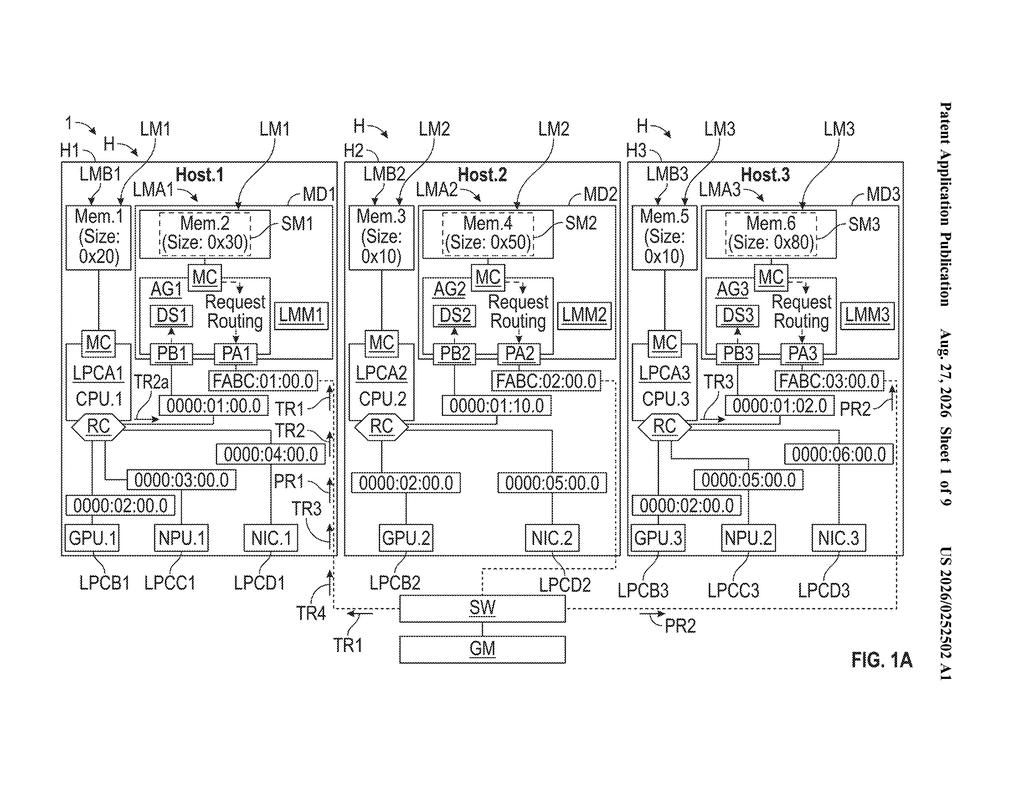
What Samsung's shared-memory sync system actually does
Imagine you and several colleagues are all editing the same shared document at the same time, but nobody has a way to know when someone else has changed a paragraph you were just reading. That's roughly the problem this patent tackles, except the "colleagues" are processors inside a server and the "document" is a pool of shared memory.
Samsung's system adds a layer of bookkeeping that tracks who asked for updates when data changes. Each request to read or write memory carries a small flag, called coherence information, that says whether the requester wants to be told if the data changes. When a write comes in and changes the data, the system checks those flags and updates its records automatically.
The practical payoff is that processors don't have to constantly check whether the data they're holding is still accurate. The memory system itself handles the notification, which reduces wasted work and lowers the chance that a chip acts on outdated information.
… receiving, by the access processing circuit, a second transaction request to access the first data from the first shared memory, the second transaction request causing a first data change of the first data …
Translation: The system detects when a new request arrives that will change the data currently stored in memory.
How the access circuit tracks and updates data-change notices
The patent describes what Samsung calls a Virtual Pool of Memory (VPOM), a system where multiple host computers or processors share a single logical block of memory, managed by an access processing circuit that sits between the hosts and the physical storage.
Here is the core flow:
- A processor sends a first transaction request to read some data. That request includes a coherence flag set to a particular status, signaling that the processor wants to be notified if the data changes.
- Later, a second processor (or the same one) sends a write request that actually modifies that data.
- The access processing circuit detects that the coherence flag's status has shifted, meaning the original read-and-watch request is now out of date, and it updates the corresponding record in its tracking table accordingly.
The mechanism avoids the traditional approach of broadcasting "data changed" messages to every processor all the time. Instead, it checks the stored coherence metadata and only modifies the entries that matter.
This style of memory coordination is called cache coherence (keeping every processor's local copy of data in agreement with the master copy). Doing it at the memory-pool level, rather than inside each individual processor's cache controller, is the architectural choice Samsung is patenting here.
… based on determining that the first coherence information has a second status that is different from the first status, modifying a first entry including the first coherence information.
Translation: The system updates its internal records when it notices that the status of the data has changed.
What this means for servers running many chips at once
For anyone running large AI workloads or database servers, the processors involved are constantly reading and writing shared memory. When those reads and writes are not properly synchronized, a chip can act on data that was already overwritten by another chip, producing wrong results that are extremely hard to debug. This patent is aimed at preventing exactly that class of silent failure.
The approach Samsung describes here fits into a broader industry push toward disaggregated memory, where memory is no longer locked to a single processor but shared across many, reducing waste and allowing workloads to scale more flexibly. How memory coherence gets handled in that model is an open engineering problem, and the new Big Tech patents in the memory and chip architecture space reflect how seriously Samsung and its peers are taking it.
This is the 45th Samsung filing we've tracked in AI chip wars since June, adding to work like one on faster AI processing and one on compressing mobile memory.
Most people will never know this system exists, and that is precisely the point. The failure it prevents does not announce itself: a processor reads old data, and the result shows up as a wrong number, a crashed query, or an AI model giving answers that make no sense.
Samsung's patent describes the bookkeeping layer that sends an alert whenever shared data changes, so that any system holding a copy knows to update. The narrow scope matters: this is not a new memory design, it is a notification mechanism, and its value depends entirely on how well it connects to the hardware around it.
For anyone running a server, a database, or a large AI workload, the concrete payoff is fewer silent errors and less time hunting down their cause. You would notice its absence long before you would notice it working.
Get our take in your Top Stories
Liked this breakdown? Add Patentlyze as a preferred source on Google, and our plain-English take shows up more often in your Top Stories the next time Samsung patent news breaks.
There are more where this came from
We read every patent application Big Tech publishes and send you the ones worth knowing. Plain English, free, every week.
The drawings
9 drawing sheets from US 2026/0252502 A1 · click any drawing to enlarge


Want this weekly breakdown for a company we don't cover? Patentlyze Pro →
Be the first to weigh in