
Samsung Patents a Keyboard That Tailors Word Suggestions to Your Chat Partner
Most phone keyboards suggest words based only on what you've already typed. Samsung's new patent pushes that idea further by factoring in who you're talking to before it makes a suggestion.
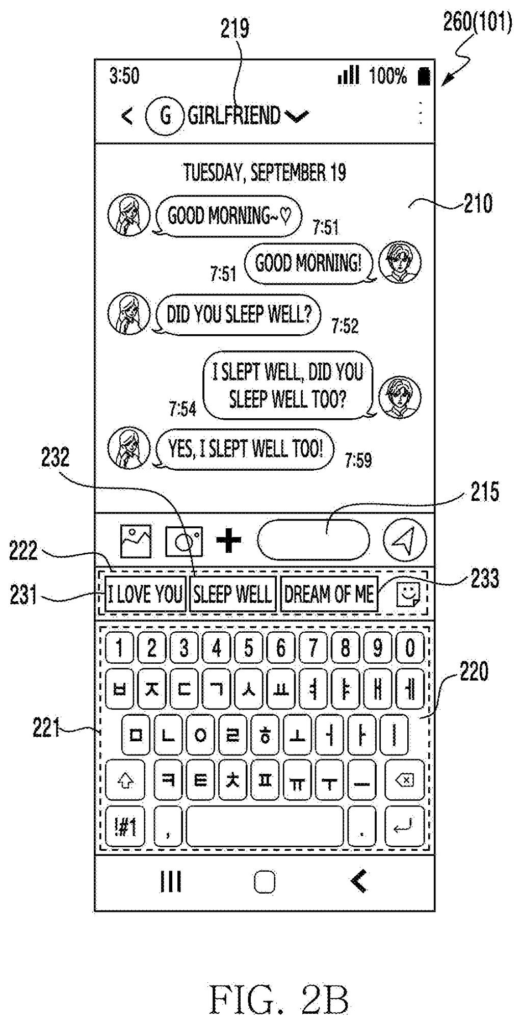
How Samsung's keyboard reads the room before you type
Every time you open a text thread and start typing, your keyboard is working from a pretty thin slice of information: just the letters you've tapped so far. It has no idea whether you're texting your boss, your best friend, or a delivery driver.
Samsung's patent describes a keyboard that also looks at information about your chat partner when deciding which words to surface in its suggestion bar. So if you start typing "See you" in a thread with a coworker, it might suggest "at the meeting" rather than "tonight," because it knows the context of that relationship.
You'd still see the same familiar keyboard layout, with character keys on the bottom and a row of suggested words above. The difference is behind the scenes: those suggestions are shaped by both your partial input and the conversation context the app already knows about.
How the keyboard pulls contact context into its word list
The patent describes a software keyboard with two distinct areas: a first area containing the usual letter and symbol keys, and a second area above or alongside it that displays recommended words.
The core claim is that the system generates those word recommendations using two inputs at once:
- The characters the user has typed so far in the current message
- "Information about a counterpart" (meaning the other person in the conversation) pulled from the app currently on screen
The device reads the execution screen of the application (the chat app or email client open behind the keyboard) to identify who the conversation is with. That contact-level context then feeds into the word suggestion logic alongside the partial text input.
The patent doesn't spell out exactly what "information about a counterpart" includes, but it could encompass details like contact name, relationship category, or prior conversation patterns. The system is designed to work while both the app screen and the keyboard are displayed at the same time, which is the standard split-screen state on any modern smartphone keyboard.
What this means for Samsung's messaging experience
If this approach works well in practice, it could cut down on the small but constant friction of rejecting irrelevant autocomplete suggestions. The keyboard suggestion bar is one of those features people interact with dozens of times a day without thinking about it, so even a modest improvement in relevance would accumulate into a noticeably smoother typing experience over time.
For Samsung, this fits a broader push to differentiate its Galaxy devices through software polish rather than just hardware specs. Keyboard intelligence is a quiet battleground between Android device makers and Apple, and small wins here matter to users who type a lot on their phones. The patent sits alongside other new Big Tech patents targeting context-aware text input, a category that's drawing steady filing activity as AI-assisted typing moves from novelty to baseline expectation.
Samsung's 1108th filing in our Samsung coverage since May adds to a run that includes a patent on steering speaker sound and one on per-app battery rules.
Switching from a work email to a casual chat and having your keyboard still suggest formal, stiff phrases is a small frustration that compounds dozens of times a day. That friction adds up, and it reflects a real gap: keyboards treat every conversation as if it were the same conversation.
The ambition here matches the problem reasonably well. Personalizing suggestions based on who you are writing to is a logical response to how people actually communicate differently with different people.
What determines how useful this actually becomes is what information the keyboard draws on. A solution built on rich communication history could meaningfully change how typing feels. One built on little more than a contact name would barely move the needle.
Get our take in your Top Stories
Liked this breakdown? Add Patentlyze as a preferred source on Google, and our plain-English take shows up more often in your Top Stories the next time Samsung patent news breaks.
There are more where this came from
We read every patent application Big Tech publishes and send you the ones worth knowing. Plain English, free, every week.
The drawings
12 drawing sheets from US 2026/0252181 A1 · click any drawing to enlarge


Want this weekly breakdown for a company we don't cover? Patentlyze Pro →
Be the first to weigh in