
Nvidia Patent Routes Compiled Code Dynamically to Different Processor Targets at Runtime
Nvidia has filed a patent for a compiler that can read a single program and decide, on the fly, which parts should run on which chip, without the programmer needing to manually split things up.
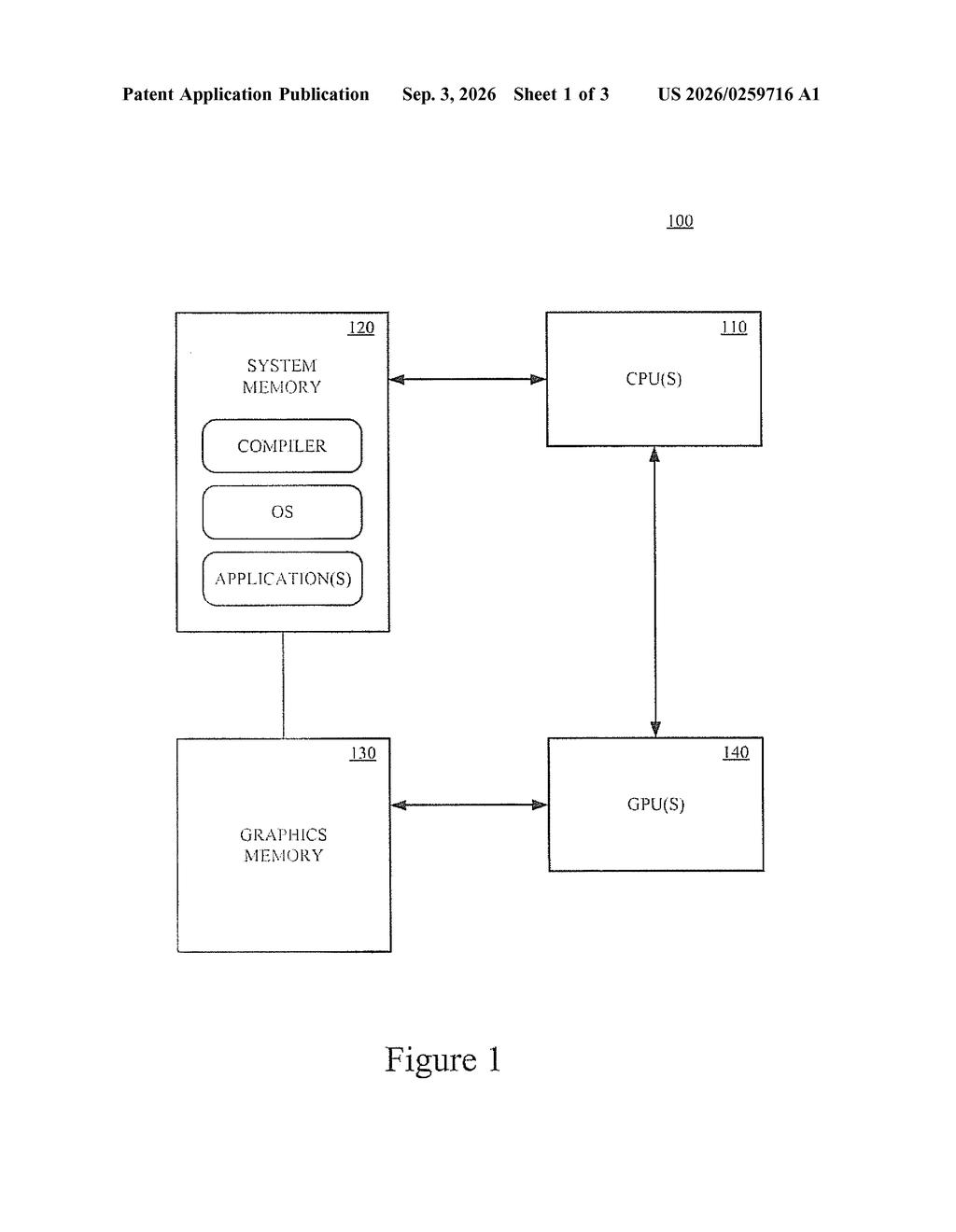
What Nvidia's split-chip compiler actually does
You're writing software, and your app needs to use both the main processor and the graphics chip at once. Normally, you'd have to write two separate sets of instructions, one for each chip, and manually coordinate them. Nvidia's patent describes a system that does this splitting for you.
The idea is that a programmer can drop a small tag into their code, almost like a label, that says "this section should run on a different chip." The compiler (the tool that turns human-readable code into machine instructions) picks up on those tags and automatically produces the right instructions for each processor, even while the program is already running.
Nvidia's approach means the same source code can be compiled into multiple machine-language versions targeted at different hardware, dynamically. That's a meaningful reduction in the extra work developers currently have to do to spread tasks across both a CPU and a GPU.
receive source code including a portion of the source code and a specifier indicating a second processor different from a first processor for the portion of the source code …
Translation: The system takes in code along with a tag pointing to an alternate processor chip.
How the compiler targets two processors from one source file
The patent centers on a compiler system that can receive a single piece of source code containing a specifier, a marker in the code indicating that a particular block should run on a different processor than the default.
Here's the flow the patent describes:
- The compiler receives source code with a tagged section marked for a second processor (typically a GPU, while the first processor is a CPU).
- It generates an intermediate representation (a halfway translation of the code, not yet tied to any specific chip's instruction set) of that tagged section.
- It compiles the untagged parts into machine code for the primary processor and starts running them.
- Based on the specifier tag, it also compiles the intermediate representation into machine code suited for the second processor and sends it there to execute.
The notable part is that this dispatch can happen dynamically, meaning during execution rather than only at build time. The compiler isn't just doing two compile jobs ahead of time; it's capable of making that routing decision while the program is live.
The patent also references inline parallelism (running multiple tasks at the same time within a single code structure) and re-targetable parallel runtime (the ability to aim execution at different hardware without rewriting the code). Together, these let a developer describe parallel work once and let the toolchain figure out where it actually runs.
Compiler techniques for inline parallelism and re-targetable parallel runtime execution of logic iterators enable selection thereof from the source code or dynamically during object-code execution.
Translation: Specialized software tools allow code to be split and run on different chips while the program is actually running.
What this means for GPU-accelerated software development
For software developers working with AI, graphics, or scientific computing, the current process of targeting both a CPU and a GPU is tedious. You write code, annotate it extensively, manage separate compilation pipelines, and handle communication between chips yourself. A system that automates the routing based on simple in-source tags lowers that barrier considerably.
Nvidia's long run of compiler and toolchain filings points to a company that understands its hardware advantage depends on making that hardware easier to program. If the runtime-dispatch capability here works as described, it could shrink the gap between writing general-purpose code and getting GPU acceleration, which matters as more software, not just games or AI training, tries to take advantage of parallel hardware.
That makes this Nvidia's 37th filing we've tracked since July in the AI chip wars watchlist, following one on skipping runtime math and one on watching many processors at once.
When the compiler decides at runtime which chip handles a piece of code, you give up predictability. A bug that sends work to the wrong processor at the wrong moment can be nearly impossible to trace, and that cost is real for anyone who needs tight, deterministic control over their software.
Keeping a chip-agnostic translation layer in the middle buys flexibility, but it adds an extra step that takes time, and any delay matters when software needs to respond in milliseconds, like during live video processing or real-time decisions.
That trade looks reasonable for the broad audience Nvidia is targeting: developers who want to harness a GPU's power without mastering the internals of how chips communicate. For the narrow group that needs precise, byte-level hardware control, this design does not replace what they already use, and it was probably never meant to.
Get our take in your Top Stories
Liked this breakdown? Add Patentlyze as a preferred source on Google, and our plain-English take shows up more often in your Top Stories the next time Nvidia patent news breaks.
There are more where this came from
We read every patent application Big Tech publishes and send you the ones worth knowing. Plain English, free, every week.
The drawings
3 drawing sheets from US 2026/0259716 A1 · click any drawing to enlarge


Want this weekly breakdown for a company we don't cover? Patentlyze Pro →
Be the first to weigh in