
Nvidia Patents a System for Watching Dozens of Processors at Once
Managing a data center full of chips usually means checking each one in turn, a slow and error-prone process. Nvidia's new patent describes a way to query hundreds of processors at the same time and log the results for later anomaly detection.
What Nvidia's parallel processor monitoring actually does
Every time a data center operator needs to check on a fleet of chips, someone (or something) has to reach out to each processor, wait for a response, and record what comes back. Do that one chip at a time across thousands of machines and it can take long enough that by the time you finish, the first chip's status has already changed.
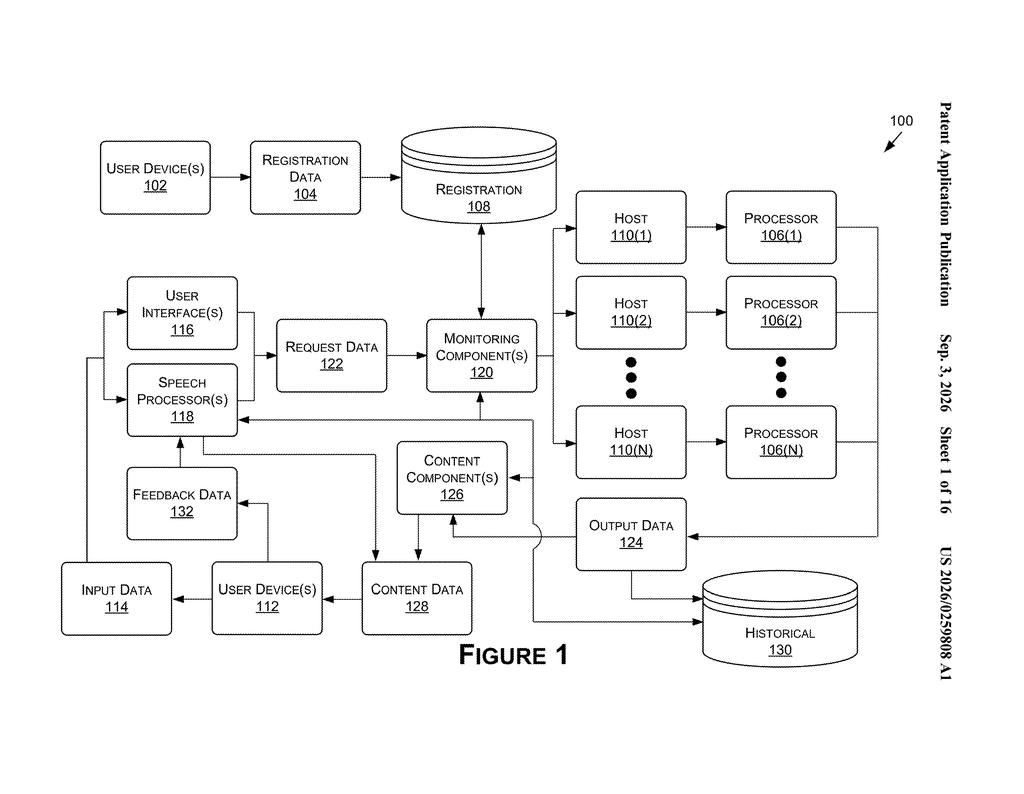
Nvidia's patent describes a system where you send a single request that covers a whole group of processors at once. The system looks up how to reach each chip, connects through intermediate host machines, and fires off the same query to all of them at the same time. The answers come back in parallel, so checking 500 chips takes roughly as long as checking one.
The system also keeps a running history of those answers, which lets it spot when something starts to look wrong before it becomes a real failure. For anyone managing AI training clusters or cloud infrastructure, that kind of early warning is worth a lot.
… causing, using the connections, the processors to perform one or more actions at least partially in parallel to determine the first information associated with the processors; …
Translation: The system tells all the targeted processors to run their diagnostic checks at the same time.
How the layered lookup-and-connect process works
The patent describes a hierarchical monitoring architecture built around three layers: a user-facing request interface, a registry of connection details, and a set of host machines that relay commands to the actual processors.
When a request comes in (typed or spoken), the system consults one or more registration databases that store connection metadata for every known processor. Think of this as a phone book that tells the system exactly which host machine sits in front of each chip and how to talk to it. Using that information, the system establishes connections to all the relevant processors through their hosts and issues commands in parallel (meaning all at once rather than one after another).
The responses are collected and returned to the user as a unified output. Separately, the system writes those results to a historical database. Over time that log becomes the baseline against which future readings are compared:
- If a processor's temperature, utilization, or error count drifts outside normal range, the system can flag it as an anomaly.
- The history also lets operators replay what the fleet looked like at any past moment.
- Requests can apparently be issued via natural language or voice, suggesting an operator-friendly interface layer on top of the technical plumbing.
The claim language keeps the design intentionally broad: it covers any processors reachable through host machines, which could include GPUs, CPUs, or specialized AI accelerators.
… where the request identifies at least the set of set of processors along with one or more actions to perform.
Translation: A user can target multiple processors at once by speaking a command or typing a request.
What this means for data centers running Nvidia hardware
Data centers running AI workloads are under constant pressure to keep every chip busy and catch hardware problems before they bring down a training run that may have taken days to set up. A monitoring system that checks processors one at a time is a bottleneck; one that checks them all at once is a real operational advantage. For Nvidia's enterprise and cloud customers, faster, automated health checks translate directly into less downtime and faster responses to hardware failures.
The anomaly-detection angle is where this gets practically interesting for your day-to-day as an IT or infrastructure operator. Rather than waiting for a chip to fail outright, the historical baseline can catch gradual degradation, which is often the more common failure mode in large GPU clusters. Nvidia's push into data center management software suggests this patent fits a broader effort to make its hardware ecosystems easier to operate at scale.
This is the 35th Nvidia filing we've tracked in AI chip wars since July, following one on a power-saving rounding trick and one on faster training via workload sharing.
The parallel-query design solves a real problem, but it makes a quiet assumption worth examining: that all the processors in a query group are reachable through their hosts at the same time. In a large cluster under heavy load, host machines can become bottlenecks themselves, and a system that fans out to hundreds of processors simultaneously could create its own traffic spikes that interfere with the workloads it is supposed to be monitoring. The tradeoff is speed against interference, and the patent does not describe how it manages that tension.
The historical-anomaly-detection piece is the more interesting half of the filing. Storing baseline readings and comparing future states against them is a well-understood technique, but it is only as good as the baseline. If the system starts logging data during an already-degraded state, every subsequent "normal" reading looks fine until something catastrophically fails. That is a design cost that monitoring systems of all kinds carry, and it matters more here because the target hardware (GPU clusters) runs at high utilization almost by definition.
On balance, this reads as solid infrastructure plumbing aimed at operators of large Nvidia deployments. It is not a dramatic departure from how monitoring systems have long worked, but parallel fan-out plus persistent history is a practical combination for environments where checking chips sequentially is simply too slow to be useful.
Get our take in your Top Stories
Liked this breakdown? Add Patentlyze as a preferred source on Google, and our plain-English take shows up more often in your Top Stories the next time Nvidia patent news breaks.
There are more where this came from
We read every patent application Big Tech publishes and send you the ones worth knowing. Plain English, free, every week.
The drawings
16 drawing sheets from US 2026/0259808 A1 · click any drawing to enlarge


Show the other 8 sheets


Want this weekly breakdown for a company we don't cover? Patentlyze Pro →
Be the first to weigh in