
Qualcomm Patents a Block-by-Block Method to Run Leaner AI on Your Phone
Running a powerful AI model on a phone chip means squeezing a very large thing into a very small space. Qualcomm's latest patent describes a way to do that compression more carefully, block by block, so the model's answers stay accurate even after it's been shrunk.
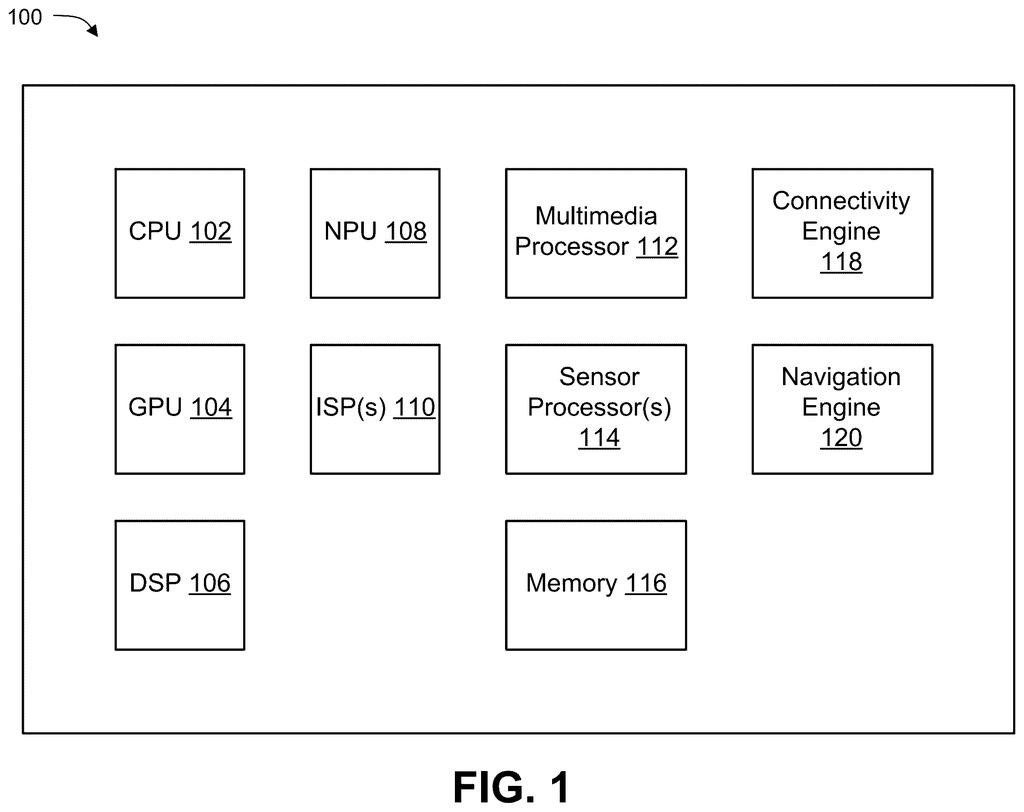
How Qualcomm shrinks AI models without wrecking their output
Today's AI models are enormous. A model trained in a data center can have billions of internal numbers, called weights, that define how it thinks. To run that model on a phone or laptop chip, those numbers have to be compressed into a much smaller format. The problem is that compression almost always degrades quality, the way a heavily compressed JPEG looks blurry compared to the original photo.
Qualcomm's patent describes a process that compresses an AI model's weights in smaller chunks, one block at a time, rather than all at once. For each chunk, the system fine-tunes several adjustment factors, including how aggressively it clips extreme values and how it rescales the remaining ones, so the compressed chunk behaves as close as possible to the original.
The goal is a model that fits on your device and runs locally, without needing to send your data to a remote server, while still giving you results that feel like the full-size version.
obtain unquantized weights associated with one or more blocks of a trained machine learning model; process the unquantized weights to generate quantized weights …
Translation: The system breaks down a heavy AI model into smaller pieces and shrinks its internal numbers to save space.
How quantized weights are tuned block by block
The patent covers a process called post-training quantization, which means compressing a model after it has already been fully trained, rather than rebuilding it from scratch. Quantization works by rounding the precise floating-point numbers inside a model down to lower-precision integers, a bit like rounding every price in a spreadsheet to the nearest dollar. That shrinks the file size and speeds up calculation on mobile chips, but every rounding operation introduces small errors.
What makes this approach specific is its block-wise structure. Instead of applying one global compression recipe to the entire model, the system processes the model in sections. For each section, it optimizes four variables at once:
- Quantization step size: how coarse the rounding grid is
- Weight-clipping thresholds: caps that prevent extreme values from distorting the grid
- Weight-scaling matrix: a per-channel adjustment that stretches or compresses different parts of the weight range
- Weight-scaling factor: a global multiplier applied on top of that
The system uses the original, uncompressed model as a teacher (a technique called knowledge distillation, where a smaller or compressed model is trained to mimic a larger one) and adjusts those four variables so the compressed block's outputs match the teacher's outputs as closely as possible. The result is quantized weights that are calibrated to the specific shape of each block's data, not just a one-size-fits-all rounding scheme.
What this means for AI running directly on your phone
The practical payoff is AI that runs locally on the chips Qualcomm sells for phones and laptops, the Snapdragon line. Local inference means your prompts and personal data don't travel to a cloud server, which is relevant both for privacy and for responsiveness in low-connectivity situations.
Qualcomm keeps filing on on-device AI compression because squeezing capable models onto mobile silicon is central to its business case against cloud-dependent alternatives. For you as a user, the promise is a faster, more private AI assistant that works whether or not you have a strong signal. The real question is how much accuracy survives the compression in practice, something a patent describes in principle but field testing has to confirm.
Qualcomm's 48th patent application we've tracked since July in the AI chip wars space builds on one fixing error-prone model parts and one compressing visual data into codes.
The tradeoff this design makes is clear: it trades compression simplicity for accuracy, adding four tunable knobs per block instead of one global setting. That extra complexity costs time during the compression step itself and requires careful calibration data. If the calibration set doesn't represent the real distribution of inputs a model will see in the wild, the carefully tuned blocks could still degrade in unpredictable ways.
That said, the tradeoff reads as worthwhile. Quantizing a transformer-style model with a single global step size is notoriously lossy for the outlier-heavy weight distributions those models produce. Giving each block its own clipping and scaling parameters directly addresses that known failure mode. This is engineering that targets a real, documented problem rather than inventing a solution looking for one.
The honest caveat is that this patent describes the optimization objective and the variables involved, not a proof that the method outperforms alternatives at scale. The value of the filing depends entirely on whether those four variables together capture enough of the compression error to matter in real-world benchmarks.
There are more where this came from
We read every patent application Big Tech publishes and send you the ones worth knowing. Plain English, free, every week.
The drawings
8 drawing sheets from US 2026/0278354 A1 · click any drawing to enlarge


Want this weekly breakdown for a company we don't cover? Patentlyze Pro →