
Qualcomm Patents an AI That Records Only When Its Two Models Disagree
Most sensors record everything and sort it out later, wasting storage and compute. Qualcomm's new patent flips that: it only saves footage when two AI models can't agree on what they're looking at.
How Qualcomm's disagreement-triggered recording works
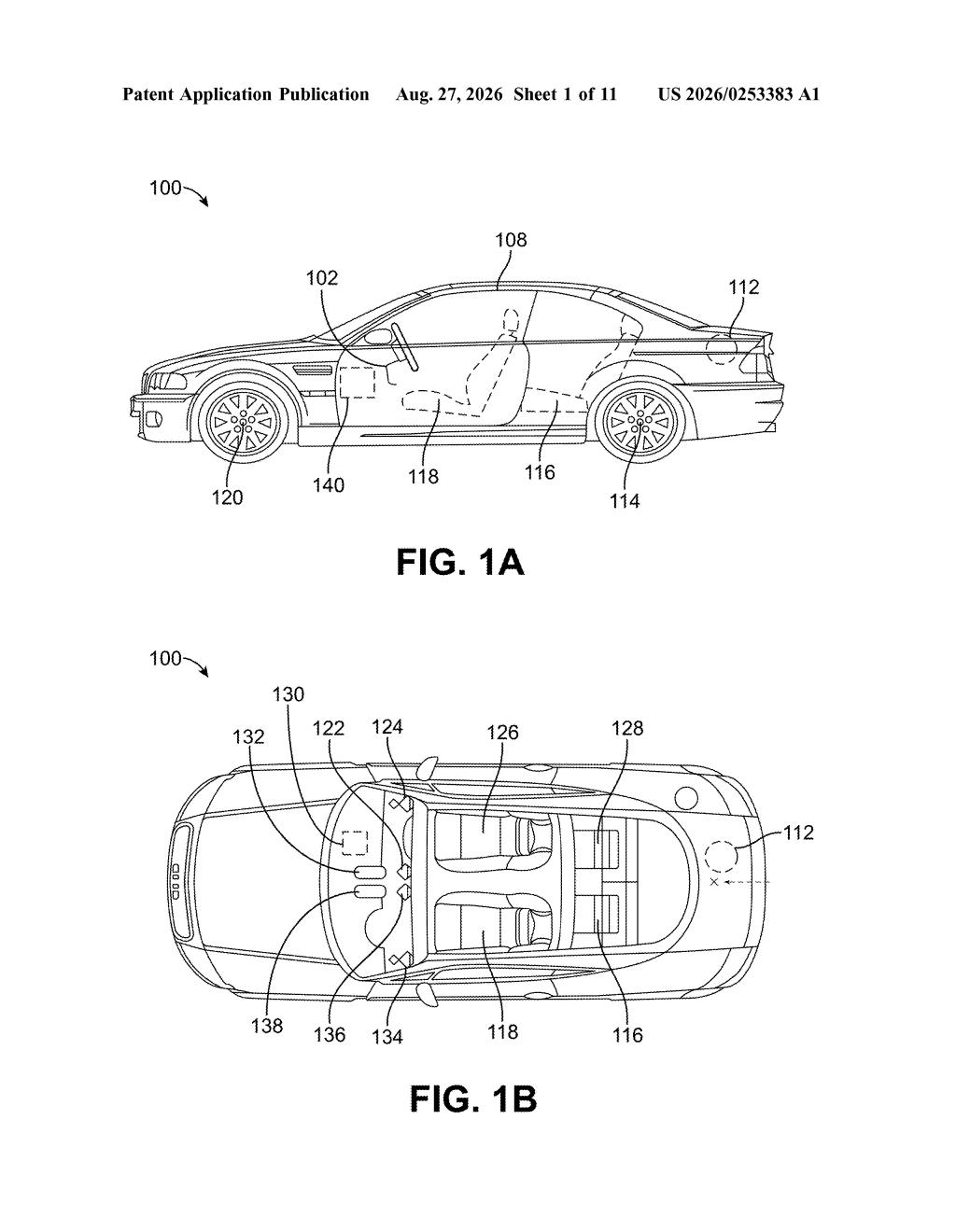
Imagine you're driving a car with cameras pointed at the road, and those cameras are asking two questions at once: "What specific object is that?" and "What kind of scene would typically have that object in it?" Most of the time both questions get the same answer, and the footage gets discarded. But when the answers conflict, that's when things get interesting.
Qualcomm's patent describes a system that runs two AI models simultaneously on the same camera or sensor feed. One model looks for specific objects. The other looks at the broader scene to estimate what objects should be there. When those two models disagree, the system treats that moment as unusual, and automatically hits record.
The practical upside is storage efficiency: instead of logging hours of ordinary footage, a device only captures the moments its own AI finds confusing. That's also exactly the kind of data AI researchers need to improve their models, making this as much a data-collection strategy as it is a sensor feature.
… determine a discrepancy between at least one of the respective first probabilities and at least one of the respective second probabilities; and trigger recording of the sensor data of the scene based on the determined discrepancy …
Translation: The system saves video or sensor data only when its two internal AI models disagree on what they are seeing.
How the two classifiers detect and flag a conflict
The patent describes an apparatus (think a chip-equipped device with cameras or other sensors) that runs two parallel classification systems on incoming sensor data.
- Object classifier: This model looks at a scene and assigns probabilities to specific objects it detects. For example, it might say "85% confident there's a pedestrian here, 10% chance it's a cyclist."
- Scene classifier: This model looks at the same scene and asks a different question: given this overall environment, how likely is it that certain classes of objects exist at all? A highway scene has a high prior (background expectation) for vehicles, a low one for shopping carts.
- Discrepancy detection: The system compares the two sets of probabilities. If the object classifier is highly confident it sees something that the scene classifier says is unlikely to exist in this context, that gap is flagged as a meaningful discrepancy.
- Triggered recording: Only when that discrepancy crosses a threshold does the device actually save the sensor data for later use.
The core insight is that unusual situations, meaning the ones hardest for AI to handle reliably, are precisely when the object-level view and the scene-level view will produce contradictory confidence scores. By monitoring for that contradiction, the system acts as an automated filter for interesting edge cases, without a human ever reviewing the footage.
The computing device can determine, using an object classifier based on the sensor data, a respective first probability an object in the scene is in each class of a plurality of classes. The computing device can determine, using a scene classifier based on the sensor data, a respective second probability of an existence of the object in each class …
Translation: The device uses one AI to identify specific objects and a second AI to analyze the overall scene context.
What this means for AI training data on edge devices
For AI companies training autonomous-driving or robotics models, the limiting resource isn't compute time or even storage capacity in isolation. It's labeled edge-case data, the rare, weird situations that trip up otherwise capable models. A system that automatically flags and captures those moments, running on the device itself with no cloud round-trip needed, could meaningfully reduce how much manual footage review a team has to do.
For Qualcomm specifically, this fits squarely into their push to run more AI workloads on-device, in cars, phones, and cameras, rather than sending raw data to a server. The patent describes a general apparatus, so it could apply to any sensor-equipped device Qualcomm supplies chips for. Edge AI and on-device data collection are areas where Big Tech patent news has tracked a surge of filings from chipmakers competing to own the sensor-processing layer before cloud companies can.
This is the sixth Qualcomm filing we've tracked since July in our AI models working in teams watchlist, following one on self-monitoring wireless chips and one on picking the right model.
The system only records when its two models disagree, which means it inherits a quiet vulnerability: if the scene model has never encountered flooding on a highway, it won't register surprise when the other model spots a boat in a traffic lane. One blind spot in the scene model erases the whole mechanism. That cost reads as acceptable for the intended setting.
Devices running in the field have limited storage and no reliable connection to offload footage constantly, so selective logging beats exhaustive logging as long as the selection logic holds. The unresolved piece is how sensitive the disagreement threshold should be.
Set it too tight and subtle anomalies slip through unrecorded; set it too loose and the system logs nearly everything, defeating its own purpose. That calibration problem is real, and the patent leaves it open.
Get our take in your Top Stories
Liked this breakdown? Add Patentlyze as a preferred source on Google, and our plain-English take shows up more often in your Top Stories the next time Qualcomm patent news breaks.
There are more where this came from
We read every patent application Big Tech publishes and send you the ones worth knowing. Plain English, free, every week.
The drawings
11 drawing sheets from US 2026/0253383 A1 · click any drawing to enlarge


Want this weekly breakdown for a company we don't cover? Patentlyze Pro →
Be the first to weigh in