
Apple Patents a Display That Watches Your Pupils to Change What You See
Apple is working on a display system that watches how your pupils change when you look at something, then adjusts what's on screen to get a stronger reaction from you. Your eyes, in other words, become a feedback loop the device listens to.
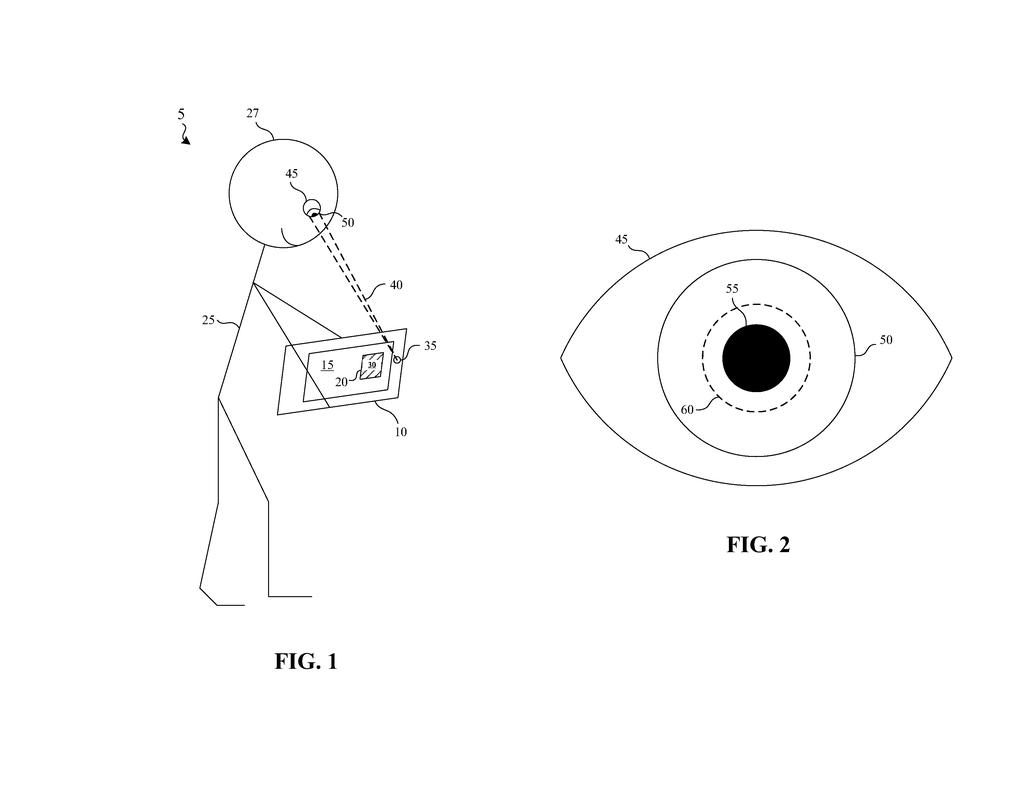
What Apple's pupil-reading display actually does
Ever noticed that your pupils get bigger when you see something you like? It happens automatically, before you even decide how you feel about it. Apple's patent is built around exactly that reflex.
The idea is to watch your pupil with a sensor while you look at an element on screen. If your pupil dilates (widens), the device takes that as a signal that you're engaged. If it doesn't, the device adjusts the color, brightness, or other visual quality of that element until it finds a version that gets a bigger response from you. You never have to tap, swipe, or say anything.
The patent also describes using pupil changes as a way to detect intent: your pupil can shift just before you interact with something, and the device can pick that up as a heads-up that you're about to act. Think of it as the screen reading your body's subconscious signal, not your finger.
… identifying pupil diameter changes prior to an interaction with the element; in response to detecting the intention, adjusting a visual characteristic associated with the element …
Translation: The system watches your pupils dilate before you touch anything so it can change the screen in advance.
How the sensor detects intent before you tap anything
The system watches where you're looking using gaze-tracking sensors, the kind already built into Apple Vision Pro. Once it confirms your eyes are aimed at a specific element on screen, it starts collecting pupillary data (measurements of how wide your pupil is at any given moment).
That data feeds into a detection loop. The patent describes two main uses:
- Intent detection: Pupil diameter changes in a characteristic way just before a person consciously decides to interact with something. The system reads those micro-changes as a signal of incoming intent, allowing the device to respond before a tap or click actually happens.
- Visual tuning: If your pupil response to an element is weak, the device adjusts that element's visual characteristics (brightness, contrast, color, size) and re-tests. Over time it builds a profile of which visual qualities get the strongest physiological response from you specifically.
The feedback loop is closed and personal: what worked for a previous user, or even a previous session of yours, informs the next adjustment. The patent frames this as enhancing pupillary responses, which is a clinical way of saying the screen is tuning itself to hold your attention more effectively at a biological level.
… utilizes a sensor of the device to obtain physiological data associated with a pupillary response of a user to the visual characteristic …
Translation: Sensors track how your eyes physically react when looking at items on the display.
What this means for Apple Vision Pro and beyond
For users, the most immediate application is gaze-based interaction on devices like Apple Vision Pro, where you already select things by looking at them. Right now, the system waits for a deliberate gesture after you look. A pupil-intent signal could make that interaction feel faster and more natural, shaving off a beat of conscious effort.
The deeper implication is that content itself could be shaped by your involuntary responses. A photo app, a shopping interface, or a reading environment could silently drift toward whatever version of itself your nervous system responds to most. Apple's interest in biometric feedback loops suggests this is part of a longer push to make devices feel less like tools you operate and more like environments that adapt to you. That shift is worth thinking about before it arrives.
Apple's 29th application we've tracked since May in our eye and hand controls watchlist follows earlier filings like waving to control Siri and moving groups of AR objects.
To tune what you see, the device must build a running record of your involuntary biological reactions. Pupil dilation happens before conscious thought, without your awareness or permission, and that is the input the system learns from.
The cost is a filter between you and the screen made of your own nervous system. The device discovers which version of something makes your body react most strongly, then serves you that version, which is not necessarily the most accurate or useful one.
For navigation or accessibility tools, that trade probably works in your favor. For anything involving persuasion or commerce, the gap between what your pupil responds to and what you would choose deliberately is precisely where harm enters, and the patent describes the mechanism without touching that question at all.
There are more where this came from
We read every patent application Big Tech publishes and send you the ones worth knowing. Plain English, free, every week.
The drawings
9 drawing sheets from US 2026/0277322 A1 · click any drawing to enlarge


Want this weekly breakdown for a company we don't cover? Patentlyze Pro →
Be the first to weigh in