
Microsoft Patents a Way to Use Any Device's Peripherals Inside One VM Session
Imagine running your work virtual machine on your laptop but using your iPad's touchscreen to control it — without switching sessions. That's precisely what Microsoft is patenting here.
What Microsoft's multi-device VM peripheral trick actually does
Picture this: you're logged into your work PC in the cloud (a virtual machine) from your laptop, but your laptop doesn't have a touchscreen. Your tablet does. Today, you'd have to disconnect from one device and reconnect from the other. Microsoft's patent describes a way to keep both devices connected to the same VM session simultaneously, so the tablet's touchscreen inputs just flow straight into what you're doing on your laptop.
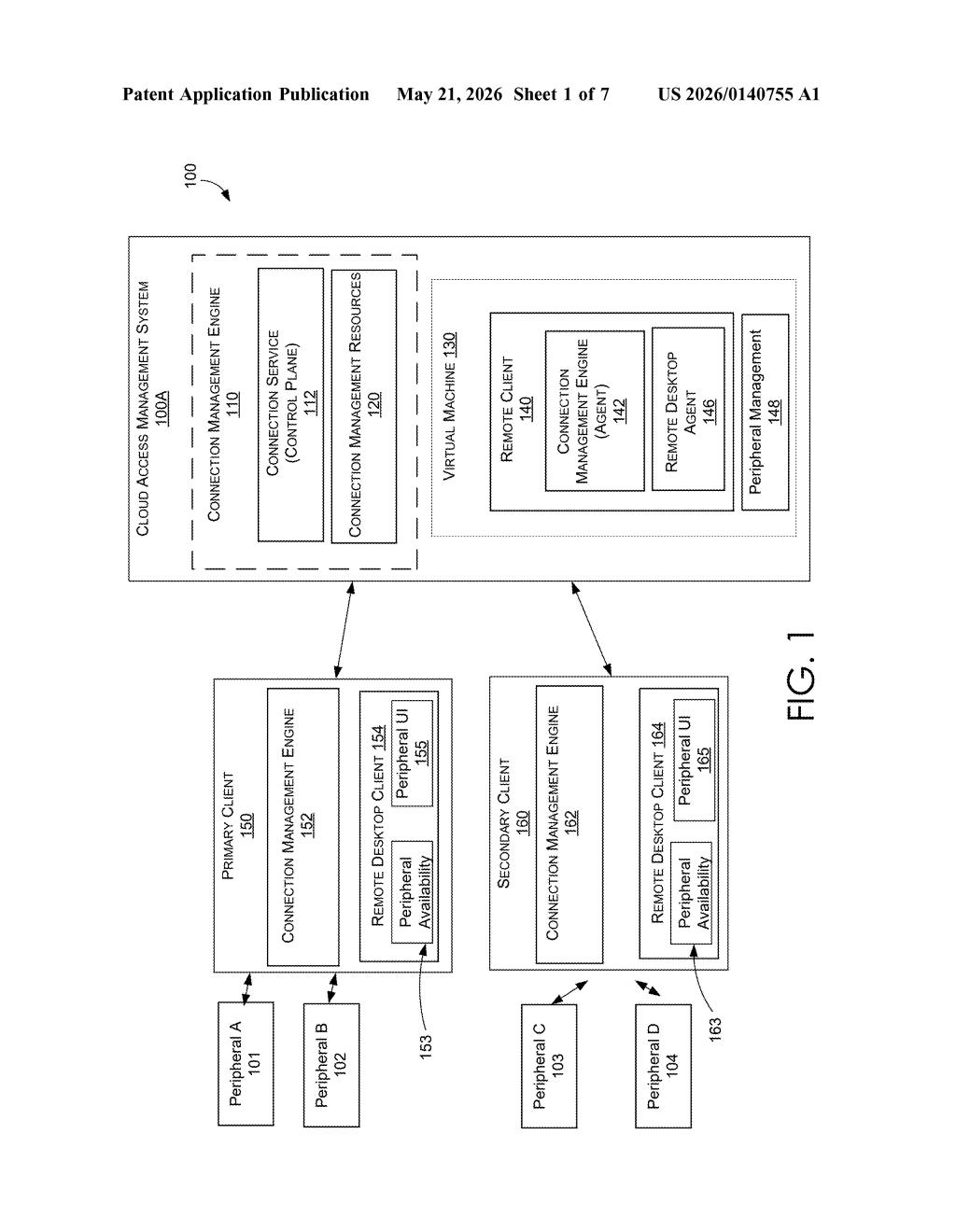
The way it works is that one device — say, your laptop — holds the "full" connection and sees the screen. Your other device, like your phone or tablet, runs in a background mode where it doesn't need to receive video, it just sends input signals (touches, stylus strokes, keyboard presses) over to the VM.
This is about making remote desktop sessions more flexible. You keep working on your primary screen while tapping into the physical input options of whatever other gadget is nearby — all tied to the same user account.
How the primary and secondary client connections actually work
The patent describes a connection management engine that handles two types of simultaneous connections to a virtual machine from devices sharing the same user account:
- Full connection — the primary client device gets graphics output (you see the VM's screen) and can send input normally.
- Background connection — a secondary client device runs in non-graphics mode, meaning it doesn't receive a video feed. It exists purely to forward peripheral input to the VM.
When a peripheral (like a touchscreen, stylus, or external keyboard) generates input on the secondary device, the remote desktop application on that device captures it and sends a redirected signal to the VM. The VM's connection management agent then applies that input to the active remote client session — the one the primary device is displaying.
The system checks that both devices are signed in under the same user account before allowing the peripheral-forwarding handshake. This is the authorization gate that prevents one user's phone from accidentally injecting input into another user's VM session. The patent also notes that primary and secondary roles can differ by connection type, meaning the architecture is flexible about which device "owns" the display versus which one just contributes input.
What this means for Windows 365 and remote desktop workers
For anyone who uses Windows 365, Azure Virtual Desktop, or Microsoft's Remote Desktop app across multiple devices, this would meaningfully reduce the friction of cloud PC work. Right now, if you want to use your phone as a secondary input device for a VM, you essentially have to hack it together with third-party tools or just give up. A native, account-aware peripheral-routing system built into the Remote Desktop stack would make hybrid setups — laptop plus tablet, PC plus phone — feel genuinely seamless.
The broader play is that cloud PCs are only as useful as their input flexibility. Microsoft has been pushing Windows 365 hard as a serious enterprise product. Letting users mix-and-match the physical inputs of devices they already own — without re-authenticating or splitting sessions — is the kind of quality-of-life feature that makes cloud desktops feel less like a compromise.
This is a focused, practical patent — not a moonshot. It solves a real and annoying limitation of remote desktop software that anyone who's ever tried to use a VM from more than one device at once has bumped into. The account-scoping and dual-connection-mode architecture show Microsoft has thought through the security angle, not just the convenience angle. Worth watching as Windows 365 matures.
There are more where this came from
We read every patent application Big Tech publishes and send you the ones worth knowing. Plain English, free, every week.
Want this weekly breakdown for a company we don't cover? Patentlyze Pro →